
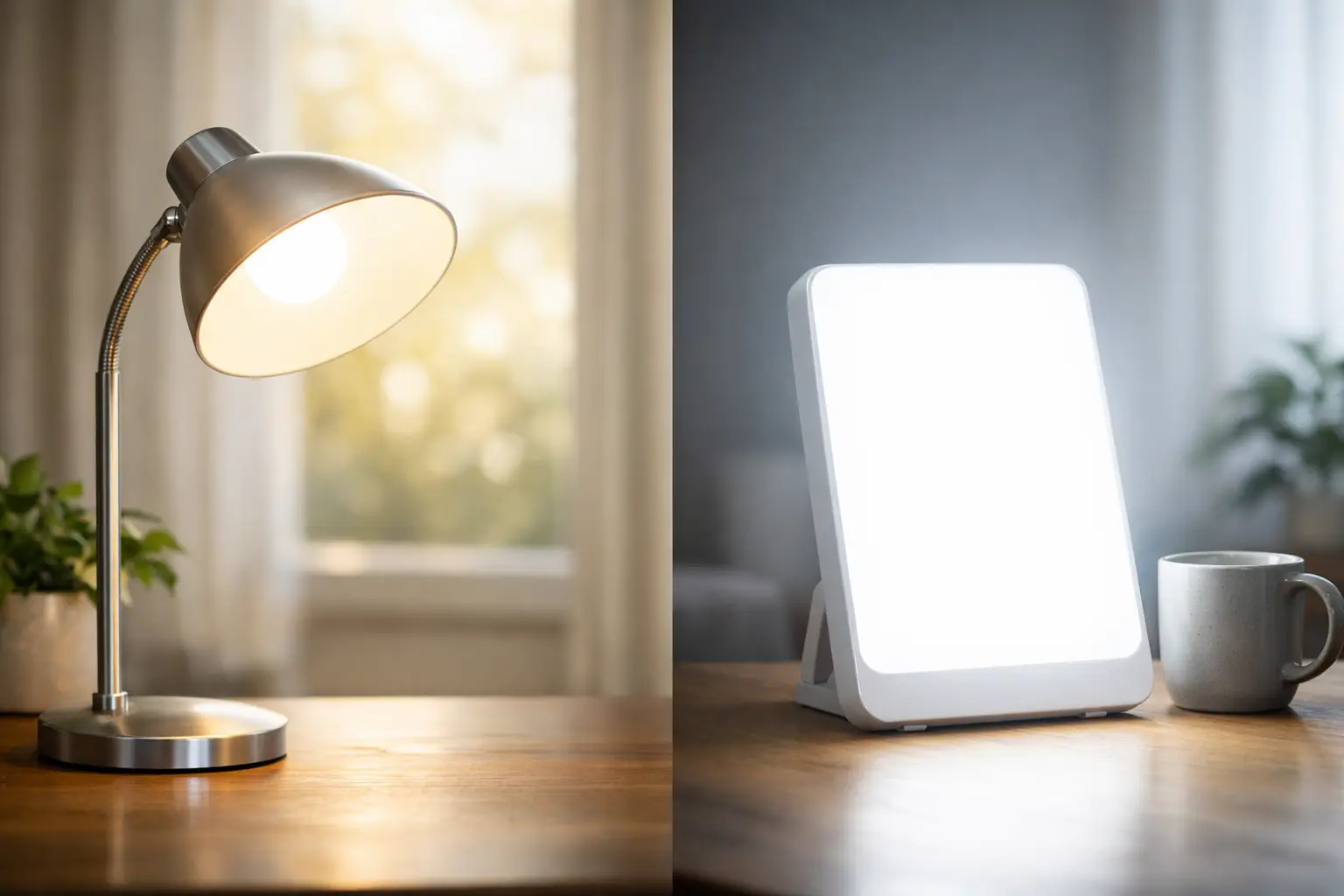
Daylight Lamp vs SAD Lamp: What Matters
If you have ever searched for a better light for dark winter mornings, you have probably run into the same confusion: daylight lamp vs SAD lamp. The two terms are often used as if they mean the same thing, but they are not always interchangeable. That matters, because the right lamp can support morning alertness and seasonal low mood, while the wrong one may just make your desk brighter.
A lot of the frustration comes from marketing. Plenty of products are labelled with feel-good phrases like natural daylight or full spectrum, which sound useful but do not tell you whether the lamp is suitable for light therapy. If your goal is simply making a dim room feel brighter, a daylight lamp may be enough. If your goal is helping with seasonal affective disorder, winter sluggishness, or difficulty waking in darker months, you need to look more closely.
Daylight lamp vs SAD lamp: the basic difference
A daylight lamp usually refers to a lamp designed to mimic the appearance of daylight. That often means a cooler, brighter-looking white light compared with a warm bedside lamp. It may make reading, working, or applying make-up easier, and it can make indoor spaces feel less gloomy.
A SAD lamp, sometimes called a light therapy lamp, is built for a more specific purpose. It is intended to deliver light at an intensity and distance that may help with seasonal affective disorder and related winter symptoms. In practical terms, that usually means a lamp tested to provide 10,000 lux at a stated distance, with a design that lets you sit near it safely for a set period.
So the simplest way to think about it is this: every SAD lamp is a type of bright light lamp, but not every daylight lamp is suitable for SAD treatment.
Why the label alone is not enough
This is where many people waste money. A box can say daylight, natural light, or full spectrum and still not offer the intensity needed for therapeutic use. It might be perfectly fine as a home or office lamp, but that does not make it a SAD lamp.
The term full spectrum is especially slippery. It sounds scientific, but in retail lighting it is often used loosely. What matters more is measurable output, especially lux at a specific distance, and whether the lamp is actually designed for light therapy rather than general illumination.
For UK readers dealing with grey mornings and short winter days, that distinction is worth taking seriously. If you want a lamp to help regulate your body clock or improve daytime alertness, vague branding is not enough.
What actually matters in a SAD lamp
If you are comparing options, focus less on the headline name and more on the specification. A proper SAD lamp should usually provide 10,000 lux at a comfortable sitting distance. Some lamps only reach that level if your face is very close, which is less practical for normal morning use.
The useful questions are simple. How many lux does it provide, and at what distance? How long are you expected to use it each day? Is the light diffused enough to be comfortable without glaring straight into your eyes? Does it filter out UV? Most reputable light therapy lamps do.
Size also matters more than people expect. A very small lamp may technically hit the right intensity, but only in a narrow beam or from an awkward position. A larger light surface is often easier to use while eating breakfast, reading, or starting work.
Colour temperature is less important than many product pages suggest. A cooler white light can feel more energising, but the therapeutic effect of a SAD lamp is more about brightness at the eye than whether the light looks blue-white or neutral white.
When a daylight lamp is enough
There are situations where a daylight lamp is a sensible choice. If your home office feels dingy, your kitchen lacks natural light, or you simply want a brighter, cleaner-looking light during the day, a daylight lamp can improve comfort and visibility.
That can still help indirectly with wellbeing. A brighter room may make you feel more awake, support concentration, and make winter days feel less oppressive. For some people, that is all they need.
But it is worth being honest about the limits. A standard daylight lamp is not a substitute for a therapeutic light box if you have clear seasonal dips in mood, struggle to wake in winter, or have symptoms that point towards SAD. It may improve the atmosphere of a room without delivering the kind of light exposure used in light therapy.
When a SAD lamp makes more sense
A SAD lamp is more appropriate if your energy drops noticeably in autumn and winter, you find dark mornings hard to manage, or you feel better on bright sunny days and worse during long grey spells. It may also be useful for people who work indoors all day and get very little morning daylight during the colder months.
This does not mean a lamp is a cure-all. Seasonal fatigue can also overlap with poor sleep habits, low physical activity, stress, irregular routines, or underlying health issues. Light therapy works best as part of a sensible routine rather than as a stand-alone fix.
That might mean using the lamp soon after waking, getting outside when possible, keeping wake times fairly consistent, and avoiding very bright light late at night. No hype. Just simple habits that work together.
How to use a SAD lamp properly
A good lamp will usually come with clear instructions, but the general approach is straightforward. Most people use a SAD lamp in the morning, shortly after waking, for around 20 to 30 minutes if the lamp provides 10,000 lux at the recommended distance. You do not usually stare directly into it. The light should reach your eyes while you read, eat breakfast, or work.
Timing matters. Morning use tends to be best because bright light early in the day can help support a healthier sleep-wake rhythm. Using it too late may leave some people feeling too alert in the evening.
Consistency matters as well. Using it once or twice when you feel tired is unlikely to do much. Benefits, where they happen, usually come from regular use over days and weeks.
A few sensible cautions
Light therapy is often considered safe, but it is not suitable for absolutely everyone without thought. If you have an eye condition, bipolar disorder, migraines triggered by bright light, or you take medication that increases light sensitivity, it is worth speaking to a GP or optician before using a SAD lamp.
It is also important not to self-diagnose everything as winter tiredness. If fatigue is persistent, severe, or present all year round, a lamp may not address the real cause. Poor sleep quality, sleep apnoea, iron deficiency, thyroid issues, and depression can all sit behind ongoing exhaustion.
For seasonal affective disorder itself, the NHS recognises treatment options including lifestyle measures, talking therapies, antidepressants in some cases, and light therapy. Guidance from NICE also supports structured treatment approaches for depression, depending on symptoms and severity. That broader context matters. A lamp can be helpful, but it should sit alongside proper medical advice when needed.
How to choose between them without overthinking it
If you are deciding between a daylight lamp and a SAD lamp, start with your actual goal. If you want a room to feel brighter and more pleasant, buy a good daylight lamp and stop there. If you want something intended to help with seasonal low mood, winter grogginess, or body clock support, choose a lamp specifically sold for SAD or light therapy and check the lux rating carefully.
Do not pay extra just because a product uses wellness language. Pay for clear specifications, practical design, and a lamp you will actually use every morning. The best option is not the one with the most dramatic claims. It is the one that fits your routine and does what the label says.
For many people, the answer is not really daylight lamp vs SAD lamp as a battle between two separate products. It is about knowing whether you need better ambient light or proper light therapy. Once that is clear, the choice gets much easier.
Dark mornings can drain more than motivation. They can shift sleep timing, blunt alertness, and make ordinary days feel heavier than they should. If a lamp helps you create a steadier morning routine and a brighter start to the day, that is often where the real benefit begins.
Further Reading
If you enjoyed this article you might like to read these articles.
- Why Do I Feel Tired After Sleeping?
- The Real Guide to Daily Energy
- Best Lamp for Circadian Rhythm: What to Buy
The role of wellness products

Some people explore supplements or wellness products to support their daily routines. While these can sometimes be helpful, they should be viewed as support rather than a replacement for healthy habits.
If you are interested in exploring wellness products that may support energy routines, you can browse the options available at the Wellthy Freedom Hub store.
Always read ingredient labels carefully and speak with a healthcare professional if you have medical conditions or take medication.
Disclosure: This site may link to products on wellthyfreedomhub.com. If you choose to buy, the store benefits. The guidance here is informational and not medical advice.

Richard Chambers is the founder of rrjchambers.com. He writes about practical ways to improve everyday health, energy, and wellbeing through simple routines, lifestyle habits, and carefully chosen wellness products. His focus is on clear, honest guidance that helps people make small changes that support better health over time.
Health Information Notice
The information in this article is intended for general educational purposes only and should not be considered medical advice. If you have concerns about your health, sleep, or energy levels, it is always best to consult a qualified healthcare professional.