
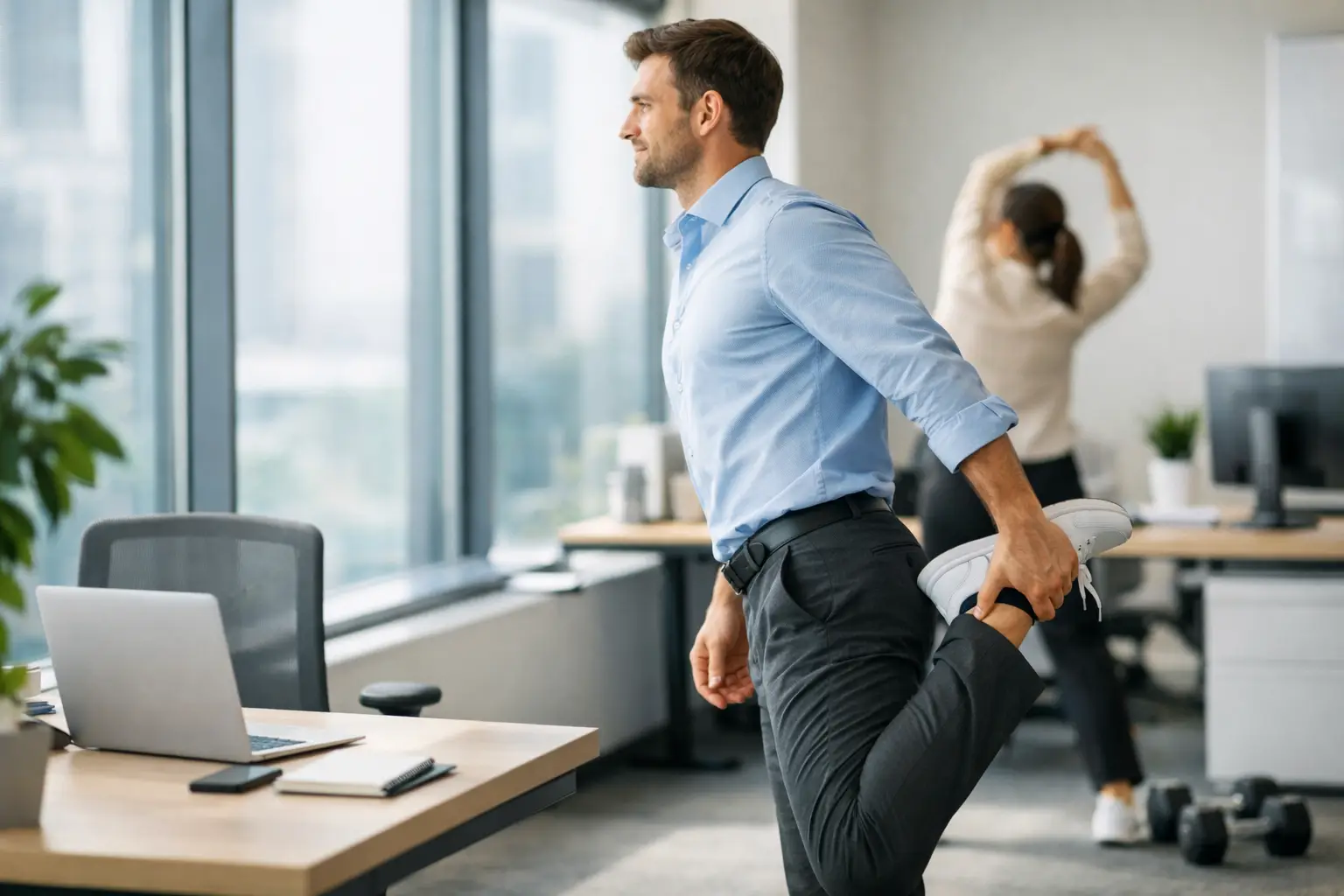
Daily Movement for Office Workers That Works
A stiff neck at 3pm, heavy legs after a day at the desk and the feeling that your brain has gone flat are not always signs that you need more coffee. Often, you need to move. Daily movement for office workers is less about fitting in a hard workout and more about interrupting long periods of sitting with small, useful actions.
That matters because a desk-based day can quietly become an almost entirely seated day: breakfast at the table, commuting, meetings, concentrated screen work, television in the evening. One gym session is worthwhile, but it does not fully cancel out ten or more hours spent still. The realistic answer is not perfection. It is building movement into the day you already have.
Why sitting all day can leave you feeling tired
Sitting is not a moral failure, and most office workers cannot simply choose not to do it. Focused work requires time at a desk. The issue is the lack of change in position and effort for long stretches.
When you stay in one position, muscles around the hips, upper back and neck may become tight or uncomfortable. Your circulation is less active than when you walk, and it is common to feel sluggish after a long meeting or an afternoon of emails. A short movement break can raise your alertness simply by changing the physical and mental pattern of the day.
Movement can also support sleep indirectly. A day with some walking and regular light activity may make it easier to build a healthy level of tiredness by bedtime. This will not solve every sleep problem – stress, illness, medication, caffeine and a poor sleep environment all matter too – but it is one dependable part of the picture.
Daily movement for office workers: make it small enough to repeat
The most effective routine is usually the one that survives a busy Tuesday. If a plan depends on changing into gym clothes, finding 45 spare minutes and feeling motivated, it may happen occasionally. If it takes two minutes and has a clear cue, it is much more likely to become normal.
Aim to break up extended sitting rather than waiting until you feel uncomfortable. For many people, moving for a couple of minutes every 30 to 60 minutes is a sensible starting point. You do not need to watch the clock constantly. Use natural points in your work instead: after sending a report, before a video call, when the kettle boils or after using the toilet.
A movement break should feel easy enough that you will not avoid it. Walk to another room, go up and down a flight of stairs, stand by a window, or do a few controlled bodyweight movements beside your desk. The goal is to change position, use your legs and give your eyes and attention a short break from the screen.
Build movement around the working day
Start before work begins
A five- or ten-minute walk before logging on can create a useful dividing line between home and work, particularly if you work remotely. It does not need to be brisk. Step outside, get some daylight where possible, and let your body wake up before the first task begins.
If you commute, consider getting off the bus one stop earlier or parking a little farther away when practical. These small choices are not a replacement for structured exercise if that is one of your goals. They are a reliable way to stop movement being squeezed out altogether.
Use meetings intelligently
Not every meeting can be walked. A presentation, a confidential discussion or a meeting involving notes may require you to sit. But one-to-one calls, catch-ups and audio-only meetings often give you more freedom.
Try taking one walking call a day, even if it is only around the building or through a quiet part of your home. For video calls, stand for the first ten minutes if your set-up allows it. Changing position is useful; you do not need to make every meeting physically demanding.
Create a better lunch break
Eating lunch at your desk is sometimes unavoidable. Making it the default, however, leaves you with very little variation in the day. A ten-minute walk after eating can be a practical reset before the afternoon begins.
If the weather is poor, walk a lap of the office, use the stairs, or simply go outside for two minutes and stand away from your screen. Fresh air is pleasant, but the main win is breaking the seated routine.
Finish with a transition
When work ends, avoid moving directly from your chair to the sofa if you can. A short walk, light household task or gentle stretch can help mark the end of the workday and reduce the sense that you have been folded into the same position since breakfast.
This is especially helpful for home workers. Without a commute, the day can lack natural movement and clear boundaries. A brief walk around the block can provide both.
Choose movements that feel comfortable and suit your space. You do not need to perform them all. Pick two or three and rotate them through the day.
- Walk for two minutes, ideally including a few stairs if that feels manageable.
- Stand up and sit down from your chair eight to ten times, using your hands if needed.
- Roll your shoulders slowly, then gently turn your head from side to side without forcing the movement.
- Raise your heels and lower them slowly ten to fifteen times while standing at your desk.
- Stretch your arms overhead, take a few calm breaths and reach gently from side to side.
Avoid treating discomfort as something to push through. A mild sense of stiffness after sitting is common, but sharp pain, numbness, dizziness, swelling or breathlessness deserves proper medical advice. If you have an injury, a long-term condition, or have been advised to limit activity, ask a qualified health professional what is appropriate for you.
Make your environment do some of the work
Willpower is unreliable when you are busy. A few changes to your workspace can make movement the easier option.
Keep your water away from your desk so refilling it involves a walk. Place the printer or bin far enough away that you need to stand. Set a quiet reminder on your mobile phone or computer, then review whether it helps rather than assuming it will. Some people find hourly prompts useful; others quickly ignore them and do better with calendar-based cues.
A height-adjustable desk can be useful, but it is not essential. Standing still for hours is not the answer either. The benefit comes from alternating positions and moving regularly. If buying equipment is not realistic or appealing, you can make meaningful progress with ordinary shoes, a chair and a bit of floor space.
Do not rely on the evening workout to fix the day
Exercise after work is valuable, whether that means a gym session, cycling, swimming or a walk. But it is easy to overestimate how often it happens when deadlines, family life, dark winter evenings or simple tiredness get in the way.
Think of purposeful exercise and regular daily movement as partners. A workout can improve fitness and strength. Movement breaks help stop the working day becoming one long spell of inactivity. One does not make the other unnecessary.
If your energy is low, start with the lowest-friction option: a two-minute walk after each main task, a short lunchtime loop, or standing during one call. Do that consistently for a fortnight before adding more. The habit needs to fit your actual life, not an ideal version of it.
The best movement plan is rarely impressive on paper. It is the one that gets you out of the chair often enough to feel a little less stiff, a little more awake and more in control of your day.
Further Reading
If you enjoyed this article you might like to read these articles.
- A Practical Afternoon Slump Fix That Lasts
- The Real Guide to Daily Energy
- Morning Sunlight Benefits for Energy and Sleep
The role of wellness products

Some people explore supplements or wellness products to support their daily routines. While these can sometimes be helpful, they should be viewed as support rather than a replacement for healthy habits.
If you are interested in exploring wellness products that may support energy routines, you can browse the options available at the Wellthy Freedom Hub store.
Always read ingredient labels carefully and speak with a healthcare professional if you have medical conditions or take medication.
Disclosure: This site may link to products on wellthyfreedomhub.com. If you choose to buy, the store benefits. The guidance here is informational and not medical advice.

Richard Chambers is the founder of rrjchambers.com. He writes about practical ways to improve everyday health, energy, and wellbeing through simple routines, lifestyle habits, and carefully chosen wellness products. His focus is on clear, honest guidance that helps people make small changes that support better health over time.
Health Information Notice
The information in this article is intended for general educational purposes only and should not be considered medical advice. If you have concerns about your health, sleep, or energy levels, it is always best to consult a qualified healthcare professional.