
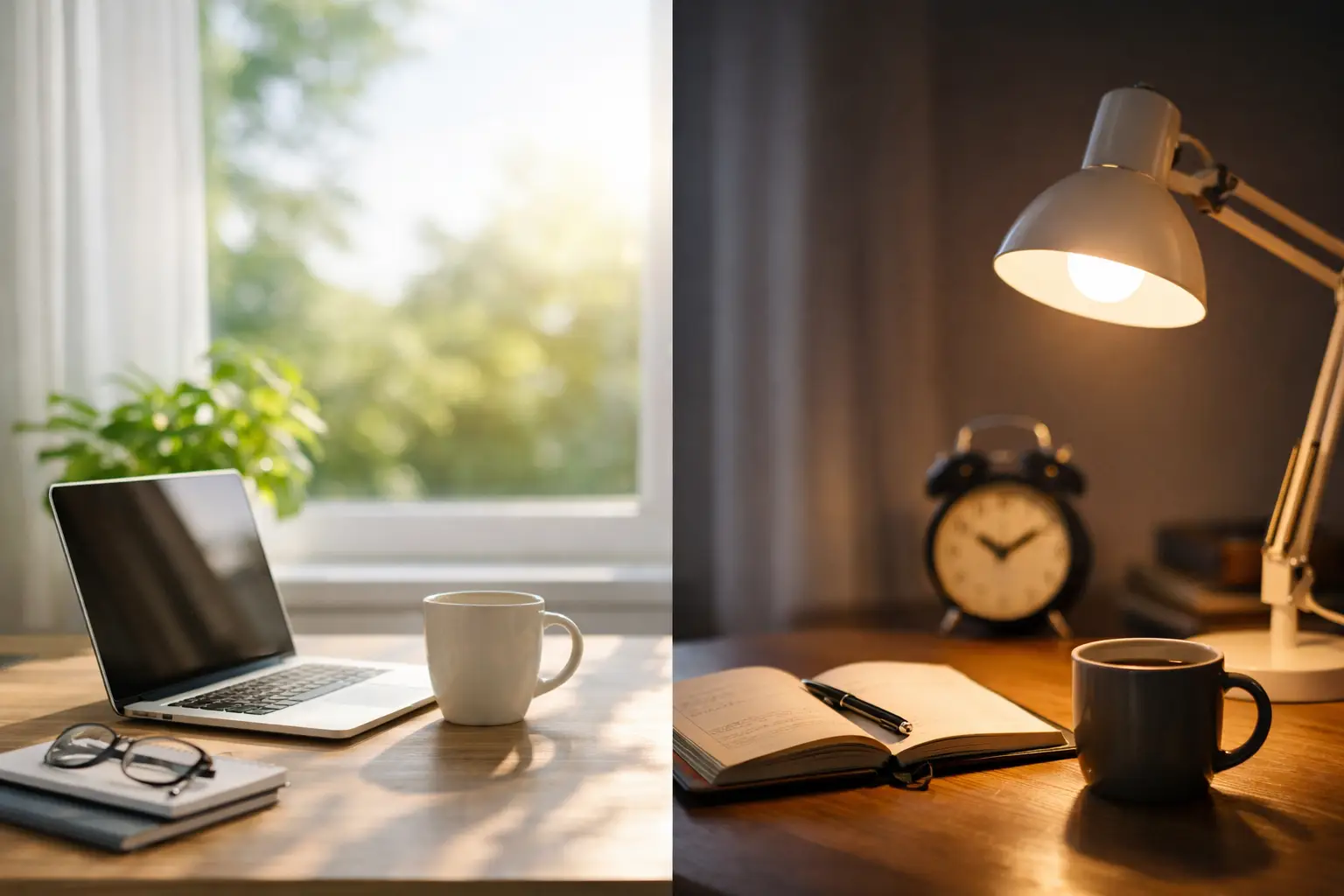
Natural Light Versus Lamps for Daily Energy
A desk beside a bright window can make a grey Tuesday feel manageable. The same desk under a weak ceiling bulb can leave you yawning by mid-morning. Natural light versus lamps is not simply a question of which looks nicer in your home. The light around you helps shape when you feel awake, when you wind down, and how comfortably you can get through everyday tasks.
For most people, daylight should do the heavy lifting during the day, while lamps provide the control and consistency that British weather, short winter days and indoor routines do not. The useful answer is not to choose one over the other. It is to use each at the right time.
Why light has such a strong effect on energy
Your body uses light as one of its main timing signals. Morning and daytime light help reinforce your circadian rhythm, the internal process that influences alertness, sleepiness, appetite and other daily patterns. Brighter light earlier in the day generally tells the body that it is time to be awake.
This matters if you work indoors, start before sunrise, or spend much of the day moving between a car, office, shop or home. You can have a reasonable night’s sleep and still feel sluggish when your days are dim, particularly in winter. Lack of daytime brightness does not explain every case of fatigue, but it can make an already tired routine feel harder.
Light also affects the practical side of energy. Poor lighting makes reading, cooking, screen work and household jobs more effortful. You squint, hunch forward, lose concentration and may develop eye strain or headaches. That is not a character flaw or a productivity problem. Often, the room simply needs better light.
Natural light versus lamps: what each does best
Natural light is usually brighter and more variable than indoor lighting. Even an overcast day outdoors is often far brighter than a typical living room. That intensity is useful in the morning and through the working day, when you want a clear signal to be alert.
Daylight has other advantages. It gives a more accurate sense of colour, makes rooms feel more open and helps you notice whether a space is gloomy or badly arranged for the task at hand. If you work from home, sitting near a window can improve the feel of the day without buying anything.
But natural light is not automatically perfect. A sunny window may cause glare on a laptop screen, heat up a room, or shine directly into your eyes. In the UK, it can also be scarce when you need it most. A north-facing room, a shaded street, winter mornings and late afternoon meetings can leave even a well-placed desk surprisingly dark.
Lamps solve a different problem: they give you usable light where and when you need it. A good desk lamp can illuminate paperwork without flooding the room. A reading lamp can make an evening book comfortable without switching on harsh overhead lighting. A warm bedside lamp can support a calmer wind-down routine.
The limitation is that many homes rely on one central ceiling fitting and call it done. This often creates a room that is bright in the middle, dark at the edges and unpleasant for close work. It is also common to use very cool, bright bulbs late at night, then wonder why switching off feels difficult.
Make the morning brighter before you make it complicated
If mornings feel slow, begin with light rather than a complicated new routine. Open curtains or blinds as soon as you get up. Have your first drink, breakfast or a few minutes of planning near the brightest window available. If possible, step outside for a short walk, even if the sky is cloudy.
The outdoor part matters because daylight outside is usually much more intense than light through a window. You do not need to stare at the sun, and you should never do so. Simply being outdoors in ordinary daylight is enough to give your body a clearer daytime cue.
For people who leave home in darkness, a bright indoor light can be a sensible support. This is particularly useful in winter, but it is not a substitute for daylight whenever you can get it. Choose it for the start of the day, not for late evening, and keep the rest of your routine simple: get up at a broadly consistent time, eat something if that suits you, and move a little.
Set up your workspace for alertness, not glare
Put your desk near a window if you can, but avoid facing directly into it or placing the window directly behind your screen. Both arrangements can create glare and make your eyes work harder. A window to the side of your desk is often the most comfortable position.
Then add a task lamp if your work involves reading, writing, detailed handwork or video calls. The lamp should light the desk surface, not shine into your face or reflect off the screen. If you are right-handed, placing it to the left can reduce the shadow from your writing hand. Reverse that if you are left-handed.
Use blinds, curtains or a sheer covering when sunlight is too strong. There is no prize for enduring a glaring workspace. Comfortable light is more useful than maximum light.
Bulb choice matters, but do not get lost in jargon. During the day, a neutral to cooler white light can feel clearer for work areas. In the evening, warmer light is usually more comfortable for living spaces. What matters most is having enough light for the task, putting it in the right place and changing the mood of the room as the day ends.
Keep evening lamps calm and local
Your home does not need to be dark at 6 pm, especially if you are cooking, helping children with homework or doing jobs that need clear vision. The goal is not to ban lamps after sunset. It is to reduce unnecessary brightness as bedtime approaches.
Start by using smaller pools of light. Turn on a floor lamp beside the sofa or a table lamp in the corner rather than every overhead fitting. Choose warm-toned bulbs in bedrooms and relaxing areas where possible. Dimmer switches can help, but they are not essential. A lower-wattage lamp used deliberately can do much the same job.
Screens add another layer, but they are not the only issue. A bright kitchen, bathroom or hallway can also wake you up when you are trying to settle. If you get up during the night, use the lowest safe level of warm light you can manage. Keep stairs and routes clear, of course. Sleep-friendly lighting should never come at the cost of a fall.
A realistic lighting plan for an ordinary home
You do not need to redesign every room. Begin with the places where you spend most of your time: the bedroom, workspace or kitchen-dining area, and living room. Notice when you rely on bright ceiling lights, when you sit in shadows, and whether you avoid a task because the lighting is uncomfortable.
A simple approach is to make mornings and work hours brighter, then make the last hour or two before bed softer. Open curtains early, sit near daylight when practical, and use a focused lamp for tasks. Later, move to warmer, lower, local lighting. Consistency matters more than having the perfect bulb in every fitting.
There are exceptions. Shift workers may need to manage light around a different sleep schedule. People with migraine, eye conditions or sensory sensitivities may find certain brightness levels uncomfortable. If persistent fatigue continues despite improving sleep habits, movement, meals and light exposure, speak with a GP. Anaemia, thyroid problems, sleep apnoea, low mood and other health issues deserve proper attention rather than a brighter lamp.
The best lighting setup is the one you barely have to think about: daylight helping you start the day, practical lamps supporting what you need to do, and a gentler glow when it is time to rest. Small changes to where you sit and which switch you use can make ordinary days feel noticeably less draining.
Further Reading
If you enjoyed this article you might like to read these articles.
- A Practical Afternoon Slump Fix That Lasts
- The Real Guide to Daily Energy
- Morning Sunlight Benefits for Energy and Sleep
The role of wellness products

Some people explore supplements or wellness products to support their daily routines. While these can sometimes be helpful, they should be viewed as support rather than a replacement for healthy habits.
If you are interested in exploring wellness products that may support energy routines, you can browse the options available at the Wellthy Freedom Hub store.
Always read ingredient labels carefully and speak with a healthcare professional if you have medical conditions or take medication.
Disclosure: This site may link to products on wellthyfreedomhub.com. If you choose to buy, the store benefits. The guidance here is informational and not medical advice.

Richard Chambers is the founder of rrjchambers.com. He writes about practical ways to improve everyday health, energy, and wellbeing through simple routines, lifestyle habits, and carefully chosen wellness products. His focus is on clear, honest guidance that helps people make small changes that support better health over time.
Health Information Notice
The information in this article is intended for general educational purposes only and should not be considered medical advice. If you have concerns about your health, sleep, or energy levels, it is always best to consult a qualified healthcare professional.