
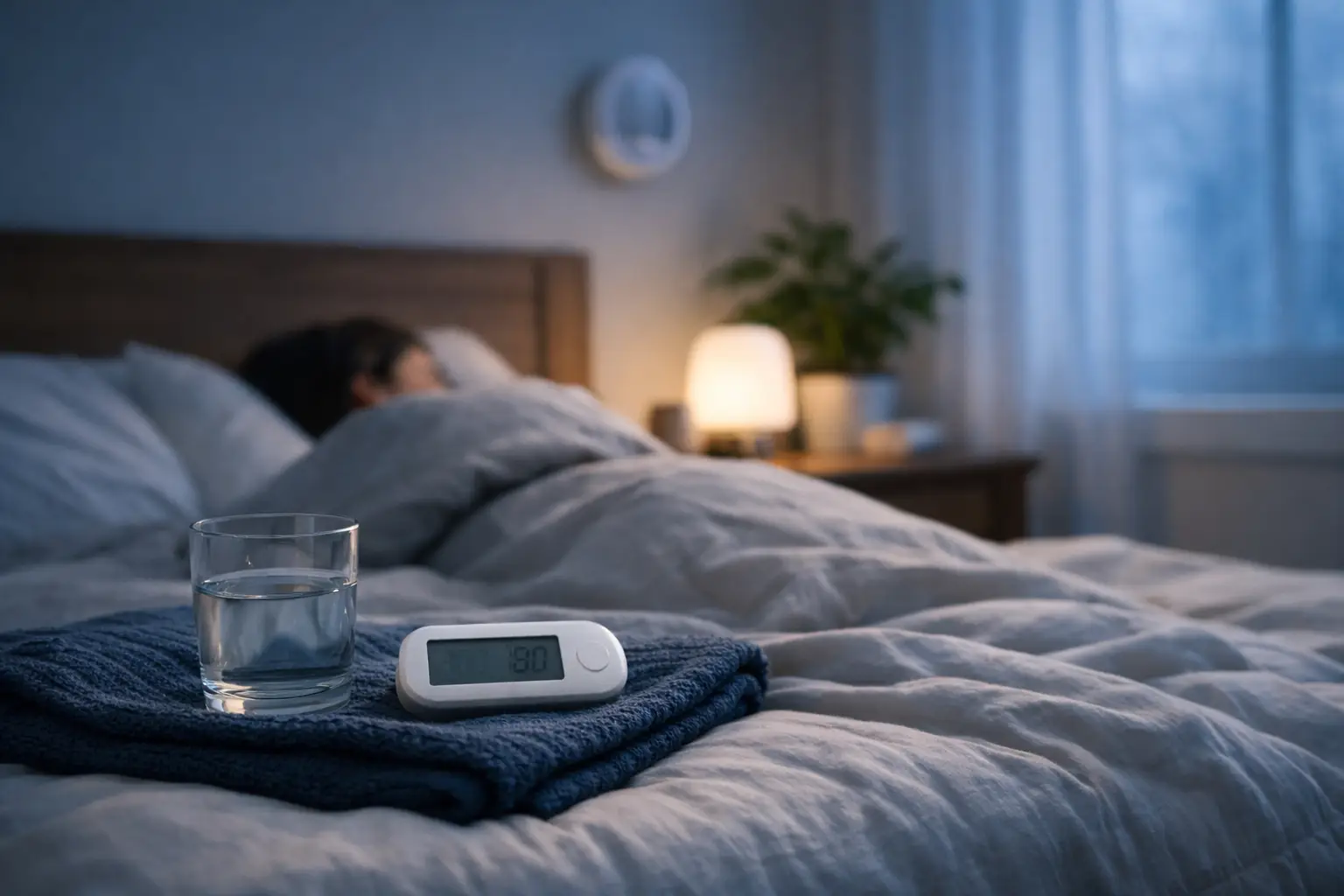
Best Bedroom Temperature for Sleep: 16 to 19°C
A bedroom that feels pleasantly warm when you first step into it can become the reason you are kicking off the duvet at 3am. The best bedroom temperature for sleep is usually cooler than people expect: around 16 to 19°C for most healthy adults. It is not a magic number, but it is a useful starting point if you wake sweaty, restless or oddly tired despite spending enough time in bed.
Your body needs to lower its core temperature slightly to fall asleep and stay asleep. A cool, stable room supports that process. A hot, stuffy bedroom asks your body to work harder instead, making lighter sleep and overnight waking more likely.
Why bedroom temperature affects sleep
Sleep is not simply a matter of closing your eyes. Your body follows a daily rhythm that changes your alertness, hormone levels and temperature. In the evening, your core body temperature starts to drop. This is one of the signals that helps prepare you for sleep.
When the room is too warm, bedding is too heavy or air cannot circulate, that natural cooling process is disrupted. You may take longer to nod off, wake more often, or spend less time in the deeper stages of sleep that leave you feeling restored.
Feeling cold is not helpful either. If you are shivering, tensing your muscles or waking because your feet are freezing, you are unlikely to sleep well. The aim is not a cold bedroom. It is a room cool enough for your body to settle, with bedding that keeps you comfortable through the night.
The best bedroom temperature for sleep
For most adults, set the bedroom somewhere between 16 and 19°C. Many people find 18°C a sensible place to begin, then adjust by a degree at a time over several nights.
This range is practical because it allows for the fact that a thermostat reading is not the same as how the bed feels. A small box room with afternoon sun, a top-floor flat, thick carpets and a heavy duvet can feel much warmer than the temperature suggests. A draughty older house can feel cooler.
Your personal comfort matters. If 16°C leaves you cold even with suitable bedding, there is no prize for forcing it. Equally, if you sleep best closer to 19°C, that is fine. What matters is avoiding sustained overheating and creating a consistent environment your body can recognise as a cue for rest.
When the ideal range may differ
Babies, young children, older adults and people with certain health conditions can have different needs. A baby’s sleep space, in particular, needs careful attention to safe-sleep guidance, suitable clothing and bedding rather than simply copying an adult thermostat setting.
Pregnancy, menopause and some medicines can also make night sweats or temperature swings more common. In those cases, a cooler room, breathable layers and easily adjustable bedding are often more useful than trying to find one perfect number.
If night sweats are regular, severe, or accompanied by unexplained weight loss, fever, pain or other worrying symptoms, speak to a GP. A warm bedroom is common. Persistent sweats are worth discussing rather than assuming they are only a sleep-environment issue.
Start with the bed, not just the thermostat
It is easy to turn the heating down and assume the job is done. But your mattress, duvet, sheets and sleepwear can trap more heat than the room itself.
Memory foam mattresses are a common example. They can feel comfortable but retain warmth, particularly when paired with a waterproof mattress protector and a thick duvet. That does not mean you need to replace everything. Start with the simple changes: use lighter bedding, choose cotton or linen sheets, and avoid wearing thick pyjamas unless the room is genuinely cold.
Duvet tog matters too. A 13.5 tog duvet may be welcome in a cold British winter, but it is often excessive in a centrally heated home or during warmer months. A lighter duvet, or two thinner duvets that can be combined in winter, gives you more control. Some couples also sleep better with separate duvets, especially if one person runs hot and the other does not.
Natural fibres are not automatically perfect, but they tend to be more breathable than dense synthetic bedding. Focus less on labels and more on whether you wake damp, overheated or chilled. Your sleep is the test.
How to keep a bedroom cool without making life complicated
You do not need expensive cooling equipment to improve a warm bedroom. The most effective changes are usually ordinary ones done consistently.
Cool the room before bed
In summer, close curtains or blinds during the hottest part of the day, particularly on south-facing windows. Open windows later in the evening when outdoor air is cooler, provided it is safe and noise levels allow it. In winter, avoid turning the bedroom radiator high just before bed. If your heating is on a timer, letting the bedroom cool naturally in the hour or two before sleep can help.
A fan can be useful when the room is stuffy, even if it does not lower the actual air temperature much. The moving air helps sweat evaporate and makes the room feel cooler. Point it across the room rather than directly at your face if a direct draught leaves you congested or uncomfortable.
Avoid creating heat at the wrong time
A hot bath or shower can still be part of a good wind-down routine. The key is timing. Taking one around one to two hours before bed may help because your body cools afterwards. Stepping out of a very hot shower immediately before getting under a thick duvet is more likely to leave you too warm.
Late alcohol, a large spicy meal and intense evening exercise can also raise body temperature or make you sweat more. None has to be banned completely. If sleep is poor, try moving these earlier and see whether your nights improve.
Use layers you can change easily
The most reliable solution is often flexibility. Keep a light blanket within reach, use breathable sleepwear and choose bedding you can adjust without fully waking up. If you share a bed, agree on a setup that works for both of you rather than setting the room to suit only the warmer sleeper.
A useful rule is this: keep the room cool, then use light layers to warm the person. Heating the whole bedroom to compensate for inadequate bedding usually makes sleep worse for someone.
Humidity and stale air matter too
Temperature gets most of the attention, but a humid or poorly ventilated bedroom can feel uncomfortable even at 18°C. High humidity makes it harder for sweat to evaporate, which is why a room can feel clammy rather than simply warm.
Condensation on windows in the morning, a musty smell, or bedding that feels damp are signs to look at ventilation. Briefly opening windows during the day, using extractor fans properly after showers, and drying clothes outside the bedroom where possible can make a noticeable difference.
Do not overcorrect by sleeping in a cold draught. Fresh air is helpful; a freezing blast across the bed is not. Again, comfort and consistency beat extremes.
A simple seven-night temperature test
If you are not sure what suits you, run a small experiment rather than constantly changing things. Set the room to 18°C, use a duvet appropriate for the season, and keep your bedtime roughly consistent for a week. Each morning, make a quick note of three things: how long you think it took to fall asleep, whether you woke hot or cold, and how refreshed you felt.
If you are waking hot, reduce the room temperature by one degree or lighten your bedding. Change one variable first, otherwise you will not know what helped. If you are waking cold, add a light layer before increasing the heating.
This approach is deliberately unglamorous, but it works. Sleep improves through small signals repeated night after night: a darker room, less late scrolling, a steadier bedtime and a temperature that lets your body do what it is already trying to do.
A cooler bedroom will not fix every sleep problem, especially if stress, pain, snoring or an irregular routine are getting in the way. But it is one of the easiest parts of your sleep environment to improve. Start around 18°C, make the bed breathable, and pay attention to how you feel in the morning. No hype. Just a simple habit that can make nights more settled and days less draining.
Further Reading
If you enjoyed this article you might like to read these articles.
- How to avoid post lunch sleepiness
- The Real Guide to Daily Energy
- How to Improve Sleep Quality Naturally
The role of wellness products

Some people explore supplements or wellness products to support their daily routines. While these can sometimes be helpful, they should be viewed as support rather than a replacement for healthy habits.
If you are interested in exploring wellness products that may support energy routines, you can browse the options available at the Wellthy Freedom Hub store.
Always read ingredient labels carefully and speak with a healthcare professional if you have medical conditions or take medication.
Disclosure: This site may link to products on wellthyfreedomhub.com. If you choose to buy, the store benefits. The guidance here is informational and not medical advice.

Richard Chambers is the founder of rrjchambers.com. He writes about practical ways to improve everyday health, energy, and wellbeing through simple routines, lifestyle habits, and carefully chosen wellness products. His focus is on clear, honest guidance that helps people make small changes that support better health over time.
Health Information Notice
The information in this article is intended for general educational purposes only and should not be considered medical advice. If you have concerns about your health, sleep, or energy levels, it is always best to consult a qualified healthcare professional.