
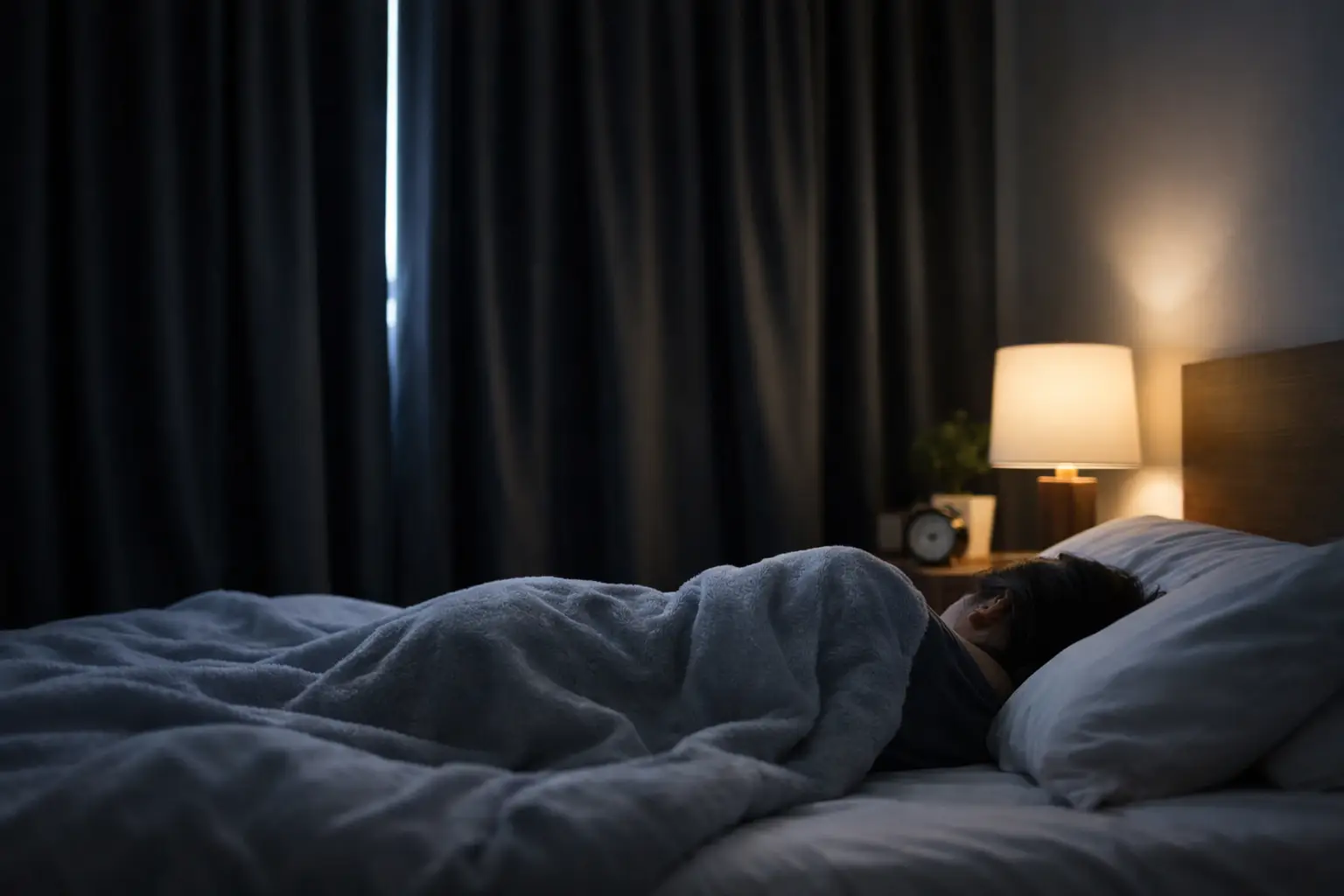
Best Blackout Curtains for Sleep That Work
A streetlamp outside the window, an early summer sunrise or the glow from a neighbour’s security light can be enough to make a bedroom feel less restful. The best blackout curtains for sleep are not necessarily the thickest or most expensive pair. They are the ones that make your room meaningfully darker once they are properly fitted.
That last part matters. Many people buy blackout curtains, put them on a narrow pole just above the window, then wonder why light still spills around every edge. The fabric matters, but the fit often matters more. A few practical choices can make a noticeable difference to a brighter bedroom without turning sleep into another complicated project.
Why bedroom darkness can help sleep
Light is one of the signals that helps regulate your body clock. Bright light in the morning helps tell the body it is time to be alert, while a darker environment in the evening supports the natural wind-down towards sleep. This does not mean your room has to be perfectly pitch black to sleep well, and it certainly does not mean curtains will fix every sleep problem.
But if outside light regularly wakes you early, makes it harder to settle, or leaves the room uncomfortably bright at bedtime, improving the window covering is a sensible place to start. It is particularly useful for shift workers trying to sleep during daylight, people living near street lighting, and anyone whose bedroom faces an early sunrise.
What makes the best blackout curtains for sleep?
A true blackout curtain uses a light-blocking layer rather than simply a dark-coloured fabric. Dark navy or charcoal curtains can still let plenty of daylight through if the material is thin. Look for curtains described as blackout lined, thermal blackout, or with a bonded blackout backing.
The best choice depends on the window, the room temperature and how much light is actually causing the problem. A bedroom that is slightly bright at dawn needs a different solution from one facing a floodlit car park.
Choose blackout lining, not just a dark colour
Blackout-lined curtains usually have a separate lining attached to the main fabric. This gives a more traditional look and can work well in bedrooms where appearance matters as much as function. They are often heavier, which helps them hang neatly and cover the window more fully.
Ready-made curtains with an integrated blackout coating can also be effective and are often simpler to wash or replace. Check that the blackout layer is on the back of the curtain and extends across the full panel. Some cheaper options are labelled “dim-out” or “room darkening”. These reduce light but may not be enough for a very bright room.
Prioritise width and overlap
The most common blackout-curtain mistake is buying panels that only just cover the glass. Curtains need to extend beyond the window frame on both sides, ideally by around 15 to 20 centimetres where space allows. This reduces the vertical strips of light that otherwise appear at the edges.
For a fuller, more effective finish, the combined curtain width should generally be around one and a half to two times the width of the pole or track. A curtain that is pulled flat can leave small gaps between folds and tends to look sparse. More fabric gives better coverage and a calmer look.
Hang the pole or track high and wide
Positioning makes a bigger difference than many people expect. Fit the pole or track above the top of the window frame, rather than directly on it, and extend it past the frame at both sides. When the curtains are open, they can then sit mostly clear of the glass. When closed, they cover the window more completely.
If your ceiling is low or the room is small, there is no need to chase perfect measurements. Even moving the pole a little higher and wider than the frame can cut the worst light leakage. In rented accommodation, a tension rod or temporary adhesive solution may be an option, though it is less likely to hold heavier curtains securely.
Consider the heading style
Eyelet curtains are easy to put up and suit a standard pole, but the large metal rings can create a line of small light gaps along the top. Pencil-pleat curtains on a track, or curtains with a concealed header, usually provide better coverage near the ceiling.
This is not a reason to avoid eyelets altogether. In many homes, the difference is minor and the convenience is worthwhile. If you are especially sensitive to light, however, a track with curtains that sit close to the wall is usually the more effective option.
Use thermal blackout curtains in colder rooms
Thermal blackout curtains can help reduce heat loss through older windows and make a bedroom feel less draughty in winter. That can support sleep if you tend to wake because the room feels cold. The trade-off is that thick curtains may also hold warmth in during a hot spell.
If your bedroom overheats in summer, focus on blocking direct evening or early-morning sun, then open the curtains once the outdoor air is cooler. Curtains cannot replace ventilation, but they can stop the room warming as quickly.
The gaps that stop blackout curtains working
Even excellent fabric cannot block light that comes around it. Before replacing a decent pair of curtains, look at the room after dark with the main light off. You will quickly see whether the issue is the material or the fitting.
Light from the sides is often reduced by using wraparound curtain poles, which curve back towards the wall. Another practical option is to add a blackout blind behind the curtains. A fitted roller blind handles much of the light at the glass, while curtains cover the edges and soften the room.
The gap at the top is harder to eliminate with a standard pole. A pelmet, curtain valance or ceiling-mounted track can help if early daylight is a serious issue. These are more involved changes, so they are usually only worth considering after trying wider, longer curtains first.
For temporary use, such as a child’s room in summer or a short-term rental, removable blackout blinds can be useful. They tend to look less polished and may not fully seal every edge, but they can make a substantial difference for little cost. Check that any temporary fitting is secure and does not create a hazard around cots, beds or window openings.
A sensible way to choose and fit them
Start by measuring the pole or track, not just the window glass. Measure the width from one end of the pole or track to the other, then choose a pair of curtains with enough combined width to gather properly. For the drop, measure from the top of the pole or track to where you want the curtains to finish.
Floor-length curtains usually block more light than sill-length ones because there is less opportunity for it to reflect up from below. They also tend to make a bedroom feel more settled. Keep them just clear of the floor if you want easier cleaning, or let them lightly rest on it if appearance is the priority.
Once fitted, test them on a bright morning rather than assuming they work from an evening glance. Sit or lie on the bed and notice where the light is coming from. A small adjustment to the pole position, curtain hooks or side overlap can achieve more than replacing the whole set.
Curtains are part of the sleep environment, not the whole answer
A darker room is useful, but sleep is still affected by caffeine late in the day, an irregular bedtime, a hot bedroom, noise and the habit of scrolling under bright light in bed. If your room is already dark but you are regularly awake for long periods, blackout curtains are unlikely to be the missing piece on their own.
It also helps not to make the bedroom so dark in the morning that getting up becomes harder. If you need to rise before daylight, use a lamp or wake-up light soon after getting out of bed. A clear dose of light early in the day can help reinforce a steadier sleep-wake rhythm.
The aim is not a showroom-perfect bedroom. It is a room that is quiet enough, dark enough and comfortable enough to stop practical annoyances getting in the way. Start with curtains that are properly blackout lined, wider than the window and fitted to cover the edges. That is a modest change, but for a room disturbed by outside light, it can make nights feel much more dependable.
Further Reading
If you enjoyed this article you might like to read these articles.
- A Practical Afternoon Slump Fix That Lasts
- The Real Guide to Daily Energy
- Morning Sunlight Benefits for Energy and Sleep
The role of wellness products

Some people explore supplements or wellness products to support their daily routines. While these can sometimes be helpful, they should be viewed as support rather than a replacement for healthy habits.
If you are interested in exploring wellness products that may support energy routines, you can browse the options available at the Wellthy Freedom Hub store.
Always read ingredient labels carefully and speak with a healthcare professional if you have medical conditions or take medication.
Disclosure: This site may link to products on wellthyfreedomhub.com. If you choose to buy, the store benefits. The guidance here is informational and not medical advice.

Richard Chambers is the founder of rrjchambers.com. He writes about practical ways to improve everyday health, energy, and wellbeing through simple routines, lifestyle habits, and carefully chosen wellness products. His focus is on clear, honest guidance that helps people make small changes that support better health over time.
Health Information Notice
The information in this article is intended for general educational purposes only and should not be considered medical advice. If you have concerns about your health, sleep, or energy levels, it is always best to consult a qualified healthcare professional.