
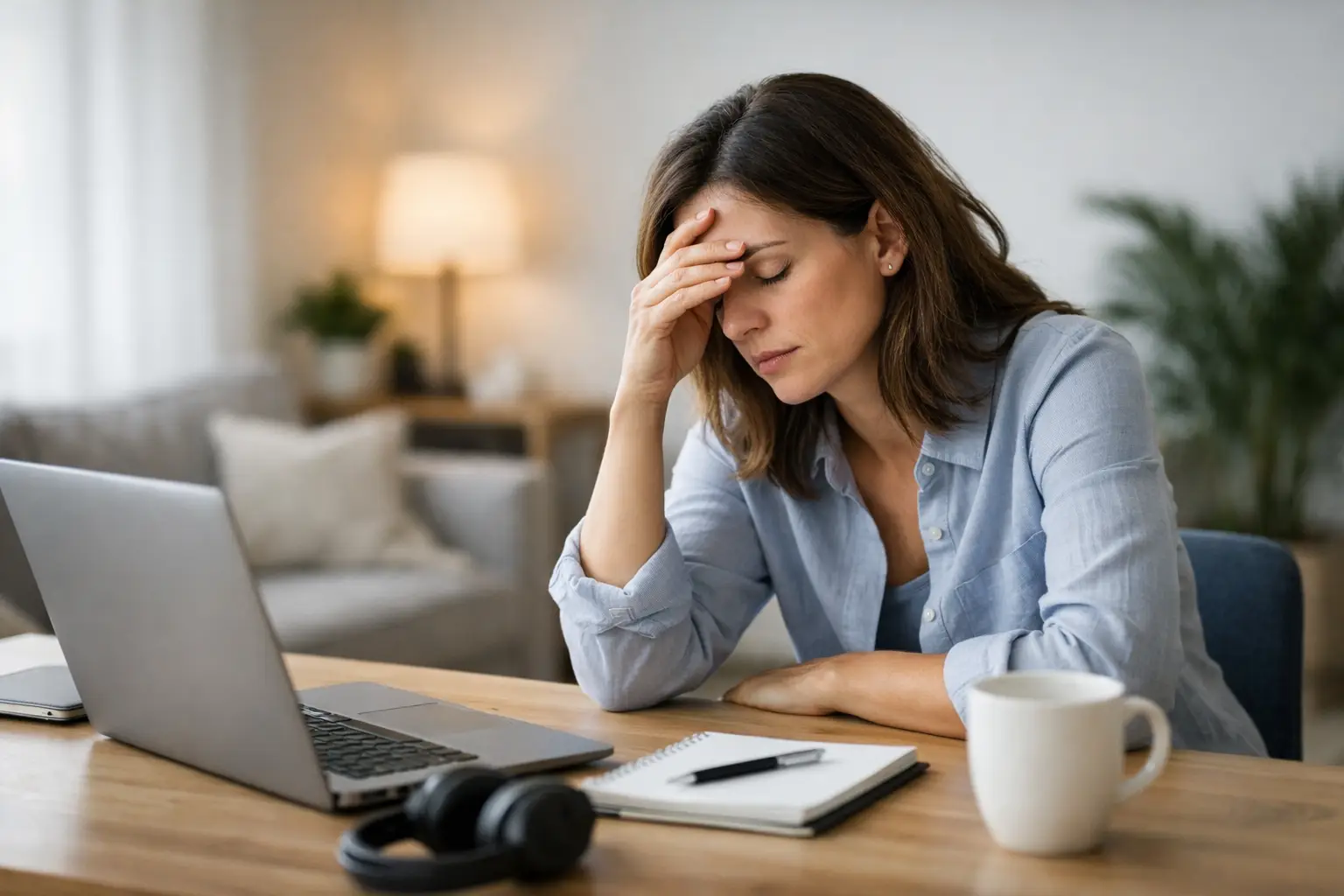
Fatigue After Working From Home Explained
By mid-afternoon, you have barely left your chair, your eyes feel grainy, and your brain seems to slow to half speed. That kind of fatigue after working from home can be confusing because, on paper, home working should feel less draining than commuting, office noise and constant interruption. In reality, many people end the day more tired at home than they ever did in a workplace.
The reason is usually not one dramatic problem. It is a stack of small energy drains that build up quietly – poor light, too little movement, blurred work-life boundaries, inconsistent meals, overuse of screens and a routine that never really starts or stops. The good news is that this kind of fatigue often improves with ordinary habit changes rather than anything extreme.
Why fatigue after working from home happens
Working from home changes the rhythm of your day in ways that are easy to miss. In an office, you tend to move without thinking about it. You walk to the station, step outside at lunch, speak to colleagues, go to meetings and break up long periods of screen time. At home, the day can become physically flat. You wake up, sit down, and keep going.
That matters because energy is not just about sleep. It is influenced by light exposure, posture, hydration, food timing, mental load and how often your body changes state. If those signals become repetitive and sluggish, your alertness often drops with them.
Home working can also make stress harder to spot. Office stress is obvious. Home-working stress is more subtle. You may be constantly reachable, half-thinking about chores, trying to focus in the same room where you relax, or carrying a sense that you should always be doing one more thing. That low-level strain can be tiring in its own right.
Your day may lack a proper start
One common cause of fatigue after working from home is the absence of a clear morning transition. Commuting is not always pleasant, but it does create separation. It wakes the brain up and marks the move from home mode to work mode.
When that disappears, some people roll straight from bed to laptop. You save time, but you also lose the signals that help your body become alert. If you are not getting daylight, movement and a consistent wake time early in the day, your energy can feel flat before work has properly begun.
Indoor light is often weaker than you think
Many home workers spend most of the day in dim rooms. Even a room that feels bright can be far less stimulating than outdoor light. Your body clock relies heavily on light exposure, especially in the morning, to regulate alertness and sleep timing.
If you work in a dark corner, keep blinds half-closed or rarely step outside, your brain may receive weak signals for daytime alertness. The result can be a foggy, sleepy feeling that lingers through the day and sometimes affects sleep later on.
You may be moving less than your body expects
Sitting still for long stretches does not just affect fitness. It can make you feel more tired in the short term. Blood flow slows, muscles stiffen and attention drifts. A home-working day can easily become eight to ten hours of low movement, especially if your kitchen, desk and sofa are only a few steps apart.
People often assume they are tired because they need more rest, when in fact they need more physical variation during the day.
Screen fatigue is real, but it is not just your eyes
Video calls, tabs, messages and constant digital task-switching create a different kind of tiredness. Your eyes work harder, your focus fragments and your brain rarely gets a genuine pause. At home, this can be worse because there are fewer natural breaks between tasks.
The problem is not technology itself. It is prolonged, uninterrupted exposure. If your workday has become one long stretch of screen-based concentration, mental fatigue is a predictable result.
Home can blur your boundaries
This is where tiredness often becomes more than physical. If your workday never feels finished, your brain stays slightly switched on. You may answer emails later, think about tasks during dinner, or sit in the same space all evening where you spent the day working.
That blurred boundary makes recovery harder. Even if you technically stop at a reasonable hour, you may not feel mentally off duty.
What helps with fatigue after working from home
The fix is usually not to redesign your life. It is to rebuild the signals that tell your body when to wake up, when to focus and when to switch off.
Start by making mornings more active
You do not need a long routine. You need a reliable one. Get up at a fairly consistent time, open the curtains straight away, and get outdoor light into your eyes within the first part of the morning if you can. Even ten minutes outside can help. Add a short walk, a few stretches or any movement that raises your sense of being awake.
This matters more than many people realise. A strong morning signal often improves both daytime alertness and sleep quality at night.
Build movement into the day on purpose
Do not rely on motivation. Use structure instead. Stand up between tasks, walk during calls when possible, and create reasons to move that are built into your schedule. A short break every hour is often more useful than one ambitious workout that never happens.
If you already exercise, that is helpful, but it does not fully cancel out a day spent sitting. The target is regular movement, not just formal exercise.
Improve your light and workspace
If possible, work near a window and keep the room well lit during the day. Natural light is best, but a brighter workspace in general can help reduce that cave-like afternoon slump. Pay attention to posture as well. Working from a sofa or kitchen stool may seem harmless, yet poor setup can create muscular strain that feels like tiredness.
You do not need a perfect home office. You need a setup that supports focus without leaving you stiff and drained.
Be more deliberate with food and hydration
Home working can make eating erratic. Some people graze all day. Others forget lunch and then reach for biscuits at 4 pm. Neither pattern is ideal for steady energy.
Aim for meals that are filling without being overly heavy, and keep hydration simple and visible. A glass of water on your desk sounds basic because it is basic, but many energy dips come from small, fixable habits rather than mystery health issues.
Caffeine also deserves an honest look. A few cups of tea or coffee are not automatically a problem, but late afternoon caffeine can quietly push sleep later, which then shows up as next-day fatigue.
When it is not just a routine problem
Sometimes fatigue after working from home is partly about work setup, but not entirely. Poor sleep, stress, anxiety, low mood, caring responsibilities and underlying health issues can all play a part. If your tiredness is persistent, worsening or out of proportion to your routine, it is worth taking seriously.
That is especially true if you also have symptoms such as breathlessness, frequent headaches, loud snoring, dizziness, unexplained weight change or fatigue that does not improve even when your habits do. Lifestyle changes can help a lot, but they are not a substitute for medical advice when something more significant may be going on.
A realistic reset for the next week
If you want a practical starting point, keep it simple for seven days. Wake at roughly the same time, get outside each morning, take brief movement breaks through the day, eat lunch away from your desk, and create a clear finish to work in the evening. That might mean closing the laptop, leaving the room, or changing clothes – any small action that tells your brain work is done.
This will not fix everything overnight. But it is often enough to show whether your fatigue is being fuelled by routine, environment and recovery rather than lack of effort or willpower.
At RRJChambers, the aim is not to turn daily energy into a full-time project. It is to help you notice the ordinary things that shape how you feel. If working from home is leaving you more tired than it should, start with the basics and make them easier to repeat. Small changes done consistently are often what bring your energy back.
Further Reading
If you enjoyed this article you might like to read these articles.
- How to avoid post lunch sleepiness
- The Real Guide to Daily Energy
- Morning Sunlight Benefits for Energy and Sleep
The role of wellness products

Some people explore supplements or wellness products to support their daily routines. While these can sometimes be helpful, they should be viewed as support rather than a replacement for healthy habits.
If you are interested in exploring wellness products that may support energy routines, you can browse the options available at the Wellthy Freedom Hub store.
Always read ingredient labels carefully and speak with a healthcare professional if you have medical conditions or take medication.
Disclosure: This site may link to products on wellthyfreedomhub.com. If you choose to buy, the store benefits. The guidance here is informational and not medical advice.

Richard Chambers is the founder of rrjchambers.com. He writes about practical ways to improve everyday health, energy, and wellbeing through simple routines, lifestyle habits, and carefully chosen wellness products. His focus is on clear, honest guidance that helps people make small changes that support better health over time.
Health Information Notice
The information in this article is intended for general educational purposes only and should not be considered medical advice. If you have concerns about your health, sleep, or energy levels, it is always best to consult a qualified healthcare professional.