
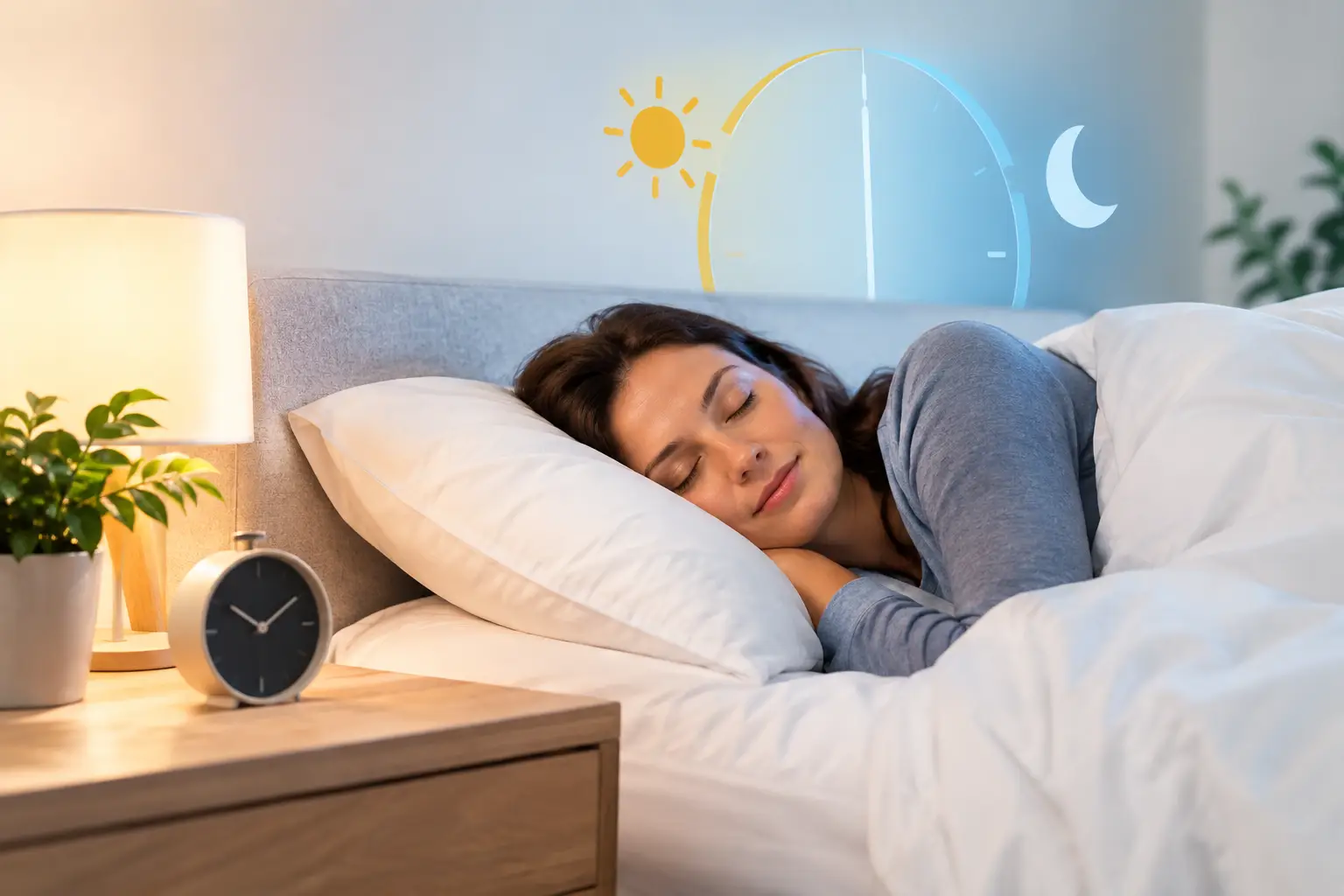
Your Guide to Sleep Chronotypes and Better Rest
You can get eight hours of sleep and still feel as though your brain has not joined you by 9am. For some people, that is down to poor sleep quality, stress or an irregular routine. For others, it is partly about timing. This guide to sleep chronotypes explains why certain hours may feel more natural to you, and how to work with that information without turning your life upside down.
A chronotype is your natural tendency to feel alert and sleepy at particular times. It is linked to your body clock, the internal system that helps regulate sleep, hormones, temperature and daytime alertness. It is not an excuse for every late night, nor a fixed label that determines your life. Think of it as a useful pattern to notice.
What sleep chronotypes actually mean
The familiar labels are lark, owl and somewhere in between. Early chronotypes tend to wake and think clearly earlier in the day, then feel sleepy earlier in the evening. Late chronotypes often take longer to get going, feel more mentally switched on later in the day and naturally prefer a later bedtime. Many people sit in the middle.
You may also see animal-based chronotypes online, usually described as lion, bear, wolf and dolphin. These can be memorable, but they are not a medical diagnosis and should not be treated as precise science. The most useful question is simpler: when do you feel naturally sleepy, and when do you feel properly alert when life is not forcing a schedule on you?
Chronotype is influenced by age, genetics, light exposure and routine. Teenagers and younger adults often shift later. Many people become earlier as they get older. Shift work, childcare, commuting and evening screen use can all pull your actual routine away from your preferred timing.
Why your chronotype can affect daily energy
Your body clock responds strongly to light and regular timing. If you regularly wake much earlier than your natural rhythm prefers, you may be trying to work, drive or make decisions during a biological low point. That can feel like laziness, poor discipline or a lack of motivation. Often, it is simply sleepiness.
The same applies at the other end of the day. An early type who has to stay up late for work or family commitments may become irritable, snack more than usual and struggle to focus after dinner. Neither person needs a complicated solution. They need to reduce the gap between their body clock and their real life where possible.
This mismatch is sometimes called social jet lag. It often shows up when someone sleeps far later at weekends, then has to return to an early alarm on Monday. The result can be a familiar cycle: a slow start to the week, reliance on caffeine, poor sleep on Sunday night and another tired Monday.
Chronotype is only one part of the picture. Waking unrefreshed can also be linked to insufficient sleep, alcohol, anxiety, pain, a noisy bedroom, sleep apnoea, medication or low mood. If tiredness is persistent, severe, or accompanied by loud snoring, breathing pauses, morning headaches or sleepiness while driving, speak with your GP rather than assuming your chronotype is the cause.
A practical guide to sleep chronotypes
The aim is not to force yourself into becoming a morning person. It is to create a routine that gives your body clearer signals and makes your most demanding hours more manageable.
First, find your likely pattern
For two weeks, make a brief note of when you go to bed, when you fall asleep, when you wake, and when your energy is best and worst. Include workdays and days off. Do not judge the results yet. You are looking for a pattern, not a perfect record.
Pay particular attention to days when you have no alarm. If you naturally fall asleep around midnight and wake around 8am after a few settled days, that tells you more than one exhausted lie-in after a busy week. Also notice whether your alertness improves sharply at a certain time. A late chronotype may not feel at their best until mid-morning, while an early chronotype may do their clearest work before breakfast.
Keep your wake-up time reasonably steady
A consistent wake-up time is usually more helpful than chasing a perfect bedtime. It gives the body clock a dependable morning anchor. Aim to keep it within about an hour on most days, including weekends where possible.
That does not mean never having a lie-in. A later morning after illness, a poor night or a special occasion is normal. The problem is the regular two- or three-hour shift that leaves Sunday evening feeling like a time-zone change. If you need extra sleep, an earlier night is often kinder to your rhythm than a very late wake-up.
Use morning light properly
Daylight is one of the clearest signals your body clock receives. Get outside soon after waking, ideally for 10 to 20 minutes. A walk to the station, a few minutes in the garden or a lap around the block is enough to be useful. Grey British mornings still provide far more outdoor light than a typical indoor room.
For later chronotypes trying to shift earlier, morning light matters especially. Pair it with a regular wake-up time and move your bedtime earlier gradually, perhaps by 15 minutes every few nights. Trying to move it by two hours in one go usually produces frustration rather than better sleep.
Put demanding tasks in your better hours
You may not control your work schedule, but you can often control parts of it. If your clearest period is 9am to midday, protect that time for focused tasks rather than email and meetings. If you come alive later, use the first part of the morning for routine work, planning or lower-stakes admin where you can.
Parents, carers and shift workers have less room to manoeuvre, so the goal becomes harm reduction. Prepare what you can the night before, reduce avoidable early decisions and use light, food and movement to create a clearer start to the day. Small adjustments count when the schedule itself cannot change.
Be careful with the things that delay sleep
Late chronotypes are often told to simply go to bed earlier. But lying awake in the dark is not a useful routine. Make the evening less stimulating first: lower bright overhead lighting, keep work out of bed, and avoid scrolling that turns ten minutes into an hour.
Caffeine deserves a realistic look too. A coffee at 3pm may be fine for one person and disruptive for another. If falling asleep is difficult, try moving your last caffeinated drink earlier for a week and see what changes. Alcohol can make you feel sleepy initially but commonly fragments sleep later in the night.
When your schedule and chronotype clash
Most adults cannot arrange life entirely around natural preference. The school run is still early. Meetings still happen. Some jobs start before sunrise. The useful approach is to choose the highest-impact adjustment rather than attempting a complete lifestyle overhaul.
If you are naturally late but need to start early, prioritise a steady wake time, outdoor light in the morning and a gradual earlier wind-down. Avoid making up for weekday tiredness with a dramatically later weekend. If you are naturally early but regularly need to stay up late, protect a calm pre-bed routine and accept that some evening commitments may cost you more energy than they cost other people.
It also helps to separate preference from sleep debt. Someone who sleeps five or six hours a night may describe themselves as an owl simply because they cannot get up easily. Most adults need roughly seven to nine hours, although the right amount varies. Before deciding your chronotype is the problem, give yourself a fair chance to get enough sleep on a regular schedule.
A calmer way to use this information
Chronotypes are useful when they encourage self-awareness, not when they become another wellness rule to fail at. You do not need an app, a special lamp or a rigid productivity system to begin. Notice your natural pattern, protect a consistent wake-up time, get daylight early and make evenings less likely to drift.
Better sleep rarely comes from one dramatic change. It comes from reducing the everyday friction between your body clock and your routine, one ordinary morning and evening at a time.
Further Reading
If you enjoyed this article you might like to read these articles.
- 9 Best Drinks for Steady Energy
- The Real Guide to Daily Energy
- Morning Sunlight Benefits for Energy and Sleep
The role of wellness products

Some people explore supplements or wellness products to support their daily routines. While these can sometimes be helpful, they should be viewed as support rather than a replacement for healthy habits.
If you are interested in exploring wellness products that may support energy routines, you can browse the options available at the Wellthy Freedom Hub store.
Always read ingredient labels carefully and speak with a healthcare professional if you have medical conditions or take medication.
Disclosure: This site may link to products on wellthyfreedomhub.com. If you choose to buy, the store benefits. The guidance here is informational and not medical advice.

Richard Chambers is the founder of rrjchambers.com. He writes about practical ways to improve everyday health, energy, and wellbeing through simple routines, lifestyle habits, and carefully chosen wellness products. His focus is on clear, honest guidance that helps people make small changes that support better health over time.
Health Information Notice
The information in this article is intended for general educational purposes only and should not be considered medical advice. If you have concerns about your health, sleep, or energy levels, it is always best to consult a qualified healthcare professional.