
Light Therapy Box vs Sunrise Alarm: Which Helps?
A dark January morning can make a normal alarm feel needlessly harsh. If you are weighing up a light therapy box vs sunrise alarm, the useful question is not which gadget is more impressive. It is which problem you are actually trying to solve: sluggish daytime energy, difficulty waking, or a sleep pattern that has drifted later than you would like.
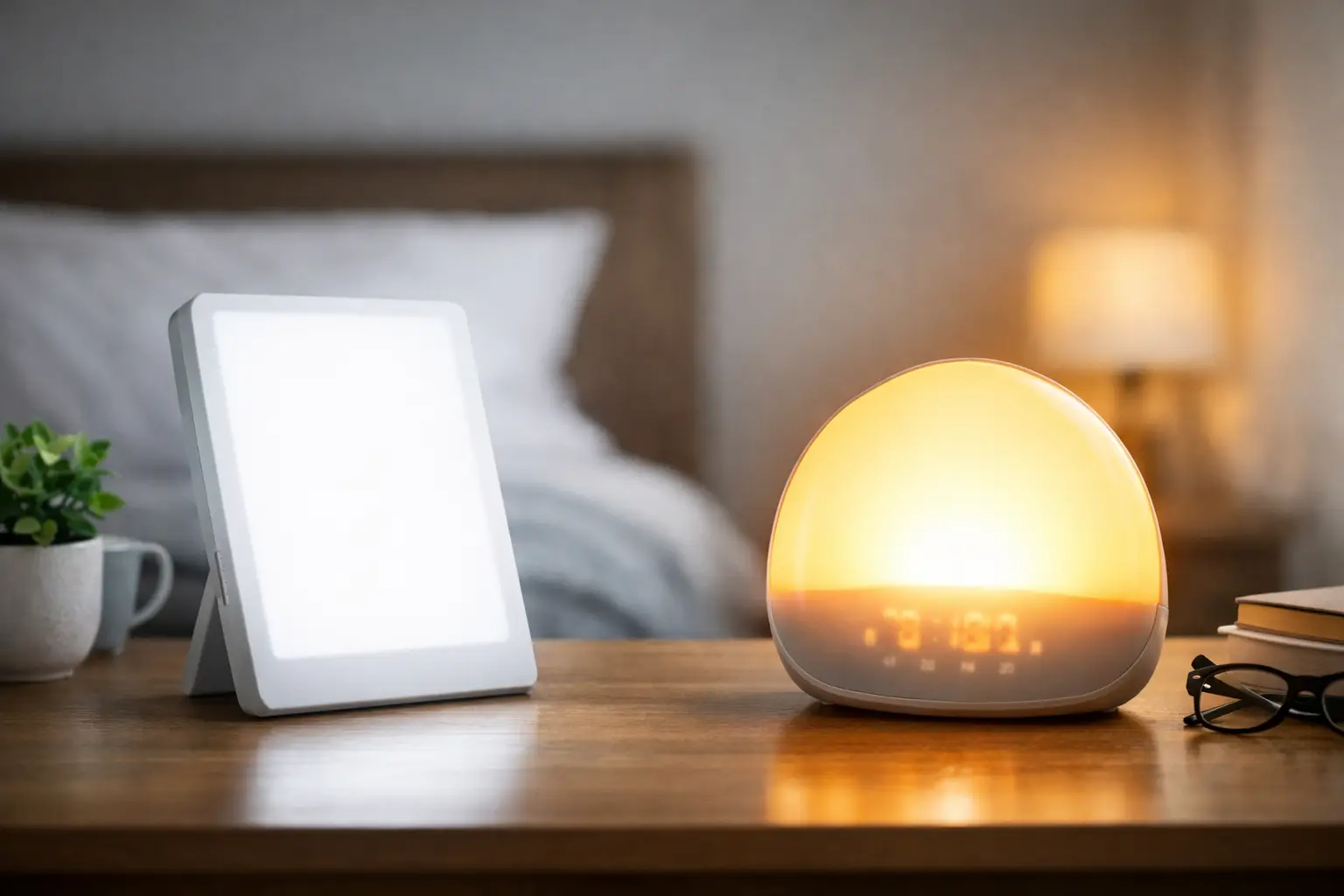
Both tools use light to support your body clock, but they do different jobs. A light therapy box is designed to give you a concentrated dose of bright light while you are awake. A sunrise alarm gradually brightens your bedroom before your chosen wake-up time. One may be a better fit than the other, and neither will make up for consistently short sleep, a late-night scrolling habit or an untreated health issue.
What a light therapy box is for
A light therapy box, sometimes called a SAD lamp, produces bright light intended to mimic the effect of daylight. It is most often used in the morning, particularly during autumn and winter when UK daylight is limited.
The main aim is to give your brain a clear signal that the day has started. Morning light helps regulate circadian rhythm, the internal timing system that influences alertness, sleepiness, hormone release and body temperature. For some people, regular bright morning light can make it easier to feel awake earlier and can support mood through the darker months.
A proper light therapy box is usually rated at 10,000 lux at a stated distance. Lux is a measure of light reaching a surface. That figure matters because ordinary indoor lighting is much dimmer, even when a room looks well lit. You do not need to stare into the lamp. Place it at the recommended distance and angle while eating breakfast, reading the news or starting work.
The timing is just as important as the lamp itself. For most people, using bright light early in the day is the sensible starting point. Using it late afternoon or evening may delay sleep further, which is the opposite of what you want if mornings are already a struggle.
When it may be the better choice
A light box tends to suit people whose main complaint is daytime heaviness rather than the act of waking up. Perhaps you get out of bed but feel foggy until lunch. Perhaps home working means you see little natural daylight before mid-morning. Or perhaps darker months reliably affect your motivation and mood.
It also gives you a consistent routine. Ten to 30 minutes of morning light, used most days, can create a clear boundary between night and day. That is useful if your working pattern has become blurred, especially when your desk is a few steps from your bed.
There is a trade-off: it requires you to sit near it once you are awake. If you already rush to get children ready, commute early or repeatedly forget new habits, a light box may end up in a cupboard after the first enthusiastic week.
What a sunrise alarm is for
A sunrise alarm slowly increases light in your bedroom over a set period, often 20 to 60 minutes, before the audible alarm sounds. The idea is simple: waking to gradually increasing light may feel gentler than being pulled from sleep by a loud noise in a dark room.
For people who find winter mornings particularly difficult, this can make getting out of bed feel less abrupt. The light begins working before you need to make a decision, which is one reason sunrise alarms are practical. You set it once, then let it become part of the bedroom routine.
Most sunrise alarms are not bright enough to replace a 10,000-lux light therapy box. Their purpose is not usually to deliver a clinical-style light dose. They are primarily a wake-up aid and a cue for a more regular morning rhythm.
When it may be the better choice
Choose a sunrise alarm if the hardest part of your day is the first five minutes. You may sleep reasonably well but hit snooze several times, wake feeling disorientated, or dread getting up when it is still pitch black outside.
It can also be a good low-effort option for parents, shift workers with a predictable wake time, and anyone who wants a calmer bedroom environment. Many models include a sunset setting that dims gradually at night. This can be pleasant, but do not mistake it for a cure for insomnia. A regular bedtime, a dark room and less bright phone light in the hour before bed will still do more of the heavy lifting.
The limitation is obvious: if you wake before the light begins, sleep through it, or keep changing your wake-up time at weekends, the effect may be modest. It is also less useful for an afternoon energy slump, because it is designed to stay in the bedroom.
Light therapy box vs sunrise alarm: the practical differences
The simplest distinction is that a light therapy box is for deliberate daytime light exposure, while a sunrise alarm is for an easier transition out of sleep.
A light box is generally the stronger option when seasonal low mood, morning grogginess and limited daylight are affecting your day. It gives a brighter, more targeted exposure, but asks for a little more commitment. A sunrise alarm is more about making a fixed wake-up time feel manageable. It is convenient, gentle and easier to automate, but its light output is usually lower.
You do not necessarily need both. Start with the tool that addresses the biggest friction point. If you cannot get yourself out of bed, begin with a sunrise alarm and a consistent wake time. If you are already up but feel drained indoors all morning, a light therapy box may be more useful.
Using both can make sense during winter if your budget allows: the sunrise alarm helps you wake, then the light box supports alertness while you have breakfast. But keep the rest of the routine simple. Open the curtains, get outside for even a short walk when daylight arrives, eat regularly, and avoid turning a helpful tool into another complicated wellness project.
How to use either tool without disrupting sleep
Consistency beats intensity. With a light therapy box, follow the manufacturer’s instructions on distance and duration, and use it early enough that it does not interfere with your bedtime. Start with a shorter session if you are unsure how you respond.
With a sunrise alarm, set the light to begin around 30 minutes before you need to wake. Keep your actual wake-up time reasonably stable across the week. A lie-in now and then is normal, but regularly shifting by several hours makes Monday mornings harder because your body clock has to readjust.
Your wider light environment matters too. Get daylight outdoors where possible, especially in the morning. Keep your home brighter during the day, then lower lighting in the evening. This contrast helps your brain distinguish active hours from winding-down time far better than a single device can.
Safety and sensible expectations
Light therapy is generally straightforward, but it is not suitable for everyone without advice. Speak to your GP, optician or relevant clinician before using a light therapy box if you have an eye condition, take medication that increases light sensitivity, or have bipolar disorder. Bright-light treatment can affect mood and sleep timing, so it deserves a little care rather than guesswork.
Stop and reassess if you develop headaches, eye strain, agitation or trouble sleeping. These issues can sometimes be improved by reducing the duration, moving the light farther away or using it earlier, but persistent symptoms are worth discussing with a professional.
Also be honest about persistent fatigue. If tiredness lasts for weeks despite adequate sleep, or comes with breathlessness, unexplained weight change, low mood, loud snoring or waking gasping, do not assume a lamp is the answer. Common causes such as sleep apnoea, iron deficiency, thyroid problems and depression need proper assessment.
A brighter morning can be a useful nudge, not a miracle cure. Pick the option that makes your next ordinary morning easier, use it consistently for a few weeks, and pay attention to whether your sleep, mood and energy actually change.
Further Reading
If you enjoyed this article you might like to read these articles.
- How to avoid post lunch sleepiness
- The Real Guide to Daily Energy
- How to Improve Sleep Quality Naturally
The role of wellness products

Some people explore supplements or wellness products to support their daily routines. While these can sometimes be helpful, they should be viewed as support rather than a replacement for healthy habits.
If you are interested in exploring wellness products that may support energy routines, you can browse the options available at the Wellthy Freedom Hub store.
Always read ingredient labels carefully and speak with a healthcare professional if you have medical conditions or take medication.
Disclosure: This site may link to products on wellthyfreedomhub.com. If you choose to buy, the store benefits. The guidance here is informational and not medical advice.

Richard Chambers is the founder of rrjchambers.com. He writes about practical ways to improve everyday health, energy, and wellbeing through simple routines, lifestyle habits, and carefully chosen wellness products. His focus is on clear, honest guidance that helps people make small changes that support better health over time.
Health Information Notice
The information in this article is intended for general educational purposes only and should not be considered medical advice. If you have concerns about your health, sleep, or energy levels, it is always best to consult a qualified healthcare professional.