
Walking Pad vs Desk Bike: Which Suits Work?
A walking pad and a desk bike can both make a home-working day less sedentary, but they suit very different kinds of work. In the walking pad vs desk bike decision, the better choice is rarely the machine with the biggest claims. It is the one you can use comfortably, often, without making your work harder or leaving you too wired late in the day.
For most people, this is not about replacing proper exercise. It is about breaking up long spells of sitting, particularly in the hours when concentration fades and the temptation to reach for another coffee appears. Small amounts of movement can help you feel less stiff and more awake. The key is choosing a setup that fits your work, your space and your routine.
Walking pad vs desk bike: the main difference
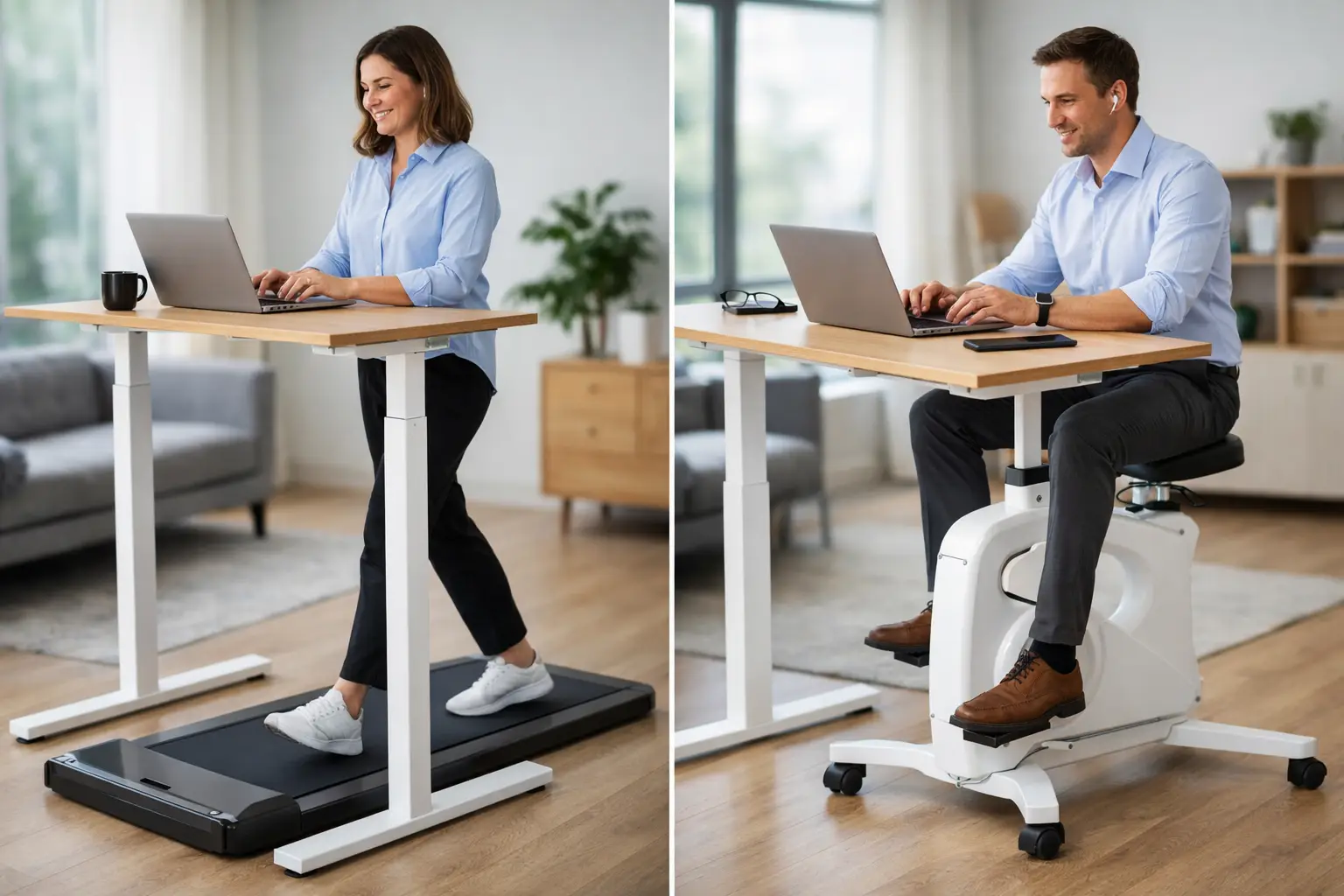
A walking pad lets you walk slowly while standing at a desk. Most people use one at a gentle pace, often around 1 to 3 kilometres per hour, while answering emails, attending calls or completing straightforward admin. It changes your posture more dramatically than sitting, engages more of the body and can make an otherwise inactive afternoon feel more purposeful.
A desk bike, sometimes called an under-desk cycle, allows you to pedal while seated. It may be a compact pedal unit under an existing chair or a bike designed to work with a desk. Because your upper body stays relatively still, it is usually easier to use while typing, reading or concentrating on detailed tasks.
Neither option is automatically better for health. The useful comparison is between the type of movement each makes realistic. A walking pad encourages more weight-bearing movement. A desk bike offers lower-impact activity with less disruption to desk work. What you will actually use several times a week matters more than the theoretical calorie figure on a product page.
Choose a walking pad if you need a stronger break from sitting
A walking pad is often the better fit if you spend much of the day in video calls, phone calls or routine tasks that do not require precise mouse work. Walking slowly can make a long call feel less draining, and standing may reduce the stiffness that builds across the hips, back and legs after hours in a chair.
It can also create a helpful boundary between tasks. Rather than moving directly from a meeting to another hour of sitting, you might walk for 20 minutes while clearing your inbox. This is a practical way to add movement without needing to find a separate workout slot.
There are trade-offs. Walking while working takes practice, and some tasks will feel awkward at first. Detailed spreadsheets, careful writing, design work and anything requiring fine control are usually better done standing still or sitting down. Your desk must also be stable and high enough for good posture. Hunching over a laptop balanced on a kitchen worktop is not a sensible long-term arrangement.
Noise is another consideration in a British home. Even quieter walking pads produce some motor and footfall sound, which may carry through a flat or disturb someone working nearby. They also need more floor space than many people expect. Measure the area where you intend to use and store it, including enough room to step on and off safely.
A walking pad may be less suitable if you have balance problems, joint pain that worsens with walking, or a condition that affects your mobility. If you are unsure whether it is appropriate, speak with a GP, physiotherapist or other qualified clinician before starting.
How to use a walking pad without losing focus
Start slower than you think you need to. The point is not to create a workout during a Teams call. A pace that lets you speak comfortably and think clearly is enough. Begin with ten or fifteen minutes once or twice a day, then build from there if it feels natural.
Save walking time for low-stakes work: listening to meetings, calls with friends or colleagues, reading simple documents, planning the day and routine inbox tasks. Keep a chair available. Being able to sit down as soon as the task changes makes the habit far more sustainable.
Choose a desk bike if you need movement with less fuss
A desk bike is often the more realistic option for people who do computer-based work for most of the day. You can pedal gently while seated, which tends to interfere less with typing and screen work. It is particularly useful in smaller homes, shared offices and situations where you cannot set up a standing desk.
For someone who feels a slump around 3 pm, light pedalling can provide a modest change of pace without turning the working day upside down. It may also be appealing if standing for long periods leaves your feet or lower back tired. The low-impact motion is generally easier on the joints than walking, though comfort still depends on your individual needs and the bike’s fit.
The limitation is that a desk bike does not fully address the effects of sitting in one position. You are moving your legs, which is worthwhile, but you are still seated. It is best seen as one tool in a wider routine that includes standing up, walking around the house and taking proper breaks from the screen.
Cheap pedal exercisers can slide across hard floors, knock against desk supports or cause your knees to hit the underside of the desk. Before buying, check the clearance between your chair and desk, the unit’s dimensions and whether it needs a non-slip mat. A quiet, stable bike that is easy to get on and off will be used more than a complicated setup with high resistance settings.
How to make a desk bike useful
Keep resistance light enough that you can work normally. If your shoulders tense, your chair rolls backwards or you start bouncing in the seat, the setup needs adjusting. Good posture still matters: feet should move freely, your chair should be stable, and your screen should remain at a comfortable height.
Instead of pedalling continuously for eight hours, use short blocks. Ten minutes after lunch, fifteen minutes during a routine meeting and another spell in the late afternoon may feel more comfortable than one long session. This approach also helps you notice whether pedalling improves alertness or simply becomes background noise.
What matters more than calories burned
It is easy to get drawn into estimates of steps, distance or calories. These figures vary widely depending on body size, pace, resistance and the device itself. They can be mildly motivating, but they should not be the reason to buy either machine.
The more valuable question is whether the equipment helps you spend less time completely still. Public health guidance generally encourages adults to be active regularly and to reduce prolonged sedentary time. A walking pad or desk bike can support that aim, but neither removes the need for normal movement outside work, such as a brisk walk, household tasks or exercise you genuinely enjoy.
Pay attention to how movement affects your energy and sleep. Gentle activity during the day helps some people feel more settled by evening. But intense late-evening exercise can be stimulating for others. A desk setup is usually light enough not to cause a problem, yet there is no need to force a session close to bedtime if you notice it leaves you restless.
A practical way to decide
Choose a walking pad if you have enough space, can adjust your desk properly and have regular stretches of call-based or simple work. It is the stronger choice when your main aim is to stand and walk more during the day.
Choose a desk bike if you need something quieter, smaller and easier to combine with focused computer work. It is usually the lower-friction option for people in flats, shared spaces or roles that require frequent typing.
If budget allows, some people benefit from both, used differently: a desk bike for concentrated tasks and a walking pad for calls. But you do not need two machines to improve a sedentary routine. A timer, a pair of comfortable shoes and a ten-minute walk outside can still do a great deal.
The best equipment is not the one that promises the fastest transformation. It is the one that makes an ordinary Tuesday feel a little less static, without adding another demanding rule to your life.
Further Reading
If you enjoyed this article you might like to read these articles.
- Morning Light Exposure Guide for Better Energy
- The Real Guide to Daily Energy
- Morning Sunlight Benefits for Energy and Sleep
The role of wellness products

Some people explore supplements or wellness products to support their daily routines. While these can sometimes be helpful, they should be viewed as support rather than a replacement for healthy habits.
If you are interested in exploring wellness products that may support energy routines, you can browse the options available at the Wellthy Freedom Hub store.
Always read ingredient labels carefully and speak with a healthcare professional if you have medical conditions or take medication.
Disclosure: This site may link to products on wellthyfreedomhub.com. If you choose to buy, the store benefits. The guidance here is informational and not medical advice.

Richard Chambers is the founder of rrjchambers.com. He writes about practical ways to improve everyday health, energy, and wellbeing through simple routines, lifestyle habits, and carefully chosen wellness products. His focus is on clear, honest guidance that helps people make small changes that support better health over time.
Health Information Notice
The information in this article is intended for general educational purposes only and should not be considered medical advice. If you have concerns about your health, sleep, or energy levels, it is always best to consult a qualified healthcare professional.