
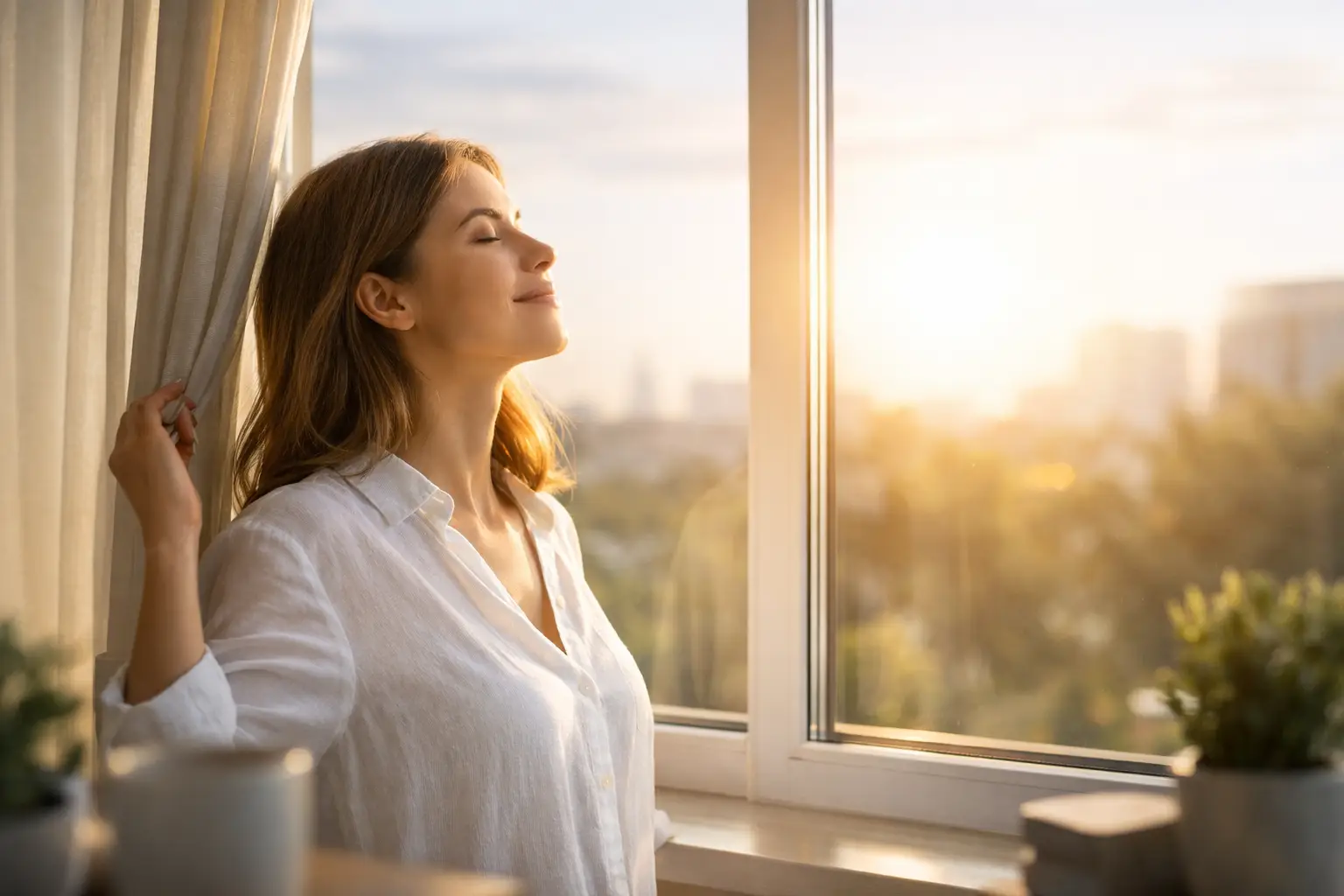
Morning Light Exposure Guide for Better Energy
If you wake up feeling foggy, then spend half the morning trying to feel like yourself, light may be part of the problem. This morning light exposure guide is built for ordinary routines, not perfect ones. You do not need a complicated wellness plan. You need to understand how morning light affects your body clock and how to use it well.
For many people, tiredness is not only about getting to bed earlier. It is also about giving the brain a clear signal that daytime has started. Morning light helps set that signal. When you get enough natural light soon after waking, it supports alertness in the morning and can make it easier to feel sleepy at the right time later on.
Why morning light matters more than most people realise
Your body runs on a circadian rhythm – a roughly 24-hour internal timing system that influences sleep, energy, appetite, mood and body temperature. Light is one of the strongest cues that keeps this rhythm on track. In simple terms, bright light in the morning tells your brain, this is daytime, be awake now.
That matters because modern life often sends the opposite message. Many of us wake in dim bedrooms, look at a mobile phone, switch on a few indoor lights and start work under lighting that is far weaker than outdoor daylight. Even on an overcast British morning, natural outdoor light is usually much brighter than indoor light.
When morning light is missing or delayed, your body clock can drift later. You may feel slow to get going, less alert early in the day, then oddly more awake late at night. That pattern is common in people who say they are tired all day but still struggle to switch off before bed.
A practical morning light exposure guide
The simplest version is this: get outside for natural light within the first hour of waking, and do it consistently. That is the basic habit. Everything else is adjustment.
For most people, 10 to 30 minutes outdoors is a sensible target. If the sky is bright, 10 minutes may be enough to have a useful effect. If it is cloudy, wintery or still quite dim, aim longer. In the UK, where mornings are not exactly famous for blazing sunlight for much of the year, consistency matters more than chasing ideal conditions.
You do not need to stare at the sun, and you should not. You simply need daylight reaching your eyes indirectly while you are outside. A short walk, standing in the garden, walking the dog, waiting for a train, or taking your coffee outside all count.
The timing matters too. Early morning light tends to have the strongest effect on shifting the body clock earlier, which is helpful if you feel groggy on waking or too alert late at night. If your routine means you cannot get out immediately, do it as early as you realistically can.
How to fit morning light into a normal UK routine
This is where good advice either becomes useful or gets ignored. If a habit only works on quiet mornings in June, it is not much use.
If you commute, getting off the bus one stop early or walking part of the route can do the job. If you work from home, step outside before opening your laptop. If mornings are chaotic because you have children to sort out, tie light exposure to a task you already do, such as the school run, taking bins out, or a quick walk round the block before everyone is fully settled.
Even five to ten minutes is worth doing when time is tight. It is not pointless just because it is not perfect. A shorter daily habit often works better than a longer one you only manage twice a week.
If mobility, safety, weather or work schedules make outdoor light difficult, sit by the brightest window you have while getting ready, then try to get outside as soon as practical. Window light is usually less effective than being outdoors because glass reduces light intensity, but it is still better than sitting in a dim room scrolling your mobile phone.
What results to expect, and when
Some effects are fairly immediate. You may feel more awake and mentally clearer after getting outside in the morning, especially if your usual start to the day is indoors under artificial light.
The bigger benefit usually comes from repetition. Over days and weeks, consistent morning light can help stabilise sleep timing. People often notice it becomes easier to wake up, easier to feel properly alert by mid-morning, and easier to feel sleepy at a more reasonable hour at night.
That said, it depends on the wider picture. If you are sleeping five hours a night, drinking too much caffeine late in the day, or spending evenings under bright light until midnight, morning light will help, but it will not compensate for everything. It is a powerful basic habit, not a magic fix.
Common mistakes that make morning light less effective
One common mistake is waiting too long. If your first real daylight exposure happens at lunchtime, you are missing the strongest timing cue. Another is relying on indoor lighting and assuming it does the same job. Even bright homes and offices usually do not match the light levels outdoors.
A third mistake is being too all-or-nothing. People often think, it is raining, it is grey, it is winter, so there is no point. There is. Outdoor daylight on a dull morning is still outdoor daylight.
The other issue is inconsistency. Doing 30 minutes once or twice a week is less useful than 10 to 15 minutes most mornings. Your body clock responds best to repeated signals.
Morning light, sleep and evening habits
A good morning light exposure guide should also be honest about trade-offs. Morning light helps set the rhythm, but evening behaviour can still push against it.
If you want the full benefit, it helps to keep evenings a bit calmer and dimmer. That does not mean living by candlelight. It means avoiding very bright light late at night where possible, especially if you already struggle to fall asleep. It also helps to keep wake-up time reasonably steady, including weekends, though not everyone can manage that perfectly.
Think of it as bookends. Brighten the morning, soften the evening. That combination gives your body clearer signals about when to be alert and when to wind down.
What about winter, dark mornings and shift work?
Winter is the obvious challenge in the UK. In darker months, you may wake before sunrise, and some people leave for work in near darkness too. In that case, get outdoor light as soon as daylight is available, even if it is later than ideal. A mid-morning walk break is still useful.
On very dark schedules, some people consider using a light box. That can help in certain cases, particularly where natural light access is limited, but it is not the first step for most readers. Start with actual outdoor light and a more consistent morning routine before spending money on equipment.
Shift work is more complicated. If your wake time changes constantly, your body clock takes more of a hit, and standard advice does not always fit. Even then, the principle remains the same: get bright light soon after your main wake-up time when you want to feel alert, and be more careful with light exposure when you are trying to sleep. If fatigue is severe or persistent, that is a separate issue worth discussing with a GP.
A realistic way to start this week
Do not overcomplicate it. For the next seven days, aim to get outside within an hour of waking for at least 10 minutes. Walk if you can. If not, stand or sit outside with a hot drink. Keep your mobile phone in your pocket if possible and let the light do its job.
If that goes well, extend it to 15 or 20 minutes on most days. Pair it with another useful habit if you like, such as a short walk, hydration or simply getting some fresh air before work. RRJChambers is built around habits exactly like this – low effort, repeatable, and more effective than they first appear.
You do not need to turn your life upside down to feel better in the morning. Often, the smarter move is simpler: step outside, get some light, and give your body a clearer start to the day.
Further Reading
If you enjoyed this article you might like to read these articles.
- How to avoid post lunch sleepiness
- The Real Guide to Daily Energy
- How to Improve Sleep Quality Naturally
The role of wellness products

Some people explore supplements or wellness products to support their daily routines. While these can sometimes be helpful, they should be viewed as support rather than a replacement for healthy habits.
If you are interested in exploring wellness products that may support energy routines, you can browse the options available at the Wellthy Freedom Hub store.
Always read ingredient labels carefully and speak with a healthcare professional if you have medical conditions or take medication.
Disclosure: This site may link to products on wellthyfreedomhub.com. If you choose to buy, the store benefits. The guidance here is informational and not medical advice.

Richard Chambers is the founder of rrjchambers.com. He writes about practical ways to improve everyday health, energy, and wellbeing through simple routines, lifestyle habits, and carefully chosen wellness products. His focus is on clear, honest guidance that helps people make small changes that support better health over time.
Health Information Notice
The information in this article is intended for general educational purposes only and should not be considered medical advice. If you have concerns about your health, sleep, or energy levels, it is always best to consult a qualified healthcare professional.