
A Practical Guide to Home Lighting Wellness
The light above your kitchen table at 8pm may be doing more to keep you awake than the cup of tea you have just made. Equally, a dim home office on a grey morning can leave you feeling as though the day has barely started. This guide to home lighting wellness is about making ordinary changes to the light around you, so your body has clearer signals for alertness during the day and rest at night.
Lighting will not fix persistent exhaustion caused by illness, stress, poor sleep habits or caring responsibilities. But it is one of the easier parts of your home routine to improve. You do not need specialist equipment, coloured glasses or a complicated smart-home system. Start by using brighter, cooler-feeling light when you need to be awake, and softer, warmer light when you need to slow down.
Why home lighting affects energy and sleep
Your body uses light to help set its internal clock, often called your circadian rhythm. Bright light, especially in the morning and daytime, helps reinforce the message that it is time to be alert. As daylight fades, lower light levels support the gradual release of melatonin, the hormone involved in sleepiness.
Modern homes can blur those messages. Many people get little natural light before work, spend the day under weak indoor lighting, then sit in a brightly lit living room close to bedtime. It is not a personal failure or a reason to panic about every lamp. It is simply a pattern worth adjusting when you regularly feel flat in the morning or wired late at night.
The goal is not perfect lighting. The goal is a more obvious difference between day and evening.
Start with daylight, not new bulbs
Before buying anything, look at how much daylight you actually see. Outdoor light is usually far brighter than indoor lighting, even on an overcast British day. A short walk after waking, walking part of the school run, or standing outside with your first drink can give your brain a useful daytime cue.
If leaving the house is not practical, sit near the brightest window available soon after waking. Open curtains fully rather than relying on a narrow gap, and avoid beginning the day in a dark room lit only by a small lamp. For home workers, placing your desk sideways to a window often reduces screen glare while still giving you useful daylight.
This is also one area where consistency helps more than intensity. Ten to twenty minutes of morning daylight on most days is more realistic, and usually more useful, than a long walk once a week. During darker months, make the most of the outdoor light you can get around lunchtime as well.
A practical guide to home lighting wellness by room
Different rooms serve different purposes, so they should not all feel the same. One harsh ceiling light for every task is convenient, but it rarely supports comfort, concentration and winding down equally well.
Home office or work area
Your work area needs enough light to read comfortably and stay engaged. If the room feels gloomy, use a desk lamp or floor lamp to add light near the task rather than making the whole room glaringly bright. Aim the light at your desk, wall or nearby surface, not directly into your eyes.
For daytime work, a neutral to cool white bulb can feel more alerting than a very warm bulb. Bulb packaging often shows colour temperature in kelvins. Roughly 4000K can work well for a task area, while 2700K usually feels warmer and more relaxed. There is no need to chase an exact number. Choose what lets you work without squinting or feeling as though you are in a waiting room.
Pay attention to screen position too. A bright window directly behind you can cause glare on video calls, while a bright screen in an otherwise dark room can strain your eyes. Balance matters more than maximum brightness.
Kitchen and dining area
The kitchen needs clear, practical light for preparing food safely, especially around worktops and hobs. Overhead lighting may be enough for general use, but under-cupboard lights can make a real difference for chopping and cooking without flooding the whole room with brightness.
In the evening, consider whether every light needs to be on while you eat or clear up. If dinner is close to bedtime, switching off the brightest overhead light and using a lower lamp in an adjoining space can create a gentler handover into the evening. This is not about eating in darkness. It is about avoiding a sudden blast of bright light at the point you want your body to settle.
Living room
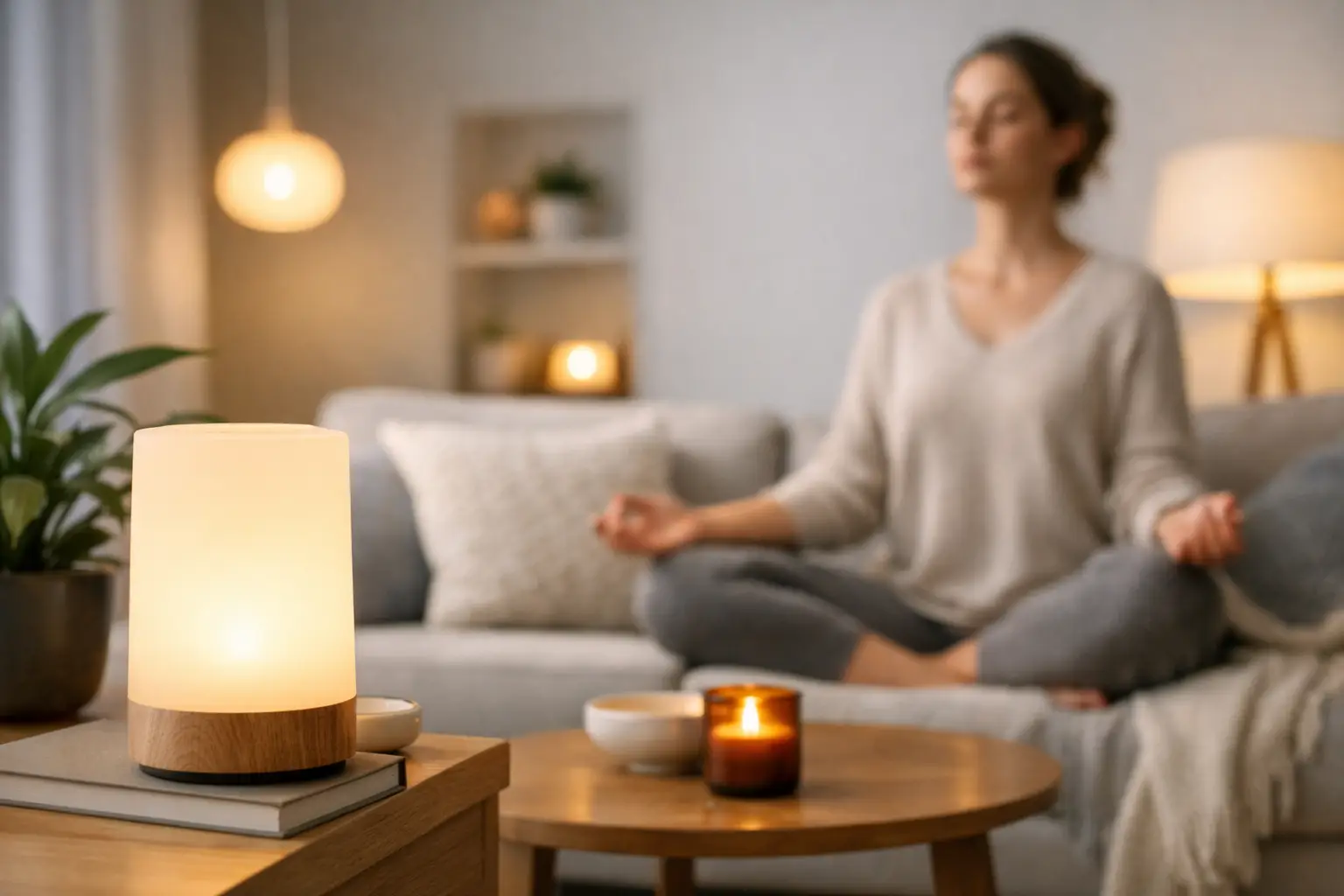
A living room works best with layers of light. Instead of relying only on the main ceiling fitting, use a combination of a floor lamp, table lamp and perhaps a small reading light. This gives you enough visibility without making the room feel overly stimulating.
Warm white bulbs, often around 2200K to 2700K, suit most evening use. They are not a cure for insomnia, but they can help mark a calmer part of the day. If you watch television, avoid sitting in total darkness with a very bright screen. A dim lamp behind or beside you can reduce the sharp contrast.
Bedroom and bathroom
Your bedroom should make it easier to prepare for sleep, not harder. Bright ceiling lights are useful when getting dressed or changing bedding, but they are rarely the best choice for the final hour of the day. A bedside lamp with a warm bulb is often enough for reading, skincare or getting ready.
Bathrooms are often overlooked. If you switch on a bright, cool light every time you wake in the night, you may feel more awake than necessary. A small, low-level warm night light can be useful for the route to the loo, particularly in homes with children or anyone at risk of falls.
Make evening light lower and simpler
The most useful evening change is usually reducing overall brightness one to two hours before bed. Start with the lights you already have: turn off the main fitting, use lamps, and avoid doing household jobs under every bright light in the house if they can wait until morning.
Screens deserve a sensible mention. Phones, tablets and laptops can keep the mind active as much as their light affects sleep. Night mode or a warmer display setting can take the edge off, but it does not turn late-night scrolling into a sleep routine. If you often lose track of time on your phone, charging it outside the bedroom may help more than changing its colour settings.
Avoid making your evening lighting so dim that it becomes inconvenient or unsafe. You still need to see stairs, medication labels, children’s toys and cooking surfaces clearly. Wellness advice should fit real homes, not an idealised one.
Choose bulbs without overthinking it
When replacing bulbs, focus on three useful details: brightness, colour temperature and where the bulb will be used. Brightness is measured in lumens. A higher number means more light, although fittings and lampshades affect how that light feels in a room.
For most homes, warm white bulbs are a sensible default for bedrooms and living spaces. Neutral white can suit kitchens, bathrooms and work areas. Dimmable bulbs are helpful where you already have compatible dimmer switches, but do not assume every LED bulb works with every dimmer. Check the packaging first to avoid flickering or buzzing.
If your lights flicker, make you uncomfortable or leave you with headaches, do not dismiss it. Try a different bulb or fitting, reduce glare, and use more than one softer source of light. Repeated headaches, major changes in vision or serious sleep difficulties are worth discussing with a GP or optician.
A seven-day reset that is realistic
For one week, make only a few changes and notice how you feel. Open the curtains and get daylight soon after waking. Make your main daytime work area brighter. Then, after dinner, turn off one bright overhead light and use a warmer lamp instead.
Keep the routine boringly consistent rather than constantly experimenting. Notice whether you feel less sluggish in the morning, more comfortable at your desk, or more ready for bed at a reasonable time. These are small signals, but they are useful ones.
Your home does not need to look like a wellness showroom. A brighter morning window, a properly lit desk and a calmer bedroom lamp can be enough to make daily rhythms feel a little easier to follow. That is often where better wellbeing starts: with practical changes you can repeat tomorrow.
Further Reading
If you enjoyed this article you might like to read these articles.
- A Practical Afternoon Slump Fix That Lasts
- The Real Guide to Daily Energy
- A Practical Guide to Movement for Desk Workers
The role of wellness products

Some people explore supplements or wellness products to support their daily routines. While these can sometimes be helpful, they should be viewed as support rather than a replacement for healthy habits.
If you are interested in exploring wellness products that may support energy routines, you can browse the options available at the Wellthy Freedom Hub store.
Always read ingredient labels carefully and speak with a healthcare professional if you have medical conditions or take medication.
Disclosure: This site may link to products on wellthyfreedomhub.com. If you choose to buy, the store benefits. The guidance here is informational and not medical advice.

Richard Chambers is the founder of rrjchambers.com. He writes about practical ways to improve everyday health, energy, and wellbeing through simple routines, lifestyle habits, and carefully chosen wellness products. His focus is on clear, honest guidance that helps people make small changes that support better health over time.
Health Information Notice
The information in this article is intended for general educational purposes only and should not be considered medical advice. If you have concerns about your health, sleep, or energy levels, it is always best to consult a qualified healthcare professional.