
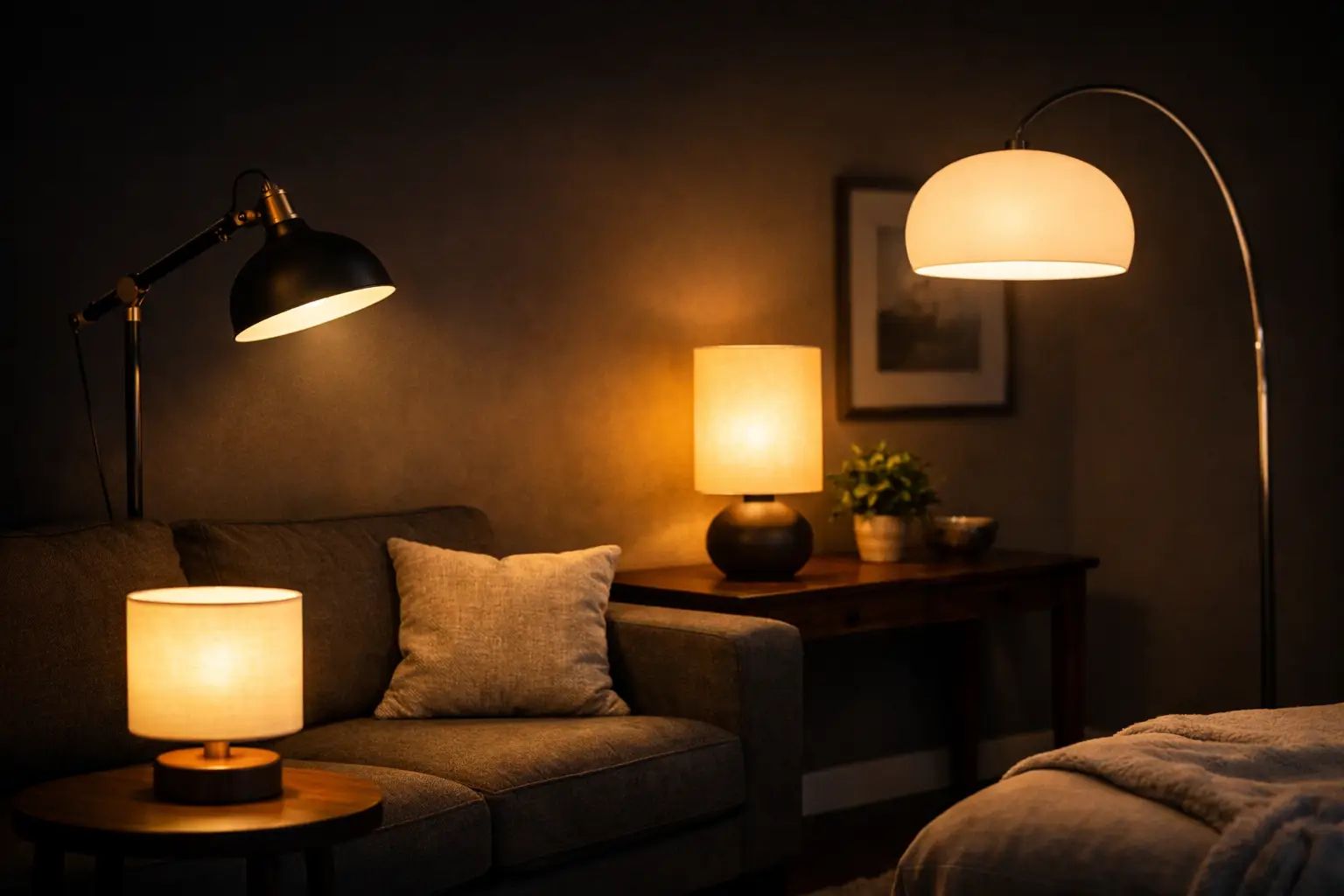
Best Lamps for Dark Rooms That Actually Help
A dim room can make a 3pm slump feel like an 8pm one. If you work from home, spend winter mornings getting ready in poor light, or sit in a north-facing lounge for much of the day, the best lamps for dark rooms can make the space feel more usable and help your body recognise that it is still daytime.
This is not about turning your home into a brightly lit office. The aim is to use enough well-placed light at the right time, then let things become gentler in the evening. That supports a more predictable daily rhythm without expensive gadgets or complicated routines.
Start with the job the lamp needs to do
The right lamp depends on why the room feels dark and what happens there. A reading chair needs focused light. A home-working desk needs broad, even light that does not create glare on a screen. A lounge may need several softer pools of light rather than one fierce bulb in the middle of the ceiling.
Before buying anything, notice when you use the room. If it is gloomy in the morning and you struggle to get going, prioritise brighter, cooler-toned light near where you eat breakfast or begin work. If the problem is a cave-like living room in the afternoon, a floor lamp that lifts light into the room may be more useful than a small table lamp tucked in a corner.
A single lamp rarely fixes a genuinely dark room. Layering usually works better: general light to lift the whole space, task light where you read or work, and a smaller lamp for comfort later on. It also means you do not have to make every bulb painfully bright.
Brightness matters more than a fashionable shade
When comparing lamps, look beyond the design and check the bulb fitting, maximum wattage and whether the fitting works with LED bulbs. The brightness you need is measured in lumens, not watts. Watts describe energy use; lumens describe the amount of visible light produced.
For a bedside or occasional table lamp, an LED bulb around 400 to 600 lumens may be enough. For reading, detailed tasks or a dark home office, 800 to 1,100 lumens is often more practical. In a larger room, you may need more than one source rather than one very high-lumen bulb.
The lamp shade affects this more than people expect. A dark, thick or opaque shade directs light downwards and may look pleasant, but it will not brighten the surrounding room much. A pale fabric, frosted glass or open-topped shade lets more light spread. An uplighter floor lamp can also help because it reflects light from the ceiling and reduces the harsh shadows created by a single downward-facing fitting.
If your ceiling is low, light walls and a pale ceiling will make that reflected light work harder for you. You do not need to redecorate immediately, but moving a lamp near a light-coloured wall can make a noticeable difference.
Choose bulb colour by time of day
Bulb colour is given in Kelvin (K). Lower numbers look warmer and more yellow; higher numbers look cooler and whiter. Neither is automatically better. What matters is whether it suits the activity and the time.
For daytime use in a dark room, bulbs around 4,000K can feel clearer and more alerting than very warm bulbs. They can be useful in a kitchen, home office or the corner where you deal with paperwork. Some people prefer 3,000K as a compromise, particularly in a living space that has to work both day and night.
For the evening, 2,700K is usually a comfortable choice. It gives a warmer light that is less likely to make the room feel like a workplace when you are trying to wind down. Very bright, cool light late at night may make it harder for some people to feel sleepy, especially if they are already prone to poor sleep.
A simple approach is to use brighter, cooler bulbs where you need daytime function and warmer, lower-level lamps for the last hour or two before bed. Dimmable lamps make this easier, but only if both the bulb and fitting are compatible.
The best lamps for dark rooms by use
There is no single best type of lamp for every dark room. These are the options that tend to solve common problems without overcomplicating things.
An uplighter floor lamp for a gloomy lounge
A tall uplighter is one of the most effective choices when the entire room feels dull. It sends light upwards, where it spreads across the ceiling and back into the space. Choose one with a separate adjustable reading arm if you also read in that room. This gives you general brightness without needing a dazzling bare bulb overhead.
The trade-off is that an uplighter needs a reasonably pale ceiling to be at its best. In a room with dark paint, wood panelling or very high ceilings, pair it with a second lamp closer to where you sit.
An adjustable desk lamp for home working
For a desk, choose an adjustable lamp with a broad cone of light and a shade that hides the bulb from direct view. Position it to the side of your dominant hand so you do not cast a shadow across the page. If you use a laptop, angle the light away from the screen to limit reflections.
A desk lamp does not need to be blue-white to help you focus. A good-quality LED at around 3,000K to 4,000K, used in the morning and early afternoon, is usually enough for most people. The useful change is often simply replacing a weak bulb and bringing the light closer to the task.
A table lamp with a pale shade for corners
Dark corners absorb light and make a room look smaller. A table lamp on a sideboard, console or shelf can add depth without taking up floor space. Choose a pale or translucent shade, and use a bulb bright enough for the shade to glow rather than merely showing a small patch of light below it.
This is a good solution for rented homes too. You can improve the feel of a room without changing ceiling fittings or redecorating.
A daylight lamp for winter mornings
A daylight lamp, sometimes called a light therapy lamp, is different from an ordinary bright lamp. It is designed to provide high-intensity light for use at a set distance, typically in the morning. Some people find it helpful during darker months, particularly where low mood and low energy follow a seasonal pattern.
It is not a replacement for going outdoors. Natural daylight, even on an overcast day, is generally much brighter than indoor lighting. A short walk outside after waking is often the simplest first step. But a daylight lamp may be worth considering if morning daylight is difficult to get, provided you use it as directed and do not stare into it.
Speak to a GP or pharmacist before using light therapy if you have an eye condition, take medicines that increase light sensitivity, or have bipolar disorder. It can be useful, but it is not a casual cure-all for tiredness.
Placement can matter as much as the lamp
Put light where you need it, not simply where there is an empty socket. A lamp behind your shoulder can cast shadows onto a book or keyboard. A bare bulb in your line of sight can produce glare and leave the rest of the room feeling oddly dim.
For daytime work, aim for light across the front and side of your workspace. For reading, place the light slightly behind and to one side of your chair, high enough to cover the page. In a lounge, use two or three light sources at different heights: perhaps an uplighter, a table lamp and a reading lamp. The room will feel brighter and calmer than it would under one central ceiling bulb.
Keep windows clear during the day. Open curtains fully, move tall plants or furniture that blocks light, and sit closer to the window when practical. A lamp is helpful, but it cannot fully replicate the shift in brightness you get from real daylight.
A practical buying checklist
Before choosing a lamp, check these four points:
- It accepts an LED bulb with enough lumens for the job.
- The shade directs light where you need it without exposing the bulb to your eyes.
- The bulb colour suits when you will use the room.
- The lamp can sit close enough to the task without becoming a trip hazard or cluttering the space.
Do not overlook the switch either. A lamp that is awkward to reach is less likely to become part of a useful morning routine. Touch controls, foot switches and smart plugs can be handy, but a straightforward switch is perfectly adequate if it makes the habit easy.
A brighter room will not solve every cause of fatigue. Poor sleep, stress, illness, low activity and irregular meals all have their part. Still, improving your morning and daytime light is one of the simpler changes to test, especially when dark rooms leave you feeling flat before the day has properly begun.
Try one purposeful lamp in the place where you spend your first working hour. Use it consistently for a fortnight, then judge the difference by how the room feels and how readily you get on with the day. Small changes are easier to keep, and that is usually where better routines start.
Further Reading
If you enjoyed this article you might like to read these articles.
- Walking Pad vs Desk Bike: Which Suits Work?
- The Real Guide to Daily Energy
- Morning Sunlight Benefits for Energy and Sleep
The role of wellness products

Some people explore supplements or wellness products to support their daily routines. While these can sometimes be helpful, they should be viewed as support rather than a replacement for healthy habits.
If you are interested in exploring wellness products that may support energy routines, you can browse the options available at the Wellthy Freedom Hub store.
Always read ingredient labels carefully and speak with a healthcare professional if you have medical conditions or take medication.
Disclosure: This site may link to products on wellthyfreedomhub.com. If you choose to buy, the store benefits. The guidance here is informational and not medical advice.

Richard Chambers is the founder of rrjchambers.com. He writes about practical ways to improve everyday health, energy, and wellbeing through simple routines, lifestyle habits, and carefully chosen wellness products. His focus is on clear, honest guidance that helps people make small changes that support better health over time.
Health Information Notice
The information in this article is intended for general educational purposes only and should not be considered medical advice. If you have concerns about your health, sleep, or energy levels, it is always best to consult a qualified healthcare professional.