
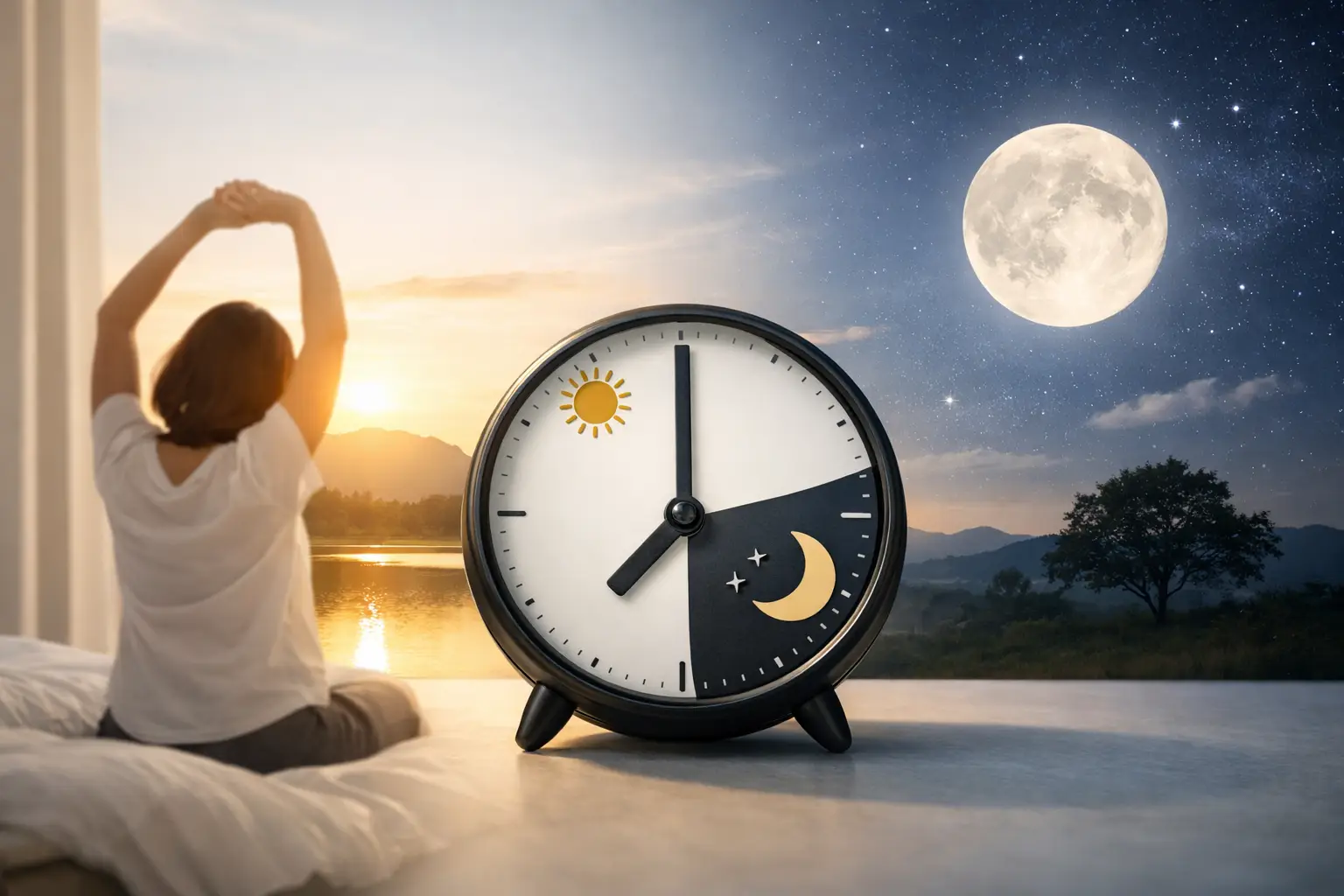
A Guide to Circadian Rhythm Basics
That second wind at 10pm, the groggy start even after a full night in bed, the afternoon slump that sends you hunting for tea or biscuits – these are often treated as separate problems. In many cases, they point back to the same thing. This guide to circadian rhythm basics explains how your body clock works, why it affects energy as much as sleep, and what you can do to support it without turning your life upside down.
What circadian rhythm actually means
Your circadian rhythm is your body’s internal 24-hour timing system. It helps regulate when you feel alert, when you feel sleepy, when certain hormones rise and fall, and even how your body handles temperature, digestion and appetite.
Most people think of it purely as a sleep issue, but it is really an energy and timing issue. If your body clock is out of step with your daily routine, you can feel tired at the wrong times, wired late into the evening, hungry when it is not especially helpful, and flat during the day.
At the centre of this system is a small part of the brain that responds strongly to light and darkness. In simple terms, morning light tells your body it is daytime. Darkness tells it that night is approaching. That sounds basic, but modern life makes it surprisingly easy to blur those signals.
A practical guide to circadian rhythm basics
If you want the simplest version, think of your circadian rhythm as a daily schedule your body prefers to keep. It does not need perfect living, but it does respond well to regular cues.
The strongest cue is light, especially natural light soon after waking. The next most useful cues are regular sleep and wake times, meal timing, movement, and what you do in the evening. When those cues are all over the place, your body has to keep guessing. That often shows up as poor-quality sleep, uneven energy and that heavy, foggy feeling many people put down to being busy.
This is also why sleeping longer does not always fix tiredness. If your timing is off, more time in bed may not mean better recovery.
Why your body clock matters for energy
A healthy circadian rhythm does not mean you feel brilliant every hour of the day. Most people naturally have peaks and dips in alertness. The point is that the pattern becomes more predictable.
You are more likely to feel awake during the day, sleepy at night and less dependent on caffeine to prop yourself up. You may also find it easier to fall asleep, wake up more cleanly and avoid that strange combination of exhaustion and restlessness that often comes with a poorly timed routine.
For adults dealing with persistent tiredness, this matters because body-clock disruption can quietly stack up. A late bedtime here, indoor living there, bright screens at night, inconsistent lie-ins at weekends, meals at random times – each one may seem minor, but together they can keep your system slightly off balance most days.
The main signs your circadian rhythm may be off
The clearest sign is not simply insomnia. Plenty of people with circadian disruption sleep, but the sleep does not feel well timed or refreshing.
You might struggle to get going in the morning, feel most awake late at night, rely heavily on caffeine before midday, or notice your mood and concentration dip badly in the afternoon. Some people feel sleepy too early in the evening, then find themselves wide awake at bedtime. Others sleep in at weekends and feel worse, not better, by Sunday night.
Shift work, frequent travel, caring responsibilities, stress and long hours indoors can all contribute. So can working from home if your mornings have become dim, sedentary and unstructured.
It is not always about discipline
This is worth saying plainly. A disrupted rhythm is not a personal failure. Some routines genuinely make it harder to maintain consistent timing, and some people naturally lean earlier or later than others.
The aim is not to force everyone into a perfect 5am routine. It is to give your body clearer day and night signals so it can do its job more effectively.
The habits that influence your circadian rhythm most
Light is the big one. Morning daylight helps anchor your body clock and encourages earlier melatonin release later that evening. If you wake in darkness for much of the year, especially in the UK, this can be harder. Even so, getting outside soon after waking is usually more effective than sitting under standard indoor lighting.
Evening light matters too. Bright indoor lights and screens do not ruin sleep for everyone in exactly the same way, but they can delay the body’s sense that night has begun. This is one reason people can feel tired at 9pm, then oddly alert at 11pm after sitting under bright lights and scrolling.
Timing also matters with sleep itself. A regular wake-up time tends to stabilise the rhythm more effectively than obsessing over bedtime. Bedtime can shift a little according to how sleepy you are. Waking at wildly different times each day gives your body mixed messages.
Meals and movement play supporting roles. Eating at erratic times and staying inactive all day can weaken your sense of routine. A short walk outside in the morning or at lunch can do more for daytime alertness than many people expect.
How to support your body clock in ordinary life
You do not need an extreme routine. You need a few signals repeated often enough that your body starts to trust them.
Start with the morning. Get up at a similar time most days, including weekends if possible. You do not need military precision, but keeping within roughly the same hour helps. Then get light into your eyes as early as you can. That usually means stepping outside for 10 to 30 minutes, depending on the weather, season and brightness.
Next, move a bit. This does not need to be a workout. A brisk walk, school run on foot, or a short stretch session by a bright window is useful because it tells your system the day has started.
During the day, try not to live entirely under artificial light. If you work at a desk, break up long indoor stretches. Get outside at lunch if you can. Keep meals fairly consistent, especially your first meal of the day.
In the evening, lower stimulation gradually. Dim the house a little, reduce overhead brightness, and avoid treating 10pm like 2pm. You do not need to ban screens completely, but it helps to make the final hour before bed quieter and less intense.
What about naps, caffeine and lie-ins?
This is where it depends. Short naps can help if you are genuinely sleep deprived, but long or late naps often make it harder to build healthy sleep pressure by bedtime. If you nap, earlier and shorter is usually safer.
Caffeine is similar. It is not automatically the enemy, but using it late in the day can push sleep later than you realise. Some people are more sensitive than others, so the right cut-off time varies. If your sleep is patchy, moving your last caffeinated drink earlier is a sensible test.
Lie-ins feel good in the moment, especially after a rough week, but large swings in wake time can leave you with a mild jet-lag effect. A bit of extra sleep may help. A three-hour weekend shift often backfires.
Why progress can feel slow
Body clocks do not always respond overnight. If your routine has been inconsistent for months or years, it may take time before mornings feel easier and evenings feel naturally sleepier.
This is one reason simple habit-based advice works better than all-or-nothing resets. You are not trying to win a wellness challenge for three days. You are trying to make daily timing less confusing for your body.
At RRJChambers, that is the practical view we come back to again and again. Better energy is often built through boring things done consistently, not dramatic interventions.
When circadian habits are not the whole story
Good rhythm support helps a lot of people, but it is not a cure-all. If you are exhausted despite decent sleep timing, or if you snore heavily, wake gasping, have restless legs, frequent night waking, low mood, or ongoing fatigue that does not improve, there may be more going on.
Poor sleep environment, stress, pain, menopause, medication effects and underlying health issues can all affect energy. Circadian habits still matter, but they may be one part of the picture rather than the whole answer.
That is why a sensible approach beats hype. Get the basics in place, notice what changes, and if the tiredness stays stubborn, look wider rather than assuming you just need more discipline.
Your body responds to rhythm whether you pay attention to it or not. If you give it clearer signals in the morning, steadier timing through the day and a calmer run-in to night, it usually starts to meet you halfway.
Further Reading
If you enjoyed this article you might like to read these articles.
The role of wellness products

Some people explore supplements or wellness products to support their daily routines. While these can sometimes be helpful, they should be viewed as support rather than a replacement for healthy habits.
If you are interested in exploring wellness products that may support energy routines, you can browse the options available at the Wellthy Freedom Hub store.
Always read ingredient labels carefully and speak with a healthcare professional if you have medical conditions or take medication.
Disclosure: This site may link to products on wellthyfreedomhub.com. If you choose to buy, the store benefits. The guidance here is informational and not medical advice.

Richard Chambers is the founder of rrjchambers.com. He writes about practical ways to improve everyday health, energy, and wellbeing through simple routines, lifestyle habits, and carefully chosen wellness products. His focus is on clear, honest guidance that helps people make small changes that support better health over time.
Health Information Notice
The information in this article is intended for general educational purposes only and should not be considered medical advice. If you have concerns about your health, sleep, or energy levels, it is always best to consult a qualified healthcare professional.