
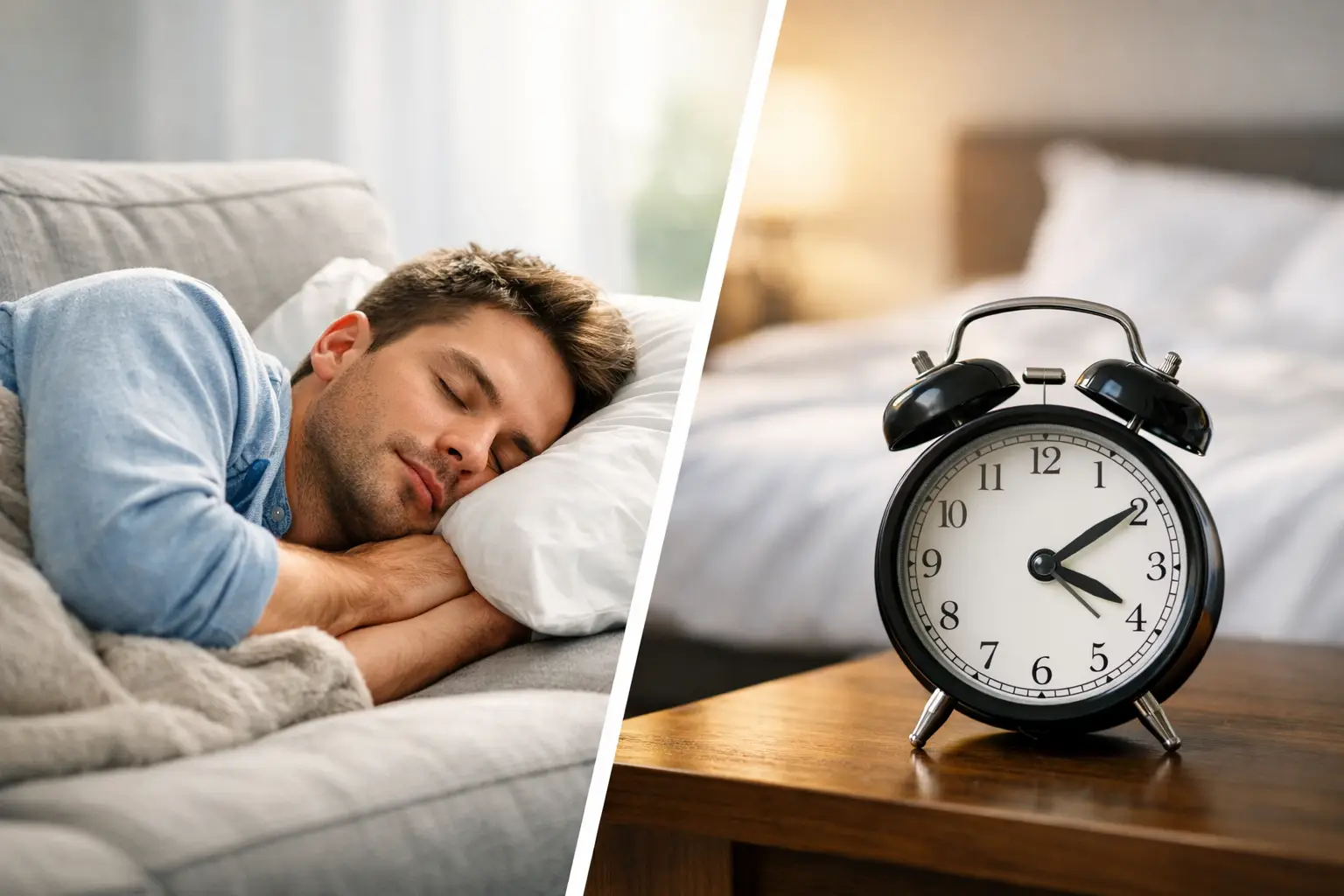
Is Napping Bad for Sleep? Timing Makes the Difference
At 3pm, a nap can feel like the most sensible thing in the world. Your concentration has gone, the tea is not touching the sides, and there are still hours left in the day. But is napping bad for sleep later that night? Not necessarily. A well-timed nap can restore alertness. A long or late one, however, can make it harder to fall asleep when you need to.
The useful question is not whether naps are good or bad in general. It is whether your nap is helping you manage a one-off dip in energy or quietly contributing to an unreliable sleep routine.
Why naps can affect night-time sleep
Sleep is partly governed by sleep pressure. This is the natural build-up of tiredness from the moment you wake up. The longer you have been awake, the stronger that pressure becomes, which helps you fall asleep at night.
A nap reduces some of that pressure. That is exactly why it can feel so refreshing. But if you sleep for too long, or too close to bedtime, you may not have rebuilt enough sleep pressure by the evening. The result can be lying awake despite feeling tired all day.
Your body clock matters too. Most adults experience a natural dip in alertness during the early afternoon. A short nap at this point tends to work with that rhythm. Sleeping in the early evening is different: it can blur the line between day and night, particularly if your bedtime already varies.
This does not mean every person who naps will sleep badly. Some people can take a short early-afternoon nap and still sleep soundly. Others are more sensitive and notice that even 20 minutes makes bedtime harder. Your own pattern is more useful than a rigid rule.
Is napping bad for sleep if you are already tired?
If you are regularly exhausted, a nap may offer relief without solving the reason you are tired. This is where people can get stuck. They use a long daytime sleep to get through the afternoon, then struggle to sleep at night, then need another nap the next day.
That cycle is especially likely if you are sleeping poorly because of stress, inconsistent bedtimes, late caffeine, alcohol, a bright bedroom, or too much screen time close to bed. A nap is not the cause of every sleep problem, but it can make an existing routine harder to reset.
On the other hand, skipping a nap at all costs is not always sensible either. If you had an unusually broken night because of a sick child, travel, shift changes or a one-off late event, a brief nap may help you function more safely and calmly. Falling asleep at the wheel or struggling through a meeting is not a badge of discipline.
The distinction is simple: occasional short naps can be useful. Frequent, lengthy naps that are needed to cope with ordinary days deserve a closer look.
The most sleep-friendly way to nap
For most adults, aim for 10 to 20 minutes, ideally in the early afternoon. This is long enough to take the edge off sleepiness but usually short enough to avoid waking from deeper sleep. Set an alarm before you settle down, rather than trusting yourself to wake naturally.
Try to nap before about 3pm if you normally go to bed around 10pm or 11pm. The exact cut-off depends on your schedule, but the principle is to leave several hours between your nap and bedtime. If you work shifts or keep very different hours, judge the timing in relation to your planned main sleep rather than the clock.
A quiet, dim room helps, but do not turn the nap into a full bedtime ritual. Getting under the duvet in a dark bedroom at 5pm makes it much easier for 20 minutes to become two hours. A sofa, reclining chair or a lighter blanket can make a short rest easier to contain.
If you wake feeling groggy, known as sleep inertia, your nap was probably too long or you woke during a deeper stage of sleep. Get up, open the curtains or step outside for daylight, drink some water and move for a few minutes. Do not take that grogginess as proof that naps never work for you. Adjust the length first.
When a nap is more likely to backfire
Naps tend to be less helpful when your main issue is difficulty falling asleep at night. If you spend a long time awake in bed, wake repeatedly, or find yourself shifting bedtime later and later, try reducing or pausing daytime naps for a week or two while you strengthen your night-time routine.
They can also be unhelpful when they become your response to every afternoon slump. Many energy dips have more ordinary causes: a large, heavy lunch, little movement, dehydration, stuffy indoor air, poor lighting, or several hours of close screen work. A ten-minute walk outside may be more useful than a nap, especially if you want to preserve sleep pressure for later.
Be particularly cautious with naps if you drink caffeine late in the day. It is easy to have a coffee to overcome post-nap grogginess, then another because the first has not quite worked, and suddenly bedtime is affected from two directions.
A nap may also hide a more persistent problem. Speak to a GP if excessive daytime sleepiness has lasted for weeks, you regularly doze off unintentionally, you snore loudly with choking or gasping sounds, or you wake with headaches despite allowing enough time in bed. Low mood, medication side effects, iron deficiency and sleep disorders can all contribute to fatigue. Lifestyle habits matter, but they are not the answer to every kind of tiredness.
A practical test for your own routine
Rather than making a permanent rule after one bad night, test it properly. For seven days, keep your wake-up time broadly consistent and note when you nap, how long for, when you have caffeine, and how long it takes to fall asleep at night. You do not need an app or a complicated tracker. A note on your phone is enough.
If your sleep is poor, start by changing one variable: limit naps to 20 minutes and take them earlier. Keep that approach for a week before deciding whether it helps. Changing your nap, bedtime, caffeine, exercise and evening screen habits all at once makes it difficult to tell what made the difference.
If you do not nap but crash every afternoon, try a short reset first. Have water, eat something balanced if lunch was light, get daylight in your eyes and walk for five to ten minutes. Daylight and movement are simple signals that help your brain stay alert during the day and support a clearer wind-down later on.
Better sleep usually starts before bedtime
The aim is not to force yourself through the day exhausted. It is to build a pattern where daytime energy and night-time sleep support each other. A consistent waking time, morning daylight, regular meals, some daily movement and a calmer evening environment will usually do more for long-term energy than relying on a long nap.
There is also room for real life. Parents, carers, shift workers and anyone recovering from a disrupted night may need more rest on particular days. Use a nap deliberately, keep it short where possible, and protect the main sleep period that keeps your routine stable.
A short early nap is not a failure of willpower, nor is it automatically bad for your sleep. Treat it as a tool, not a daily rescue plan. The best sign it is working is straightforward: you feel more alert afterwards and can still fall asleep at a reasonable time that night.
Further Reading
If you enjoyed this article you might like to read these articles.
- How to avoid post lunch sleepiness
- The Real Guide to Daily Energy
- How to Improve Sleep Quality Naturally
The role of wellness products

Some people explore supplements or wellness products to support their daily routines. While these can sometimes be helpful, they should be viewed as support rather than a replacement for healthy habits.
If you are interested in exploring wellness products that may support energy routines, you can browse the options available at the Wellthy Freedom Hub store.
Always read ingredient labels carefully and speak with a healthcare professional if you have medical conditions or take medication.
Disclosure: This site may link to products on wellthyfreedomhub.com. If you choose to buy, the store benefits. The guidance here is informational and not medical advice.

Richard Chambers is the founder of rrjchambers.com. He writes about practical ways to improve everyday health, energy, and wellbeing through simple routines, lifestyle habits, and carefully chosen wellness products. His focus is on clear, honest guidance that helps people make small changes that support better health over time.
Health Information Notice
The information in this article is intended for general educational purposes only and should not be considered medical advice. If you have concerns about your health, sleep, or energy levels, it is always best to consult a qualified healthcare professional.