
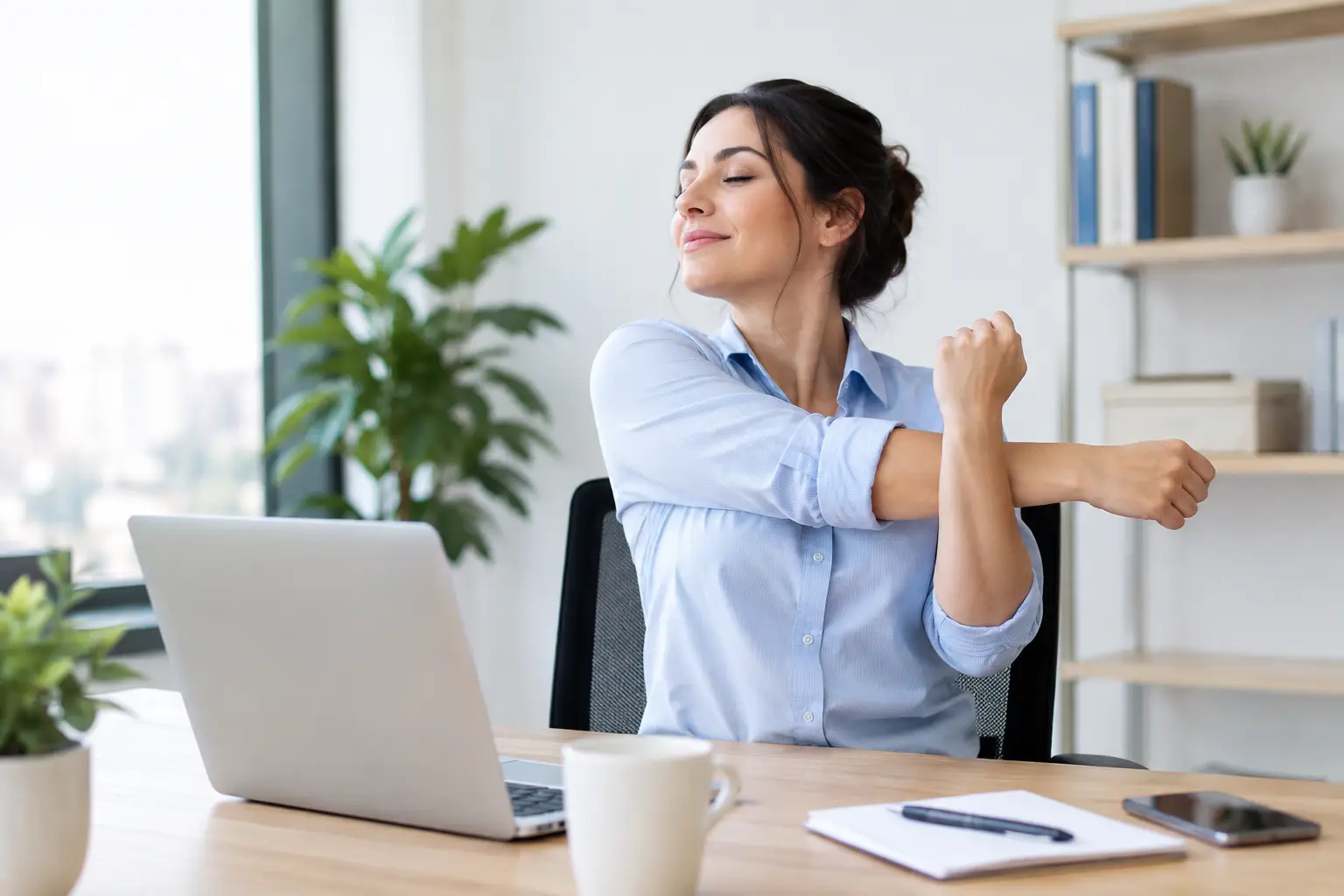
8 Best Desk Stretches for Alertness at Work
That 3pm slump is not always about willpower or another coffee. After hours of sitting, your body has been still, your eyes have been fixed at a screen and your breathing may have become shallow without you noticing. The best desk stretches for alertness give you a brief physical reset: they ease the tightness that builds around the neck, shoulders and hips, and help break the sense of mental fog that often comes with long, sedentary work.
They are not a substitute for sleep, regular meals or a proper break outdoors. But used at the right moments, a few minutes of movement can make the rest of an afternoon feel more manageable. No special kit is needed, and most of these can be done beside your desk in ordinary work clothes.
Why stretching can help you feel more awake
Sitting still for a long period can leave muscles tense and circulation less active than when you are regularly changing position. That is particularly noticeable if you lean towards a laptop, hold a phone between shoulder and ear, or spend much of the day in video calls. Stiffness itself is distracting. You may find yourself shifting in your chair, rubbing your neck or reading the same sentence twice.
A short stretch will not produce the jolt of a strong coffee, and it should not be sold as one. What it can do is interrupt inactivity, encourage you to breathe more fully and give your attention something physical to reset around. Pair it with a glass of water, a look out of the window or a short walk to the kitchen, and the effect is often more noticeable.
The aim is gentle movement, not forcing a deep stretch. You should feel mild tension, never sharp pain, tingling or numbness. If you have a recent injury, persistent pain, dizziness, or a condition affecting your joints or circulation, get individual advice from a qualified clinician before changing your routine.
The best desk stretches for alertness
Choose three or four of the following when your concentration starts to drift. Hold each stretch for around 15 to 30 seconds, breathing normally. There is no prize for doing them all at once. A small routine you repeat is more useful than an ambitious one you abandon after two days.
1. Seated chest opener
Sit towards the front of your chair with both feet flat on the floor. Bring your hands behind your lower back and either clasp them loosely or rest them on the back of the chair. Gently draw your shoulder blades down and back, allowing the front of your chest to open. Keep your chin level rather than tipping your head back.
This is a useful counter-movement to hunching over a keyboard. It can make breathing feel less restricted and relieve the rounded-shoulder feeling that builds after screen work. If clasping your hands is uncomfortable, simply place your hands on your hips and draw your elbows back a little.
2. Neck side stretch
Keep your shoulders relaxed and look straight ahead. Slowly lower your right ear towards your right shoulder without lifting that shoulder to meet it. Hold, then repeat on the other side. For a little more stretch, rest the opposite hand lightly beneath the chair seat, but do not pull your head down with your other hand.
Neck tension is common when you are concentrating, especially on a laptop placed too low. This movement should be small and controlled. If turning or bending your neck causes pain, skip it and focus on walking or shoulder movements instead.
3. Shoulder rolls with a full breath
Lift both shoulders gently towards your ears, roll them back and down, then repeat slowly six to eight times. Reverse the direction afterwards. Match the movement to your breathing: breathe in as the shoulders rise and breathe out as they drop.
This is one of the simplest ways to stop carrying tension without making a performance of it in a shared office. The breathing matters. Many people hold their breath or take very shallow breaths while reading emails or working against a deadline. A slower exhale can help reduce that clenched, rushed feeling.
4. Seated upper-back stretch
Interlace your fingers in front of you at shoulder height, turn your palms away and gently reach forwards. Let your upper back round slightly as if you were making space between your shoulder blades. Keep the shoulders away from your ears.
This stretch targets the area between the shoulders that can feel tight after using a mouse or typing for long periods. It is also a good option when you need a discreet movement break during a call. Avoid holding your breath or collapsing through the lower back.
5. Seated spinal twist
Sit tall with both feet on the floor. Place your right hand on the outside of your left thigh and your left hand lightly on the chair or desk behind you. Turn your chest gently to the left, beginning the movement from your middle back rather than wrenching your neck. Hold, then change sides.
A seated twist can relieve the fixed, compressed feeling that comes from facing forwards all day. Keep it mild. Twisting hard in a swivel chair is not helpful, and may leave you feeling less comfortable than when you started.
6. Wrist and forearm stretch
Extend one arm in front of you with the palm facing up. With the other hand, gently draw the fingers down towards the floor until you feel a light stretch through the forearm. Then turn the palm down and draw the fingers gently towards you to stretch the other side. Repeat on the other arm.
This is particularly worthwhile if your work involves a mouse, keyboard or phone. It will not fix ongoing wrist pain by itself, but it can be a useful prompt to check your set-up. Your keyboard and mouse should allow your shoulders to stay relaxed and your wrists to remain fairly straight rather than bent upwards for hours.
7. Seated figure-four hip stretch
Sit near the edge of a stable chair. Place your right ankle across your left thigh, keeping the right foot flexed. Stay upright, or hinge forwards slightly from the hips until you feel a stretch around the outer hip and buttock. Repeat on the other side.
Long periods of sitting can leave the hips feeling stiff, particularly if you rarely stand between tasks. This stretch is effective, but it does not suit everyone. If you have hip or knee problems, keep the movement very shallow or choose a brief walk instead.
8. Standing calf raise and reach
Stand behind your chair, using it lightly for balance if needed. Rise onto the balls of your feet, lower with control, then reach both arms overhead as you breathe in. Lower your arms as you breathe out. Repeat eight to ten times.
Strictly speaking, this is more of a movement break than a static stretch, which is exactly why it works well for alertness. It brings your legs into the picture, changes your posture and gives your eyes a moment away from the screen. If you can do only one thing during a sluggish afternoon, stand up and move for a minute.
Make the routine fit the point in your day
The most useful time for desk stretches is usually before you are completely drained. Try a two-minute reset after a long meeting, before starting a task that needs concentration, or every time you refill your water. Waiting until your neck is aching and your attention has disappeared makes the habit feel like another chore.
A simple pattern is to do shoulder rolls and a chest opener in the morning, wrist stretches after a concentrated spell of computer work, and the standing movement after lunch. This approach works better than setting an unrealistic target of stretching every hour on the hour.
Your workspace still matters. Stretching cannot fully compensate for a chair that is far too low, a screen that makes you crane your neck, or a workday with no daylight or proper breaks. Raise a laptop screen where practical, sit with your feet supported, and change position regularly. The best set-up is not one perfect posture held rigidly all day. It is a set-up that lets you move often.
When tiredness needs a wider look
If you are regularly fighting sleep at your desk, do not assume a stretch routine is the whole answer. Poor sleep, irregular meals, dehydration, limited daylight, stress and a lack of movement outside work can all affect daytime energy. Persistent or worsening fatigue, particularly alongside breathlessness, unexplained weight changes, low mood or other symptoms, deserves a conversation with your GP.
For ordinary desk-day sluggishness, keep the standard low and the habit easy. Stand, stretch one area that feels tight, take a few slower breaths, and return to your work. Those small interruptions may not look dramatic, but they are often what keeps an afternoon from becoming a write-off.
Further Reading
If you enjoyed this article you might like to read these articles.
- 9 Best Drinks for Steady Energy
- The Real Guide to Daily Energy
- Morning Sunlight Benefits for Energy and Sleep
The role of wellness products

Some people explore supplements or wellness products to support their daily routines. While these can sometimes be helpful, they should be viewed as support rather than a replacement for healthy habits.
If you are interested in exploring wellness products that may support energy routines, you can browse the options available at the Wellthy Freedom Hub store.
Always read ingredient labels carefully and speak with a healthcare professional if you have medical conditions or take medication.
Disclosure: This site may link to products on wellthyfreedomhub.com. If you choose to buy, the store benefits. The guidance here is informational and not medical advice.

Richard Chambers is the founder of rrjchambers.com. He writes about practical ways to improve everyday health, energy, and wellbeing through simple routines, lifestyle habits, and carefully chosen wellness products. His focus is on clear, honest guidance that helps people make small changes that support better health over time.
Health Information Notice
The information in this article is intended for general educational purposes only and should not be considered medical advice. If you have concerns about your health, sleep, or energy levels, it is always best to consult a qualified healthcare professional.