
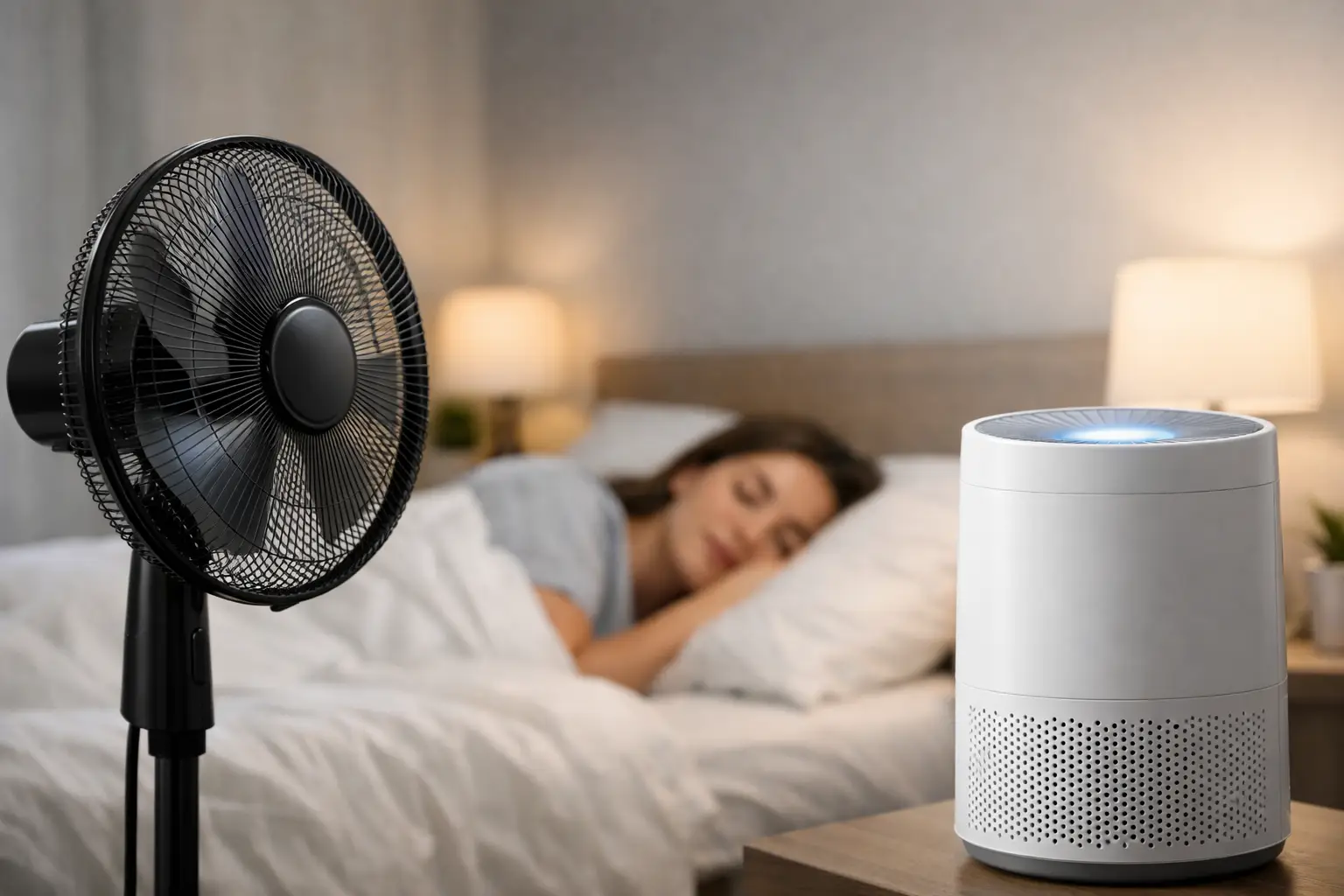
Fan vs purifier for sleep: which helps?
If you have ever lain awake feeling stuffy, too warm, or mildly irritated by the air in your bedroom, the fan vs purifier for sleep question becomes less about gadgets and more about whether you can get through the night properly. Both can help, but they solve different problems. That is where people often waste money – buying a purifier when they really need cooler air, or using a fan when the issue is allergens, dust, or stale indoor air.
For most people, a fan helps sleep more immediately because temperature and airflow have a direct effect on comfort. A purifier can still be useful, especially if allergies, asthma triggers, traffic pollution, or pet dander are part of the picture. The better choice depends on what is actually disrupting your sleep.
Fan vs purifier for sleep: the real difference
A fan moves air. That sounds obvious, but it matters because sleeping in a warm, stagnant room is uncomfortable even if the air itself is technically clean. Air movement helps sweat evaporate, makes the room feel cooler, and often creates the kind of steady background noise many people find soothing.
An air purifier does not cool the room. Its job is to draw in air and filter out particles such as dust, pollen, smoke, and some pet dander. Depending on the model and filter type, it may also help reduce fine particulate pollution. If your sleep is being affected by congestion, sneezing, throat irritation, or poor air quality, that can make a noticeable difference.
So the simplest way to think about it is this: fans improve comfort, purifiers improve air quality. Sometimes comfort is the missing piece. Sometimes air quality is. Sometimes both matter.
When a fan is the better choice
If you regularly wake up hot, kick the duvet off in the middle of the night, or sleep badly in warm weather, a fan is usually the more useful first step. Most people sleep best in a cool bedroom, and even a small drop in perceived temperature can help you fall asleep more easily.
A fan can also help if you like white noise. The low, consistent sound can mask light traffic, neighbours, creaking pipes, or the general background noise of a busy household. For parents, shift workers, and people in built-up areas, that can be as valuable as the airflow itself.
There is also the cost factor. Fans are usually cheaper to buy than a decent purifier and cheaper to run than many people assume. If your main issue is overheating or stale-feeling air, a fan often gives you more immediate value.
That said, fans have limits. They do not remove dust or pollen. In some rooms, especially if surfaces are dusty, a fan may even stir particles around. If you wake with a blocked nose or itchy eyes, airflow alone may not solve the problem.
When a purifier is the better choice
A purifier makes more sense when your bedroom air is part of the problem. That often shows up as symptoms rather than obvious discomfort. You might wake congested, sneeze more in the morning, notice irritation in your throat, or sleep worse during hay fever season.
If you live near a busy road, have pets, or keep windows shut because of outdoor pollution or noise, an air purifier may help create a cleaner sleeping environment. Bedrooms can collect plenty of airborne particles without feeling dirty. Carpets, bedding, curtains, and soft furnishings all hold dust, and if ventilation is poor, that can build up over time.
For allergy-prone sleepers, a purifier with a proper HEPA filter is usually the thing worth looking for. It is not a cure-all, and it will not replace washing bedding or keeping the room clean, but it can reduce the background load of particles you are breathing overnight.
The trade-off is that some people expect a purifier to make the room feel fresher in the same way opening a window or using a fan does. It usually will not. You may breathe easier, but you will not get that cooling effect.
What matters more for sleep: temperature or air quality?
In general, temperature wins for immediate sleep comfort. If your room is too warm, you will probably notice it quickly. You may struggle to drift off, wake more often, or feel unrested by morning. That is why many people feel an instant benefit from using a fan.
Air quality tends to matter more when there is a specific issue. If you have allergies, asthma, sensitivity to dust, or a bedroom that feels stale and aggravates congestion, a purifier can have a bigger impact than a fan. The improvement may be less dramatic at first, but more meaningful across weeks and months.
If you are not sure which applies to you, pay attention to your pattern. Feeling hot, clammy, or stuffy points towards a fan. Waking congested, coughing, sneezing, or dealing with irritated eyes points more towards a purifier.
Can a fan and purifier work together?
Yes, and for some bedrooms that is the best setup. A purifier can clean the air while a fan helps with cooling and gentle circulation. If your room tends to be warm and you also struggle with dust or pollen, using both covers more of the problem.
Placement matters, though. A purifier should have enough space around it to pull in air properly, and a fan should not be blasting directly into your face all night if that leaves you dry or uncomfortable. Many people do better with indirect airflow rather than a strong stream of air across the bed.
Using both can also be sensible in summer when windows are open more often. A fan helps with heat, while a purifier can be useful if open windows bring in pollen or outdoor pollution.
What about noise, dryness and running costs?
Noise is one of the biggest deciding factors and it depends entirely on the person. Some people sleep better with a fan because the sound is steady and familiar. Others find any mechanical noise irritating. The same goes for purifiers. A quiet purifier on a low night setting may be barely noticeable, while a cheaper or more powerful unit can be distracting.
Dryness is often misunderstood. Fans do not dry out the air itself, but they can make your eyes, mouth, or skin feel drier if air is blowing directly at you for hours. Purifiers are not usually designed to add moisture either, so neither device solves genuinely dry air. If dryness is your main issue, that is a different problem.
Running costs vary by model, but fans are usually simpler and cheaper. Purifiers involve filter replacements, and that ongoing cost matters. A cheap purifier with poor filters or expensive replacements may not be good value in the long run.
How to choose the right one for your bedroom
If your budget only allows one, start with the problem that is most likely to be disturbing your sleep. For overheating, poor air movement, or a need for background noise, choose a fan. For allergies, dust sensitivity, pet dander, or traffic-related air concerns, choose a purifier.
It is also worth being realistic about the rest of the room. A purifier will not fully compensate for infrequent cleaning, old bedding, or a mattress full of dust. A fan will not fix a bedroom that traps heat because blackout curtains stay shut all day and the room never gets aired. Devices help most when the basics are already in place.
Those basics are not glamorous, but they matter more than people like to admit. Wash bedding regularly, vacuum properly, reduce clutter around the bed, and keep the room as cool and dark as you reasonably can. If you deal with hay fever, showering before bed and changing pillowcases more often can help as much as any machine.
For readers trying to improve sleep without turning it into a major project, that is usually the sensible approach RRJChambers takes: solve the obvious friction first, then add a device if it fits the actual problem.
The best option depends on why you are sleeping badly
The fan vs purifier for sleep debate only sounds like a direct comparison because both sit in the same room and switch on at night. In practice, they do different jobs. A fan is often the better sleep tool for heat, stuffiness, and white noise. A purifier is often the better health and comfort tool for allergens and indoor air quality.
If you are unsure, ask a plain question before buying anything: what is making my bedroom harder to sleep in? Start there. The best sleep setup is rarely the most expensive one – it is the one that quietly removes the problem you notice night after night.
Sometimes that is moving cooler air across the room. Sometimes it is breathing cleaner air. And sometimes the smartest change is simply choosing the one that matches your real life, not the marketing on the box.
Further Reading
If you enjoyed this article you might like to read these articles.
- How to avoid post lunch sleepiness
- The Real Guide to Daily Energy
- How to Improve Sleep Quality Naturally
The role of wellness products

Some people explore supplements or wellness products to support their daily routines. While these can sometimes be helpful, they should be viewed as support rather than a replacement for healthy habits.
If you are interested in exploring wellness products that may support energy routines, you can browse the options available at the Wellthy Freedom Hub store.
Always read ingredient labels carefully and speak with a healthcare professional if you have medical conditions or take medication.
Disclosure: This site may link to products on wellthyfreedomhub.com. If you choose to buy, the store benefits. The guidance here is informational and not medical advice.

Richard Chambers is the founder of rrjchambers.com. He writes about practical ways to improve everyday health, energy, and wellbeing through simple routines, lifestyle habits, and carefully chosen wellness products. His focus is on clear, honest guidance that helps people make small changes that support better health over time.
Health Information Notice
The information in this article is intended for general educational purposes only and should not be considered medical advice. If you have concerns about your health, sleep, or energy levels, it is always best to consult a qualified healthcare professional.