
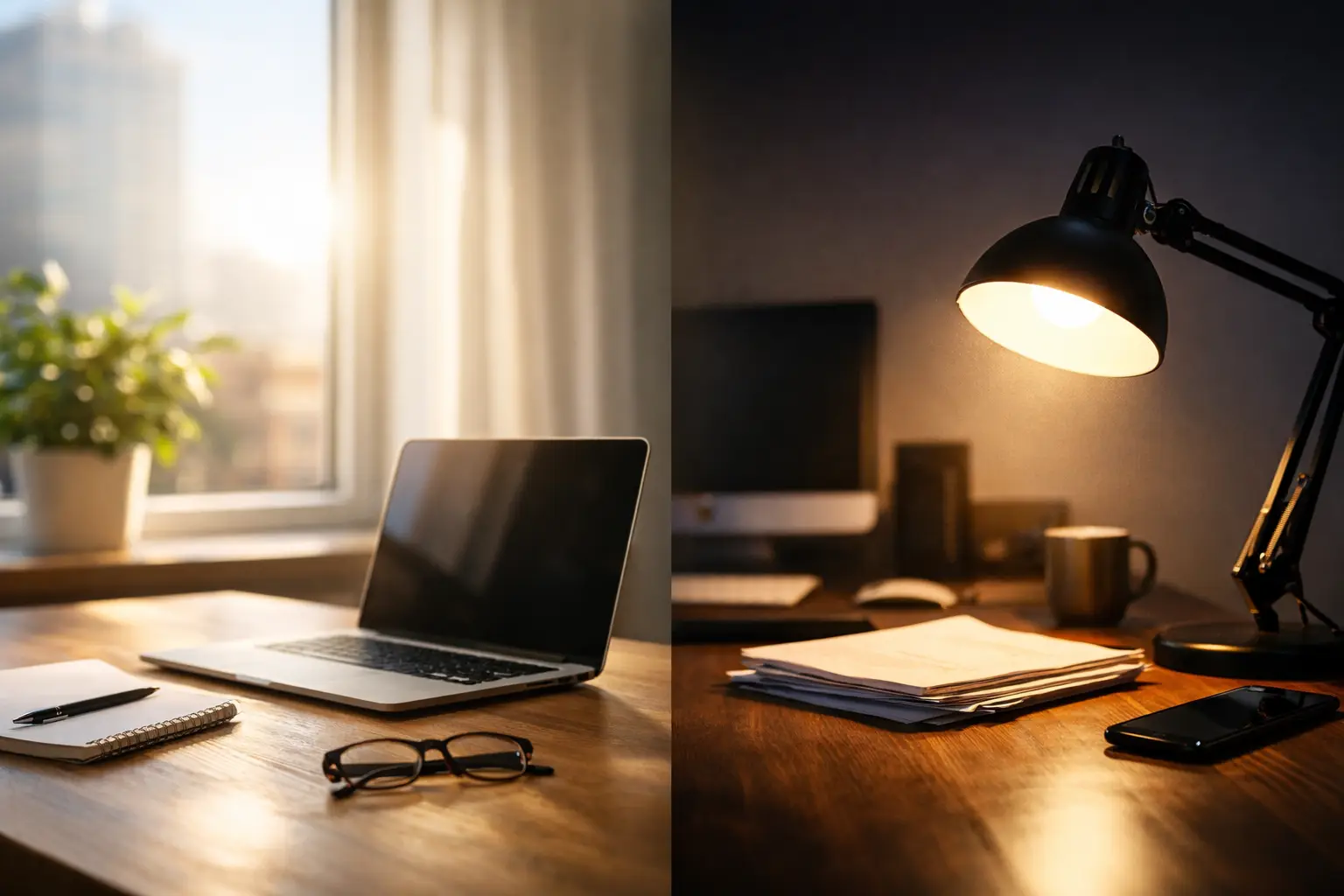
Natural Light vs Artificial Light Explained
The difference between natural light vs artificial light shows up long before you notice it on a spec sheet or in a lighting shop. You feel it when you wake more easily after opening the curtains, and you feel it again at 3pm when a dim room leaves you flat and unfocused. For most people, this is not really a design question. It is a daily energy and sleep question.
Light helps set your body clock. It influences alertness, mood, concentration and how ready you feel for sleep later on. That means the quality, timing and intensity of the light around you matter more than many people realise.
Natural light vs artificial light: what is the real difference?
Natural light comes from the sun and changes throughout the day. It tends to be brighter, more dynamic and better matched to the cues your body expects. Morning daylight is especially useful because it tells your brain that the day has started, which helps regulate your circadian rhythm – the internal system that affects sleep and wake timing.
Artificial light is any man-made light source, from ceiling bulbs and desk lamps to screens and kitchen spotlights. It gives you consistency and control, which is useful, but it does not behave like daylight. Indoor light is often much dimmer than outdoor light, even in a well-lit room, and the timing of artificial light can sometimes work against your body clock rather than with it.
That does not make artificial light bad. It simply means it needs to be used with a bit more intention.
Why light matters for energy, sleep and wellbeing
Your brain uses light signals, especially through the eyes, to help decide when to feel alert and when to start winding down. Bright light in the morning supports wakefulness. Lower light in the evening supports the natural rise of melatonin, the hormone that helps prepare you for sleep.
This is one reason some people feel tired all morning in winter, or struggle to switch off after working under bright lights late into the evening. It is not always about motivation, stress or lack of discipline. Sometimes the lighting pattern across the day is simply out of step with what your body needs.
Natural daylight also tends to encourage more movement and better routine. If your mornings involve opening the blinds, stepping outside, or working near a window, you are more likely to feel that the day has properly begun. By contrast, spending most of the day in dim indoor light can leave the whole day feeling slightly muted.
Where natural light tends to do a better job
The biggest advantage of natural light is that it provides a stronger daytime signal. Even on a grey British morning, outdoor light is usually far brighter than what you get from indoor bulbs. That stronger signal helps with alertness, concentration and body clock timing.
Natural light also changes in colour and intensity across the day. That variation matters. Your body is used to mornings feeling different from evenings. Daylight gives those changes automatically, without you needing to think about settings, bulb temperatures or timers.
There is also a practical mood benefit. Rooms with decent daylight often feel more open, easier to be in and less draining over long periods. If you work from home or spend a lot of time indoors, that can make a noticeable difference to how tired you feel by late afternoon.
Still, natural light is not perfect. In the UK, it is limited by weather, season, building layout and working hours. A north-facing room in December is not going to give you much help at 8am. That is where artificial light becomes useful rather than second best.
Where artificial light is genuinely useful
Artificial light gives you reliability. You can use it early in the morning, after sunset and in darker rooms that never get much daylight. If your home has poor window placement or you start work before sunrise, you cannot rely on natural light alone.
Good artificial lighting can also improve function. A bright task lamp can reduce eye strain when reading. Proper kitchen or bathroom lighting makes routine tasks easier. In winter, thoughtful indoor lighting can stop your home feeling gloomy by mid-afternoon.
The issue is usually not artificial light itself. It is poor artificial light. That often means rooms that are too dim during the day, too harsh at night, or lit in a way that ignores what the body clock is trying to do.
Natural light vs artificial light at different times of day
Timing matters as much as type.
In the morning, natural light is usually best. Getting outside within the first hour of waking, even for 10 to 20 minutes, can help you feel more awake and support better sleep later. If that is not realistic, sitting near the brightest window in the house is still useful, though outdoor light tends to be stronger.
During the middle of the day, a combination often works well. Use daylight where you can, then top it up with indoor lighting if your room is dull. This is especially helpful for home workers who sit in one spot for hours and gradually become sleepy without realising the environment is part of the problem.
In the evening, the balance shifts. Very bright artificial light, especially cool-toned overhead light, can make it harder to feel sleepy at the right time. That does not mean you need to live by candlelight. It means your lighting should start becoming softer and less intense as bedtime approaches.
How to use both better at home
The most useful approach is not choosing one over the other. It is matching light to the job and time of day.
Start by using as much daylight as you can in the morning and early afternoon. Open curtains fully, sit closer to windows, and if possible step outside soon after waking. Even a short walk, school run or few minutes in the garden can help.
Then look at the darker parts of your home. If a room feels dull in daytime, add lighting that makes it easier to stay alert rather than leaving yourself to fade through the afternoon. A desk lamp or brighter ambient light can help more than people expect.
Later in the evening, ease off. Switch from bright overhead lights to warmer lamps if you have them. Reduce unnecessary glare. If you are trying to improve sleep, this is often more realistic and more effective than chasing complicated evening routines.
Common mistakes people make with lighting
One of the biggest mistakes is spending all day in low indoor light and then sitting under bright light at night. That is the opposite of what your body clock wants. Daytime should generally be brighter. Evening should generally be dimmer.
Another common issue is assuming screens are the main problem while ignoring room lighting. Screens do matter, but if your whole living room is brightly lit at 10pm, that matters too. Equally, if your daytime workspace is gloomy, cutting screen time alone will not fix afternoon tiredness.
There is also the habit of treating tiredness as purely internal. People blame themselves for poor focus or low motivation when the room they are in is making the job harder. Lighting will not solve every energy problem, but it is one of the easier things to improve.
Which is better: natural light or artificial light?
If the question is which works better for supporting your natural body clock, natural light usually wins. It is brighter, more biologically useful and better at giving your brain the signals it expects.
If the question is which is more practical in modern life, artificial light is essential. It lets you function safely and comfortably when daylight is limited, especially during British winters or in homes and workplaces with poor natural light.
So the honest answer is that natural light is generally better for rhythm, alertness and sleep timing, while artificial light is better for consistency and convenience. The goal is not to replace one with the other. It is to use natural light as your foundation, then use artificial light in a way that supports rather than disrupts how you want to feel.
At RRJChambers, the useful mindset is simple: if your energy feels off, look at your environment before assuming you need something more extreme. Better light habits are not glamorous, but they often work.
Tomorrow morning, open the curtains straight away, get outside if you can, and notice how the rest of the day feels. Small changes like that are often where better sleep and steadier energy begin.
Further Reading
If you enjoyed this article you might like to read these articles.
- How to avoid post lunch sleepiness
- The Real Guide to Daily Energy
- How to Improve Sleep Quality Naturally
The role of wellness products

Some people explore supplements or wellness products to support their daily routines. While these can sometimes be helpful, they should be viewed as support rather than a replacement for healthy habits.
If you are interested in exploring wellness products that may support energy routines, you can browse the options available at the Wellthy Freedom Hub store.
Always read ingredient labels carefully and speak with a healthcare professional if you have medical conditions or take medication.
Disclosure: This site may link to products on wellthyfreedomhub.com. If you choose to buy, the store benefits. The guidance here is informational and not medical advice.

Richard Chambers is the founder of rrjchambers.com. He writes about practical ways to improve everyday health, energy, and wellbeing through simple routines, lifestyle habits, and carefully chosen wellness products. His focus is on clear, honest guidance that helps people make small changes that support better health over time.
Health Information Notice
The information in this article is intended for general educational purposes only and should not be considered medical advice. If you have concerns about your health, sleep, or energy levels, it is always best to consult a qualified healthcare professional.