
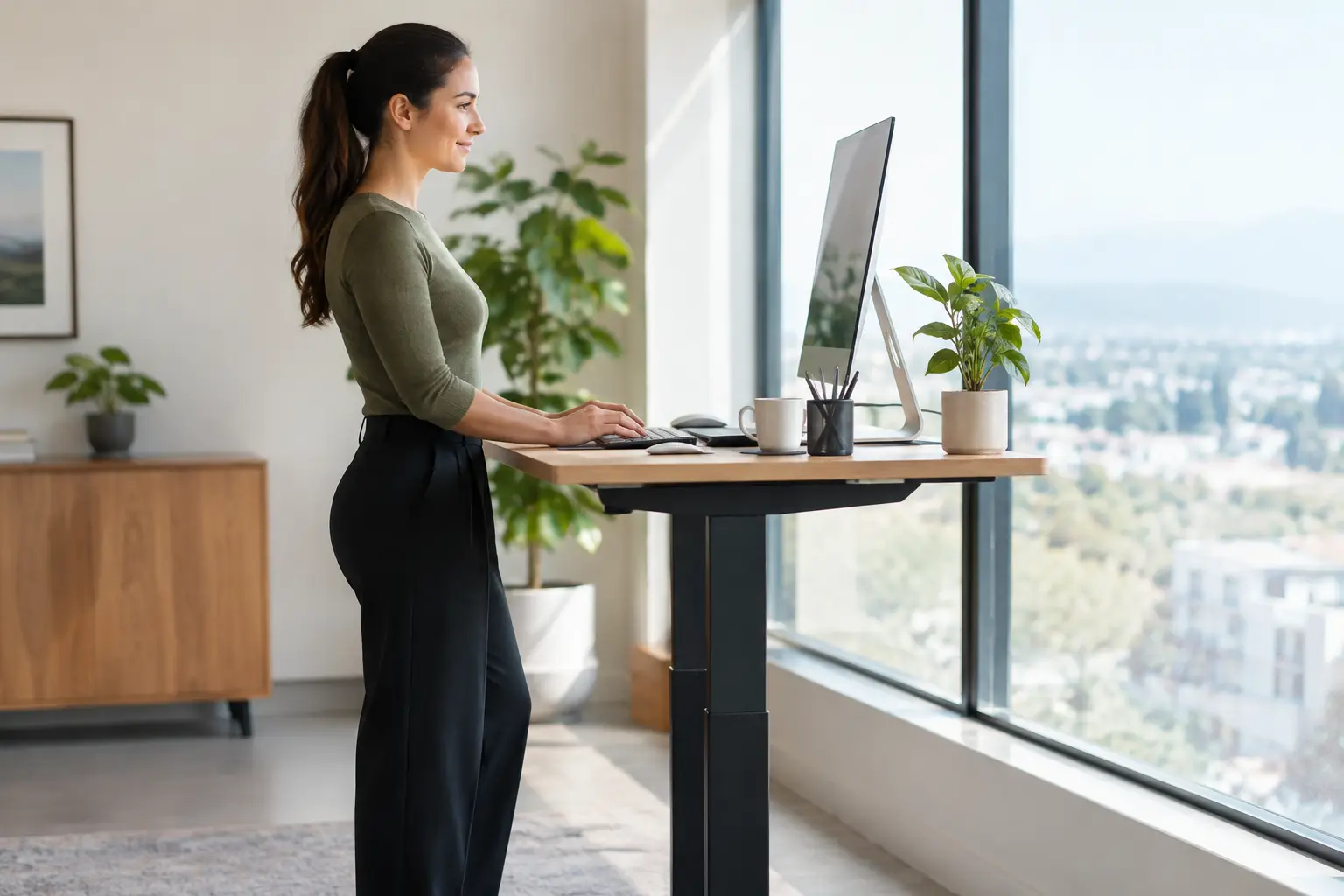
Standing Desk Benefits: What They Can Really Do
A standing desk will not fix a poor night’s sleep, erase stress, or make a long working day effortless. But standing desk benefits can be worthwhile when they help you break up long periods of sitting and move more often. For people who spend most of the day at a laptop, that is a practical change rather than a wellness trend.
The key is to see a standing desk as a tool for varying your position, not a command to stand for eight hours. Sitting all day can leave many people feeling stiff, sluggish and mentally flat by late afternoon. Replacing some of that sitting with comfortable standing, short walks and regular position changes can make the working day feel more manageable.
The standing desk benefits that matter most
The clearest potential benefit is reducing prolonged, uninterrupted sitting. Many office workers sit through meetings, emails, focused tasks and lunch without noticing how little they have moved. A desk that moves up and down makes it easier to change position before discomfort builds.
Research on sitting and health generally points to the value of reducing sedentary time, but the detail matters. Standing is not the same as exercise, and simply standing still for long stretches has limits of its own. The useful habit is regular movement across the day: standing for a task, walking to make a drink, stretching briefly, or taking a call away from the screen.
For some people, alternating between sitting and standing may ease the familiar stiffness in the lower back, hips and legs that comes from staying in one position too long. It can also reduce the urge to slump over a laptop. That does not mean a standing desk treats back pain. Persistent, severe or worsening pain needs proper assessment, particularly if it comes with numbness, weakness, fever or unexplained weight loss.
There can be a modest mental benefit too. Changing position can create a useful break between tasks and make you more aware of your energy level. If you tend to lose focus at 3pm, standing for a short spell while dealing with routine emails may feel more alert than remaining folded into your chair. The effect varies from person to person, but it is a simple experiment worth trying.
What a standing desk cannot do
Wellness marketing often turns one sensible habit into a cure-all. A standing desk is not a substitute for sleep, regular activity, balanced meals, daylight or time away from work. If you wake exhausted every day, rely heavily on caffeine, or feel unwell despite getting enough rest, raising your desk is unlikely to address the main cause.
It also cannot undo a sedentary day if you stand rigidly in one spot. Feet, knees and lower backs can ache when standing is excessive or poorly set up. People with varicose veins, joint problems, balance concerns or certain long-term health conditions may need to be especially cautious and seek individual advice if standing worsens symptoms.
The aim is not to decide whether sitting is bad and standing is good. Both are normal. Problems often arise when either position lasts too long without a break.
How to use a standing desk without making work harder
Start more slowly than you think you need to. If you currently sit for most of the day, try standing for 10 to 15 minutes once or twice a day. Choose an easy task at first, such as reading messages, joining a meeting or planning your next piece of work. Increase the time only if your feet, legs and back feel comfortable afterwards.
A reasonable pattern for many people is to alternate throughout the day rather than follow a strict timer. Sit for focused work, stand for a short task, then move away from the desk for a minute or two. The best routine is the one you can repeat without becoming distracted, sore or tired.
Set the desk to fit you
Poor desk height can turn a helpful change into neck and shoulder strain. When standing, your elbows should sit roughly at a right angle while typing, with shoulders relaxed rather than lifted. Keep the keyboard close enough that you are not reaching forward.
The top of your screen should be around eye level, although comfort matters more than chasing a perfect measurement. If you use a laptop, consider a laptop stand with a separate keyboard and mouse. Looking down at a laptop for hours is uncomfortable whether you are seated or standing.
Wear supportive shoes if possible. Standing in hard-soled shoes, slippers with little support, or bare feet on a hard floor can make your feet ache quickly. An anti-fatigue mat may help some people, but it is optional. A comfortable setup and sensible time limits matter more.
Move, do not just stand still
Small movement is where much of the value lies. Shift your weight naturally, take a few steps when thinking, or use a short break to refill your water bottle. You do not need a complicated routine or a fitness tracker to make this useful.
Try pairing movement with existing cues. Stand when your first meeting begins. Sit down when you start concentrated work. Walk for two minutes after lunch or after finishing a difficult task. These small links are easier to maintain than promising yourself you will move more at some vague point later.
Will it help with tiredness?
It may help with the particular sluggishness that comes from being still and indoors for hours. A change of posture can make you feel less stuck, especially alongside a short walk, water and a few minutes of daylight. It is not, however, a reliable treatment for ongoing fatigue.
Tiredness has many possible causes, including disrupted sleep, stress, low mood, medication, low iron, thyroid problems and sleep conditions. If fatigue lasts for several weeks, affects daily life, or comes with symptoms such as breathlessness, palpitations or unintentional weight loss, speak to your GP. Practical habits are useful, but they should not delay getting help when something feels wrong.
For everyday energy, think of the desk as one part of a wider working routine. Get outside early where you can, eat regular meals that suit you, drink enough water, and protect a sensible wind-down before bed. These basics tend to have a larger effect on how you feel than any single piece of office equipment.
Is a standing desk worth buying?
That depends on your workspace and how you work. An adjustable desk can be useful if you are at a computer for long periods and find that sitting leaves you stiff or restless. It is particularly practical for home workers who can control their setup and build movement into their day.
But you do not need to buy an expensive desk to test the idea. A stable riser or a safely arranged higher surface can show whether you actually enjoy working while standing. Avoid makeshift setups that wobble or force you to crane your neck. If the experiment feels uncomfortable after a fair adjustment period, a standing desk may not be the right answer for you.
The most helpful desk is one that supports better habits rather than becoming another unused purchase. Set it up comfortably, use it for short periods, and let it remind you to change position. A few ordinary moments of movement across the day can do more for your comfort and energy than trying to stand perfectly from nine to five.