
Sunrise Alarm Clock Review: Worth It?
If your current alarm drags you out of sleep with a harsh beep and leaves you groggy, a sunrise alarm clock review is worth reading before you spend any money. These clocks promise a gentler wake-up by gradually increasing light before your alarm time, which sounds sensible enough. The real question is whether they make a noticeable difference in ordinary life, especially if you wake up tired most mornings.
The short answer is yes, they can help, but not in the miracle-cure way some product pages suggest. A sunrise alarm clock is best thought of as a useful tool for improving the way you wake up, not a fix for chronic poor sleep, late nights, stress, sleep apnoea, or a bedroom that works against you. Used in the right context, though, it can make mornings feel less abrupt and a bit more human.
What a sunrise alarm clock is actually trying to do
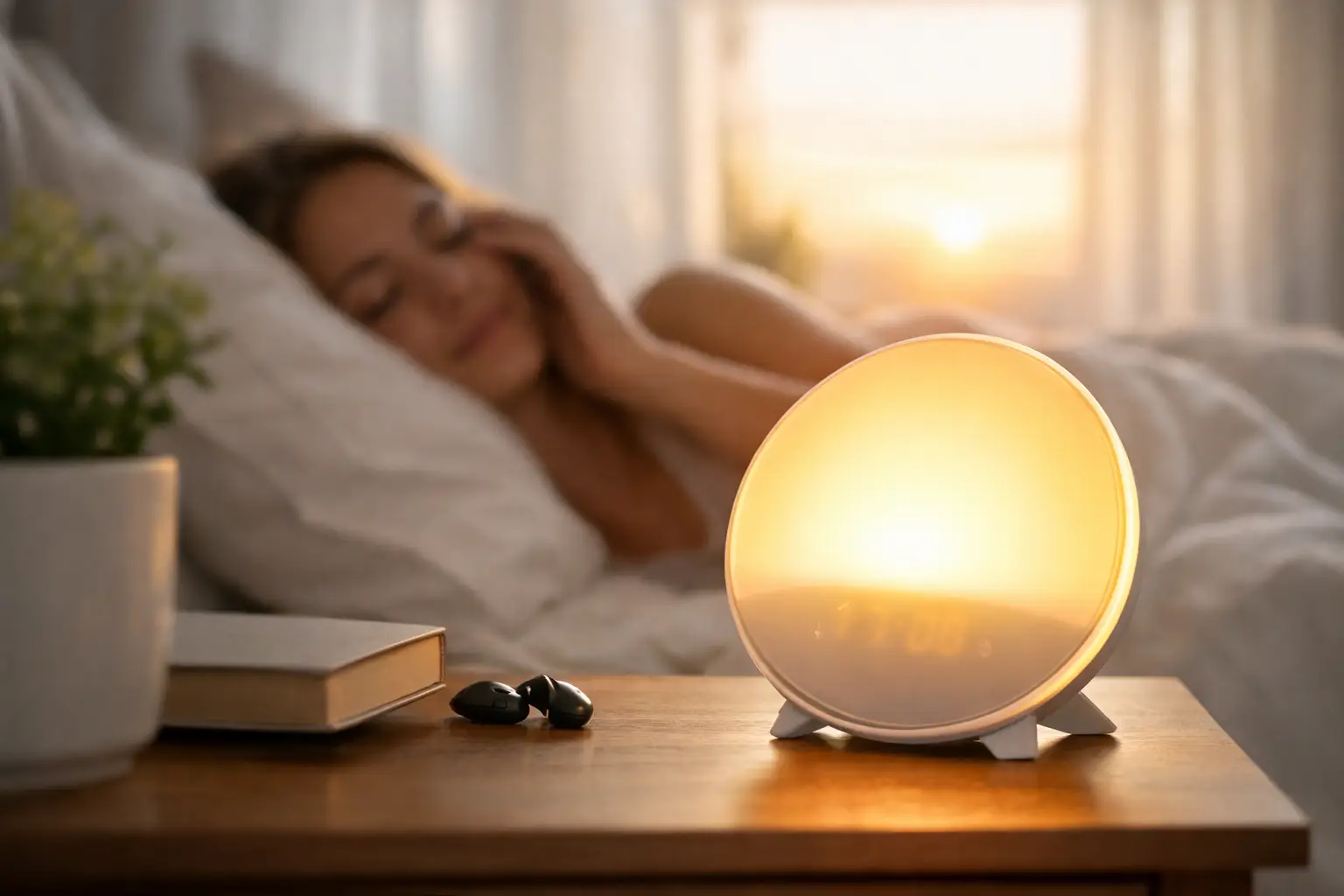
A sunrise alarm clock slowly brightens over a set period, usually 15 to 60 minutes before your chosen wake time. The idea is to mimic a natural dawn, prompting your body to move towards wakefulness more gradually than it would with a sudden alarm sound in darkness.
That makes practical sense. Light is one of the strongest signals affecting your sleep-wake rhythm. Morning light helps tell your brain that the day has started, which supports alertness and helps regulate your internal clock. If you wake in winter darkness, live somewhere with poor natural light in the bedroom, or get up before sunrise for work, an artificial dawn can be useful.
This is also why these clocks tend to suit UK readers particularly well. Between dark winter mornings, heavy curtains, and early starts, many people are waking without much natural light at all.
Sunrise alarm clock review: the genuine benefits
The main advantage is that waking feels less jarring. That may sound minor, but it matters. If you already feel drained, the difference between being yanked awake and being brought round more gently can affect your mood and energy for the first hour of the day.
Many people also find they are less likely to hit snooze. When the room is already getting lighter, it is slightly easier to feel oriented and less tempted to stay under the duvet. That does not mean you will spring out of bed full of enthusiasm. It simply means the transition into wakefulness can feel smoother.
There is also a useful knock-on effect for morning routine. People who struggle most in the first 20 minutes after waking often lose the rest of the morning to that sluggish start. A sunrise alarm clock can create a better opening to the day, especially when paired with getting out of bed promptly, opening curtains, and seeing real daylight soon after.
Some models add natural sounds, bedside lamp functions, or sunset dimming in the evening. Those extras can be helpful, but they are not the core reason to buy one. The main value is the gradual increase in light.
Where sunrise alarm clocks fall short
This is the part many reviews skip. If you are consistently sleeping five or six hours, a sunrise alarm clock will not magically make you feel well rested. If your room is too warm, your sleep is fragmented, or your bedtime is all over the place, the clock is not the main issue.
The same goes for people dealing with more significant sleep problems. If you snore heavily, wake choking, feel exhausted despite enough time in bed, or struggle with insomnia, you may need proper medical advice rather than another gadget on the bedside table.
There is also some variation in how effective the light feels. Cheaper models can be too dim, too small, or too abrupt in the way the light changes. If the clock barely lights the room, it may not do much unless it is positioned very close to your face. On the other hand, if it gets bright too quickly, it defeats the point.
And then there is personal preference. Some people simply sleep through the light and still need a sound alarm as backup. Others find the concept helpful in winter but unnecessary for much of the year.
What matters most when choosing one
If you are comparing models, brightness matters more than novelty features. You want a clock that can produce enough light to make a genuine difference in a dark bedroom. A gradual ramp-up period is important too. Around 30 minutes suits many people, but the ability to adjust that is useful.
Sound options are worth having, even if you prefer light-led waking. A gentle sound backup can help if you are a deep sleeper. It is also worth checking whether buttons are intuitive. There is nothing calming about wrestling with a badly designed menu system at 10.30 pm.
Build quality matters more than it might seem. A bedside product gets used every day, often half-asleep. If it feels fiddly, unstable, or overly bright at night, it becomes irritating quickly.
For most people, the ideal model is not the one with the longest feature list. It is the one that is easy to set, gives a warm gradual light, has reliable alarm settings, and does not clutter the bedside table.
Who benefits most from a sunrise alarm clock
People who wake in darkness are the obvious group. That includes early commuters, shift workers on morning schedules, parents getting up before the rest of the house, and anyone facing long winter mornings.
They also tend to help those who are not naturally good at abrupt transitions. If your main problem is that you feel disoriented, irritable, or heavy-headed when a standard alarm goes off, this type of clock may suit you well.
They can also be useful for home workers. One downside of working from home is that the boundary between sleeping and starting the day can get blurred. A gradual light signal can make mornings feel more structured, especially when followed by a simple routine such as washing, dressing, hydrating, and getting outside for a few minutes.
If, however, you already wake easily, have plenty of natural morning light, and mostly sleep well, the benefit may be fairly modest.
How to get better results from one
A sunrise alarm clock works best when it supports decent habits rather than trying to compensate for poor ones. Put it close enough for the light to reach you properly, but not so close that it feels intrusive. Give yourself a consistent wake time where possible. And do not keep the room completely black until midday after the alarm has gone off.
The most effective combination is usually simple: regular bedtime, darker evenings, a slightly cooler bedroom, gradual light before waking, and real outdoor light as soon as practical after getting up. That sequence gives your body clearer cues.
It also helps to be realistic in the first week. You may not feel transformed overnight. For many people the benefit is subtler – less grogginess, less hostility towards the alarm, and a slightly easier start that adds up over time.
A balanced sunrise alarm clock review verdict
So, are they worth it? For the right person, yes. A good sunrise alarm clock can make waking feel gentler, support a more stable morning rhythm, and reduce some of the shock of dark early starts. That is a meaningful benefit if mornings are consistently difficult.
But this is not a product to buy with inflated expectations. It will not replace enough sleep, fix poor sleep quality, or solve every energy problem. Think of it as part of a better sleep and morning setup, not the whole answer.
If you are choosing between a cheap impulse buy and a well-made model you will actually use daily, it is usually worth leaning towards quality. Not luxury for the sake of it, just something reliable with sensible brightness and simple controls.
For readers who want practical wellbeing tools without the usual nonsense, this is one of the more reasonable options. It is low effort, habit-friendly, and grounded in a basic principle that makes sense: light helps your body wake up.
If your mornings feel harder than they should and darkness is part of the problem, a sunrise alarm clock is not a bad place to start. Just keep your expectations steady, use it consistently, and let it support the habits that matter more than any bedside gadget ever will.
Further Reading
If you enjoyed this article you might like to read these articles.
- How to avoid post lunch sleepiness
- The Real Guide to Daily Energy
- How to Stop Afternoon Energy Crashes
The role of wellness products

Some people explore supplements or wellness products to support their daily routines. While these can sometimes be helpful, they should be viewed as support rather than a replacement for healthy habits.
If you are interested in exploring wellness products that may support energy routines, you can browse the options available at the Wellthy Freedom Hub store.
Always read ingredient labels carefully and speak with a healthcare professional if you have medical conditions or take medication.
Disclosure: This site may link to products on wellthyfreedomhub.com. If you choose to buy, the store benefits. The guidance here is informational and not medical advice.

Richard Chambers is the founder of rrjchambers.com. He writes about practical ways to improve everyday health, energy, and wellbeing through simple routines, lifestyle habits, and carefully chosen wellness products. His focus is on clear, honest guidance that helps people make small changes that support better health over time.
Health Information Notice
The information in this article is intended for general educational purposes only and should not be considered medical advice. If you have concerns about your health, sleep, or energy levels, it is always best to consult a qualified healthcare professional.