
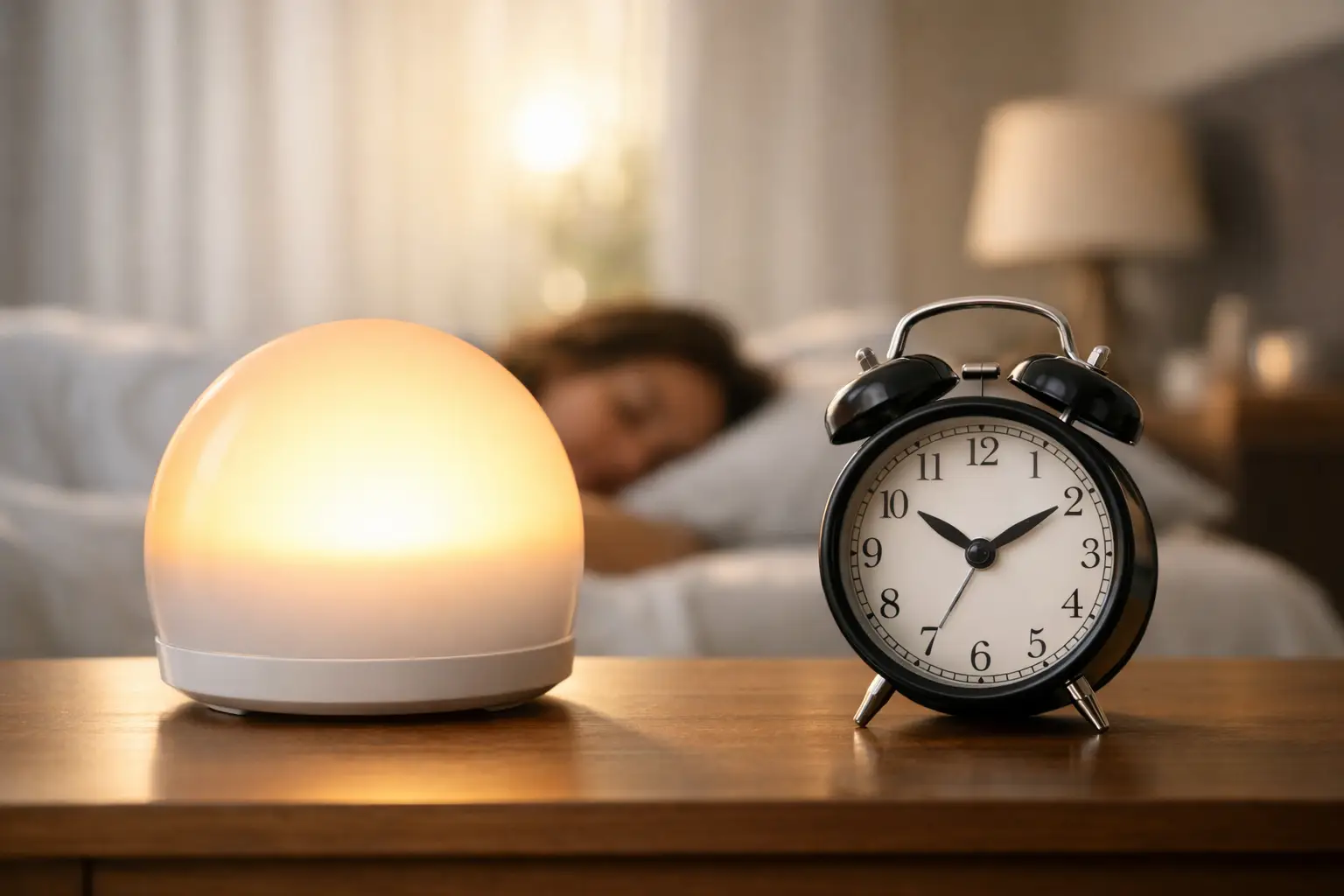
Wake Light vs Alarm Clock: Which Is Better?
This article contains affiliate links. If you buy through them I may earn a small commission at no extra cost to you.
If your current alarm drags you out of sleep with a harsh beep and leaves you groggy, the wake light vs alarm clock question is worth asking. The way you wake up can shape your first hour of the day more than most people realise, especially if you already struggle with low energy, poor sleep or dark winter mornings.
A standard alarm clock does one job well. It makes a noise at a set time. A wake light tries to do something more gradual by increasing light before your alarm time, often paired with gentle sound. That difference sounds small, but in practice it can change how abrupt waking feels.
For many people, this is not about buying a clever gadget for the sake of it. It is about reducing morning stress, making it easier to get out of bed and supporting a more consistent routine. Still, a wake light is not automatically better for everyone.
Wake light vs alarm clock: what is the actual difference?
A traditional alarm clock relies on sound. At 6.30 or 7.00, it goes off and expects your brain to catch up instantly. If you sleep lightly, that may work perfectly well. If you sleep heavily, you may need a louder tone or several alarms.
A wake light works differently. It starts brightening your room gradually, usually over 20 to 30 minutes before your chosen wake time. The idea is to mimic a sunrise, giving your body a gentler cue that morning is coming. Many models also include a backup alarm sound, so it is not simply light or nothing.
That matters because light is one of the strongest signals for your body clock. Morning light helps regulate circadian rhythms, which influence when you feel sleepy and when you feel alert. Research on light exposure and circadian timing has consistently shown that morning light can support wakefulness and help shift sleep timing in a healthier direction.
An alarm clock, by contrast, does not help regulate your body clock. It just interrupts sleep at a chosen moment.
Why a wake light can feel easier to wake up to
The biggest advantage of a wake light is not that it guarantees more sleep. It is that it can make waking feel less aggressive. If you are already close to a lighter sleep stage when the room starts to brighten, you may wake more naturally and feel less disoriented.
This is especially useful for people who find winter mornings difficult. In much of the UK, dark mornings can make it harder to feel properly awake. When your bedroom is still black at 7.00, your brain is getting mixed signals. A wake light helps create a more convincing start to the day.
It may also help if you tend to snooze repeatedly. Many people use the snooze button not because they need much more sleep, but because the jump from deep sleep to a loud alarm feels awful. A gentler wake-up can reduce that resistance.
That said, a wake light is not magic. If you are sleeping five and a half hours a night, waking with simulated sunrise will not fix the underlying sleep debt. It can improve the experience of waking, but it cannot compensate for chronic sleep restriction.
Where a standard alarm clock still makes sense
A basic alarm clock still has clear advantages. It is cheap, simple and reliable. There is very little to set up, and for some people that is exactly the point.
If you are a deep sleeper, a wake light alone may not be enough. Light can help prepare your body to wake, but some people still need a firm sound to get out of bed. In that case, a traditional alarm or a wake light with a strong audio setting may work better than a light-only approach.
A standard alarm clock also suits people who wake before the alarm anyway. If you naturally stir around the right time and only need a backup, there may be little reason to spend more on a wake light.
There is also the issue of room conditions. A wake light tends to work best in a relatively dark bedroom. If your room is already bright from street lighting or an early summer sunrise, the effect may be less noticeable.
Wake light vs alarm clock for sleep quality
This is where expectations need to be realistic. A wake light may help you wake more gently, but it does not necessarily improve sleep quality across the whole night.
Sleep quality depends far more on factors such as bedtime consistency, caffeine timing, alcohol, stress, room temperature, noise and evening light exposure. If those areas are off, your alarm choice is not the main problem.
Where a wake light can help is at the edges of the sleep routine. A smoother wake-up may make it easier to get up at the same time each day, and a steady wake time is one of the most useful anchors for better sleep. Some wake lights also include a dimming sunset mode at night, which can support a calmer wind-down if used properly.
So the honest answer is this: a wake light can support better sleep habits, but it is not a direct cure for poor sleep.
Who should choose a wake light?
A wake light is usually a better fit if you wake up feeling startled, struggle with dark mornings, hit snooze often or want to build a steadier morning routine. It can also suit people who do not like checking their mobile phone the moment they wake, since many wake lights replace the mobile phone alarm on the bedside table.
It is particularly worth considering if your mornings feel harder than they should. Not everyone who feels tired has a sleep disorder. Often, the problem is a cluster of ordinary issues: too little morning light, irregular sleep timing and a rushed start to the day. A wake light can help with one part of that picture.
Parents with broken sleep may also find a gentler alarm preferable, although this depends on whether they need a stronger prompt after a disturbed night.
Who should stick with an alarm clock?
If you sleep well, wake reasonably easily and simply need something dependable, an alarm clock is enough. The same applies if budget matters more than comfort. A good routine beats an expensive device every time.
You may also prefer a standard alarm if you share a room and your partner’s sleep schedule is different. A wake light brightening the whole room half an hour early is not always popular.
And if your main issue is not waking up, but falling asleep too late, a wake light may be addressing the wrong end of the problem.
What to look for if you are buying a wake light
Not all wake lights are equally useful. The best ones let you adjust brightness gradually, choose the sunrise duration and use a gentle but audible backup alarm. Some also offer warm evening light, which can be more suitable before bed than harsh overhead lighting.
Keep the features practical. You do not need a dozen nature sounds, meditation programmes and app integrations if all you want is a calmer wake-up. In many cases, simplicity makes it more likely you will use it consistently.
Placement matters too. A wake light should be near enough for the light to reach your eyes while you sleep, but not so bright or close that it becomes irritating. A bedside table usually works well.
Recommended wake lights on Amazon UK
I have looked at what is actually available in the UK and tried to be straightforward about what is worth considering and what is not. Wake lights vary enormously in quality and the cheaper ones often do not produce a convincing enough light change to make any real difference to how you wake up.
Lumie Bodyclock Shine 300 – the one most people end up with
The Lumie Bodyclock Shine 300 is made by a British company that has been making light therapy products for over 30 years. That matters because a lot of what is sold as wake lights are cheap imports with no real research behind them. The Shine 300 uses a mix of LEDs that shift from deep red through orange to a warmer yellow as the time approaches, which is closer to what an actual sunrise looks like than the flat white glow most budget models produce. It is not cheap. But it is the one that sleep researchers tend to mention when they talk about this category, and it has been around long enough to have a genuine track record rather than just good reviews.
Lumie Bodyclock Starter 30 – if you want to try one without spending too much
The Lumie Bodyclock Starter 30 does the core job without the extra features of the higher models. The sunrise function works reliably, it is easy to set up, and it is considerably less expensive than the Shine 300. If you have never used a wake light before and are not sure whether it will suit you, this is a sensible place to start. You can always upgrade later if you find it makes a difference.
Dreamegg Sunrise Alarm Clock – the budget option worth knowing about
The Dreamegg Sunrise Alarm Clock does not have the colour quality of the Lumie range and the light shift is less convincing, but for people who want to test the idea without committing much money it is a reasonable starting point. It has a backup alarm, adjustable brightness, and is well reviewed on Amazon UK for what it is. Go in with realistic expectations and it probably will not disappoint. Expect it to perform like a Lumie and it will.
Philips SmartSleep Wake-Up Light – better for heavier sleepers
The Philips SmartSleep Wake-Up Light is worth looking at if you know from experience that light alone probably will not get you out of bed. It has FM radio and several sound options alongside the sunrise function, so you are not relying purely on light to wake up. Philips make several versions at different price points and they are all available on Amazon UK. The build quality is solid and the brightness range is wider than most budget alternatives.
If you decide a standard alarm clock is the right choice
Getting the phone off the bedside table is still worth doing even if you do not want a wake light. The Peakeep Twin Bell Alarm Clock is about as simple as it gets. Battery operated, no backlight to disturb sleep, nothing to set up or connect to anything. It just tells the time and goes off when you set it to. Sometimes that is genuinely all you need.
One last thing before you buy anything
Whichever option you go for, placement makes a difference. A wake light needs to be close enough that the light actually reaches your eyes when you are lying down. Too far away and you will sleep through the gradual increase and only wake when the backup alarm goes off, which rather defeats the point. A bedside table at roughly arm’s length tends to work well for most people.
The bigger issue is your morning light exposure
Whether you choose a wake light or alarm clock, morning light after waking still matters. Getting real daylight soon after you get up helps reinforce your body clock far more effectively than staying indoors under dim lighting.
If possible, open the curtains straight away and spend a few minutes outside or near a bright window. Even on grey UK mornings, outdoor light is usually much stronger than indoor light. This simple habit often does more for alertness than people expect.
That is why the best answer to wake light vs alarm clock is often both-and, not either-or. A wake light can help you wake more gently, and real morning daylight helps you feel properly awake afterwards.
So which is better?
For comfort and a more natural wake-up, a wake light is often better. For simplicity, cost and sheer reliability, an alarm clock still wins.
If you are exhausted, dread the alarm and struggle through dark mornings, a wake light is worth trying. If your current setup works and you generally feel fine on waking, there is no reason to overcomplicate it.
No hype. Just simple habits that work. The best choice is the one that helps you wake at a consistent time with the least stress and the most chance of starting the day well.
Further Reading
If you enjoyed this article you might like to read these articles.
- Blue Light Blocking Glasses Review
- The Real Guide to Daily Energy
- Daylight Lamp vs SAD Lamp: What Matters
The role of wellness products

Some people explore supplements or wellness products to support their daily routines. While these can sometimes be helpful, they should be viewed as support rather than a replacement for healthy habits.
If you are interested in exploring wellness products that may support energy routines, you can browse the options available at the Wellthy Freedom Hub store.
Always read ingredient labels carefully and speak with a healthcare professional if you have medical conditions or take medication.
Disclosure: This site may link to products on wellthyfreedomhub.com. If you choose to buy, the store benefits. The guidance here is informational and not medical advice.

Richard Chambers is the founder of rrjchambers.com. He writes about practical ways to improve everyday health, energy, and wellbeing through simple routines, lifestyle habits, and carefully chosen wellness products. His focus is on clear, honest guidance that helps people make small changes that support better health over time.
Health Information Notice
The information in this article is intended for general educational purposes only and should not be considered medical advice. If you have concerns about your health, sleep, or energy levels, it is always best to consult a qualified healthcare professional.