
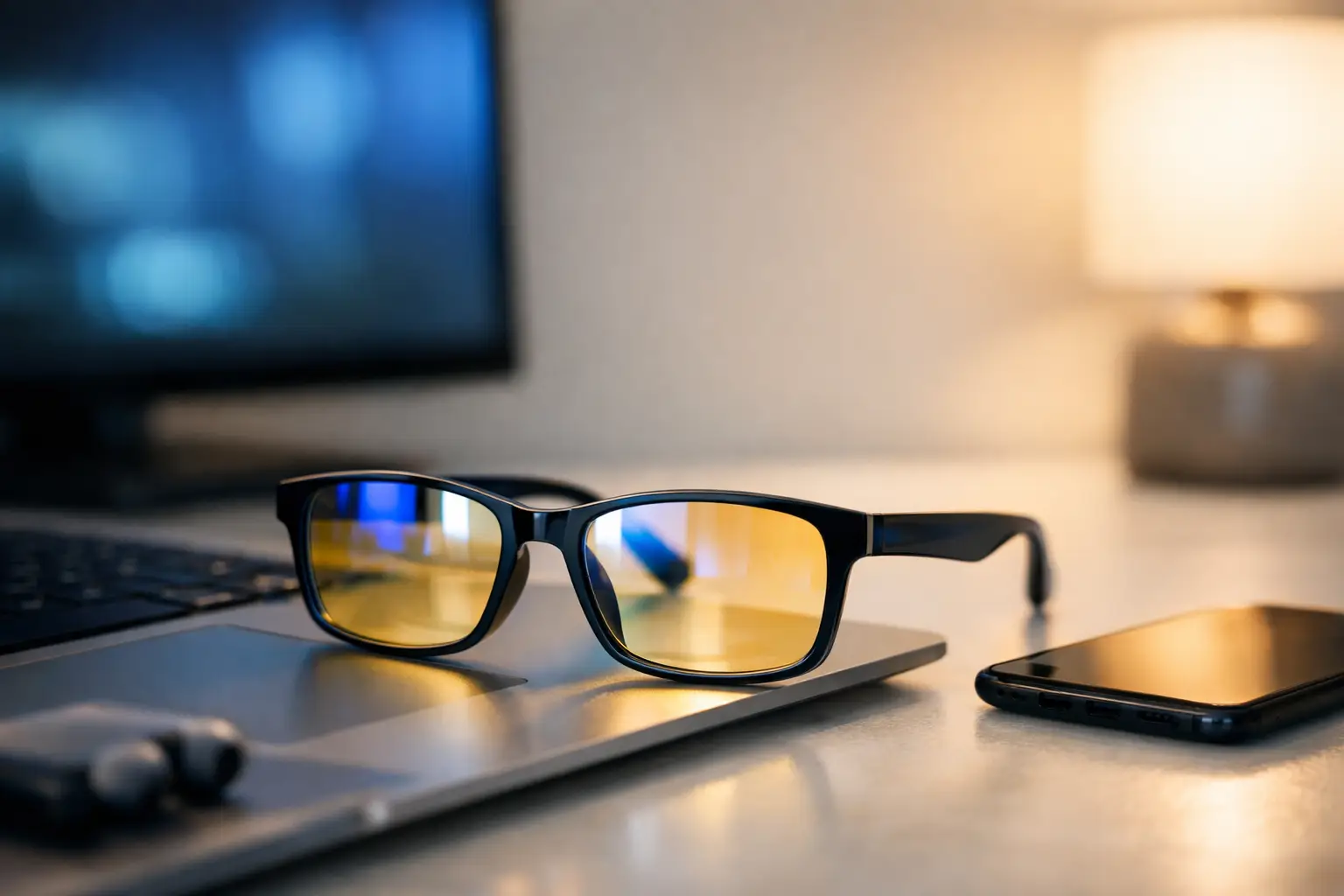
Blue Light Blocking Glasses Review
This article contains affiliate links. If you buy through them I may earn a small commission at no extra cost to you.
If you are staring at a laptop until 10pm, then lying in bed feeling tired but oddly not sleepy, a blue light blocking glasses review is worth your time. Not because these glasses are a miracle fix, but because they sit in that useful middle ground between gimmick and genuinely helpful tool. For some people, they make evenings feel calmer and sleep comes a bit easier. For others, they do very little beyond changing the tint of the world.
That is the key point from the start: blue light blocking glasses can help, but only in the right context. If your sleep is poor because you drink coffee at 5pm, scroll in bed for an hour, keep the bedroom too warm, and wake at different times each day, glasses alone will not sort it. If, however, your main problem is heavy screen use in the evening, they may be a sensible addition to your routine.
Blue light blocking glasses review: do they work?
The short answer is yes, sometimes. The longer answer is that it depends what you want them to do.
Blue light is part of normal daylight and plays a useful role in helping regulate your body clock. During the day, that is a good thing. In the evening, large amounts of bright light, especially from screens and strong indoor lighting, may make it harder for the body to prepare for sleep. Blue light blocking glasses are designed to reduce that signal, particularly later in the day.
Where they seem most useful is sleep support, not curing general tiredness or fixing all forms of eye discomfort. Research on evening light exposure and melatonin suppression is strong enough to take seriously, although studies on glasses specifically are mixed because the lenses, timing, and people studied vary quite a lot. Some trials suggest benefit for sleep onset and sleep quality, especially in people with significant evening screen exposure. Others show modest effects rather than dramatic ones.
So if you are hoping for a noticeable but not life-changing improvement, that is realistic. If you expect to put on a pair of glasses and sleep like a log on night one, that is not.
What blue light blocking glasses can help with
For most adults, the main potential benefit is making evenings less stimulating from a light exposure point of view. If you work late, watch television at night, or use your mobile phone after dinner, reducing blue light may support a smoother transition towards sleep. That can mean feeling sleepier at a sensible time, taking less time to drift off, or waking feeling slightly less groggy.
Some people also report reduced visual discomfort when using screens. That said, screen-related eye strain is not just about blue light. It is often caused by long periods of close focus, poor blinking, dry air, glare, and bad workstation setup. If your eyes feel sore after a day at the computer, glasses may help a bit, but so will regular breaks, better lighting, and adjusting the screen position.
Headaches are more complicated. If bright light triggers discomfort for you, certain tints may feel easier on the eyes. But blue light blocking glasses are not a dependable headache solution in themselves.
What they probably will not do
A grounded blue light blocking glasses review has to be honest about the limits. These glasses are not a treatment for chronic insomnia, burnout, nutrient deficiencies, stress overload, or underlying health problems that leave you exhausted. They also do not replace sensible sleep habits.
They are unlikely to do much if you only use screens lightly in the evening, if your home lighting is already warm and dim, or if your sleep issues have little to do with light exposure. They also will not undo the effects of staying up too late because you are working, worrying, or watching just one more episode.
There is also a marketing problem in this category. Many products promise sharper focus, total eye protection, and dramatically better sleep, all at once. That is where common sense helps. A pair of glasses can filter light. It cannot correct an overloaded routine.
Which lens type makes sense?
This is where many reviews become less useful than they should be. Not all blue light blocking glasses are built for the same job.
Clear or very lightly tinted lenses tend to filter a smaller proportion of blue light. These are often sold for daytime office use and may slightly reduce glare or feel more comfortable for screen work. If your main aim is protecting sleep in the evening, they may be too mild to make much difference.
Amber, orange, or red-tinted lenses usually block more of the short-wavelength light associated with circadian disruption. These are the better choice if you want support in the two to three hours before bed. The trade-off is obvious: stronger tints change colour perception and are not always practical if you need accurate colour on screen.
For most people, the sensible split is simple. Clear lenses are more about screen comfort and convenience. Amber or orange lenses are more relevant for sleep routines.
What to look for in a pair
You do not need the most expensive option. You do need clarity about what the lenses actually block.
A decent product should say how much blue light it filters and, ideally, at what wavelengths. Vague terms like advanced protection or digital defence do not tell you much. If the brand avoids specifics, be cautious.
Comfort matters more than people expect. If the frame pinches behind your ears or slides down your nose, you will stop wearing it. Light frames, anti-glare coating, and a shape that suits your face all matter if you plan to use them nightly.
If you already wear prescription glasses, clip-ons or prescription blue light blocking lenses may be more practical than wearing a second pair over the top. Again, realism wins. The best pair is the one you will actually use.
Blue light blocking glasses review for sleep
If sleep is your main goal, timing matters as much as the glasses themselves. Put them on 60 to 120 minutes before bed, not five minutes before you switch the light off. Pair them with dimmer, warmer home lighting if possible. That combination is often more effective than glasses alone.
This is also where expectations should stay sensible. You are not trying to sedate yourself. You are reducing one alerting input so your body has a better chance to follow its normal evening rhythm.
If your evenings are very bright, especially in winter when many people in the UK spend long hours indoors under artificial light, the effect may be more noticeable. If your home is already softly lit and you rarely use screens late, you may notice little.
Are they worth buying in the UK?
For many UK adults, yes, particularly those who work indoors all day and then continue with mobile phones, tablets, laptops, and bright LED lighting at home. Modern life creates a lot of light at the wrong time of day. That makes blue light blocking glasses a reasonable tool, especially in darker months when routines drift and sleep can become patchy.
Still, they are best seen as one small part of a bigger picture. Morning daylight, regular wake times, less caffeine late in the day, and a bedroom that is dark, cool, and quiet will usually do more for sleep than any pair of glasses. The glasses become more worthwhile when those basics are at least partly in place.
That is the lens RRJChambers generally takes with wellness tools: useful when they support good habits, less useful when they are expected to replace them.
Our verdict
A fair blue light blocking glasses review lands somewhere between scepticism and overstatement. They are not nonsense, and they are not essential for everyone either.
Buy them if you use screens heavily in the evening, struggle to wind down, and want a low-effort way to reduce light exposure before bed. Choose amber or orange lenses if sleep is the priority, and do not overpay for clever branding. Skip them if you rarely use devices at night or if your sleep issues clearly come from stress, irregular routines, or something more medical.
The best way to judge them is to treat them like an experiment. Wear them consistently for two weeks in the evening, keep the rest of your routine fairly steady, and notice whether you fall asleep faster or feel more settled at night. If they help, great. If not, you have learned something useful without turning your life upside down.
Sometimes better wellbeing comes from dramatic changes. More often, it comes from small adjustments that lower the friction between feeling tired and actually being able to rest.
Recommended options on Amazon UK
Best amber lens option for sleep
The Prospek Blue Light Blocking Glasses are a well-regarded amber lens option available on Amazon UK. The amber tint filters a meaningful proportion of blue light rather than just a token amount, which makes them more suitable for evening use than most clear-lens alternatives. Lightweight frames, comfortable for extended wear, and honest about what they actually block. If sleep support is your main reason for buying, amber is the right choice over clear.
Best clear lens option for daytime screen use
For daytime computer work where you still need accurate colour on screen, clear blue light glasses are a more practical option than tinted lenses. The filtering is less aggressive, which suits an environment where you need to see colours accurately. Worth trying if your eyes feel tired or uncomfortable after long hours at a screen, though expectations should stay realistic.
Best budget option to try first
If you want to test whether blue light glasses make any difference to your evenings before spending more, the Gamma Ray Optics blue light glasses are a consistently recommended entry point on Amazon UK. Inexpensive, lightweight, and available in several frame styles. A sensible way to run the two week experiment mentioned above without a significant outlay.
Best clip-on for prescription glasses wearers
If you already wear prescription glasses, a separate pair over the top is awkward for daily use. Clip-on blue light blocking lenses sit over your existing frames and flip up when not needed. Much more practical than a second pair and a fraction of the cost of prescription blue light lenses from an optician.
Screen filter as an alternative
If glasses feel like too much of a commitment, a monitor blue light screen filter is a passive alternative. It fits over your computer or laptop screen and reduces the blue light output without you needing to wear anything. Less effective than glasses for phone and tablet use, but a reasonable solution for people whose main evening screen is a desktop or laptop.
Prices and availability change frequently on Amazon UK, so it is worth checking current listings. What matters most is lens type for your intended use rather than brand name or price.
Further Reading
If you enjoyed this article you might like to read these articles.
- Why Do I Feel Tired After Sleeping?
- The Real Guide to Daily Energy
- Best Lamp for Circadian Rhythm: What to Buy
The role of wellness products

Some people explore supplements or wellness products to support their daily routines. While these can sometimes be helpful, they should be viewed as support rather than a replacement for healthy habits.
If you are interested in exploring wellness products that may support energy routines, you can browse the options available at the Wellthy Freedom Hub store.
Always read ingredient labels carefully and speak with a healthcare professional if you have medical conditions or take medication.
Disclosure: This site may link to products on wellthyfreedomhub.com. If you choose to buy, the store benefits. The guidance here is informational and not medical advice.

Richard Chambers is the founder of rrjchambers.com. He writes about practical ways to improve everyday health, energy, and wellbeing through simple routines, lifestyle habits, and carefully chosen wellness products. His focus is on clear, honest guidance that helps people make small changes that support better health over time.
Health Information Notice
The information in this article is intended for general educational purposes only and should not be considered medical advice. If you have concerns about your health, sleep, or energy levels, it is always best to consult a qualified healthcare professional.