
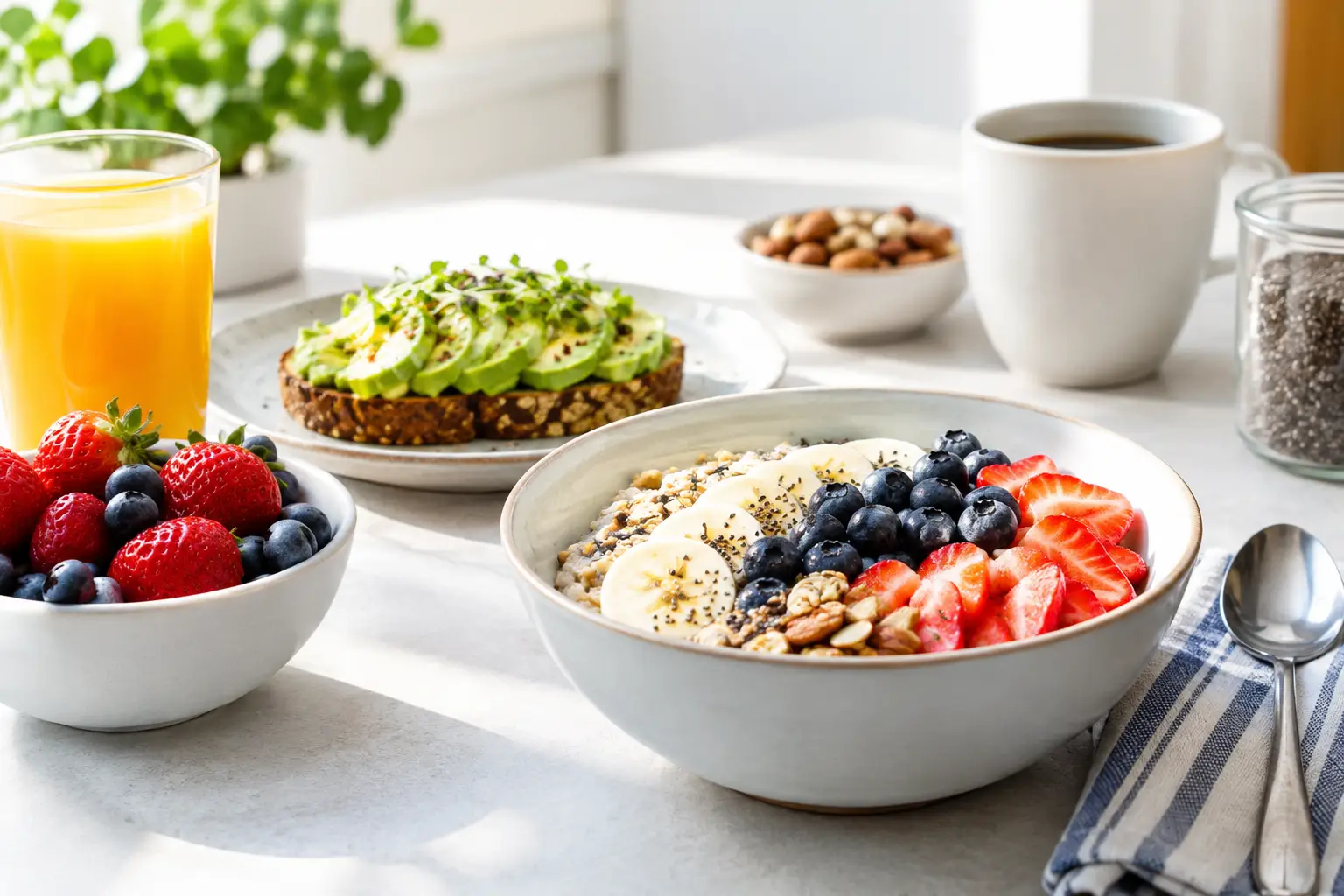
How to Plan Energising Breakfasts That Last
The 10.30am slump is rarely solved by another coffee. More often, it starts with a breakfast that was too small, too sugary, or eaten in a rush. Learning how to plan energising breakfasts gives you a more dependable way to start the day: enough fuel to concentrate, move around and get through the morning without feeling desperate for a snack.
This does not require a perfect menu, expensive powders or a full hour in the kitchen. A useful breakfast is simply one that suits your appetite, your schedule and the demands of your morning. The aim is steadier energy, not a brief rush followed by a crash.
What makes a breakfast genuinely energising?
The most reliable breakfasts combine protein, fibre-rich carbohydrates and some healthy fat. Each has a practical job. Protein helps you stay full and supports your body after an overnight fast. Fibre slows digestion and helps energy arrive more gradually. Fat also adds staying power and makes food more satisfying.
Compare a bowl of sugary cereal eaten alone with porridge topped with yoghurt, nuts and fruit. Both contain carbohydrate, but the second meal is more likely to keep you going because it has more protein, fibre and fat alongside it. You do not need to ban cereal, toast or fruit. The useful question is what you can add to make the meal more balanced.
For many adults, a breakfast built mainly around refined carbohydrate can lead to hunger and poor concentration well before lunchtime. White toast with jam, a pastry on the commute or a sweetened coffee may be quick, but they often do not provide enough substance. Adding eggs, Greek yoghurt, nut butter, beans, cheese, seeds or milk can change the effect without making breakfast complicated.
Portion size matters too. A breakfast that works for someone working from home at a desk may not be enough for a parent on the school run or someone beginning a physically active shift. Plan for the morning you actually have, not an idealised version of it.
How to plan energising breakfasts around your real week
Start by looking at the point where breakfast tends to fail. Perhaps weekday mornings are rushed, perhaps you have no appetite until mid-morning, or perhaps you buy a pastry because there is nothing ready at home. The answer is not willpower. It is making the easier option a better one.
Choose two or three breakfasts you genuinely enjoy and repeat them. Variety is welcome, but it is not essential at 7am. Repeating a few solid meals reduces decisions, makes shopping simpler and helps you notice what leaves you feeling well.
A simple planning approach is to decide on one cooked option, one cold option and one emergency option for the week. Your cooked option might be eggs on wholemeal toast with tomatoes or beans. Your cold option could be overnight oats with yoghurt and berries. Your emergency option might be plain yoghurt, a banana and a handful of nuts, or wholemeal toast with peanut butter.
When you shop, buy the basics that make these meals possible rather than chasing a long list of superfoods. Oats, eggs, wholemeal bread, milk or a dairy-free alternative, yoghurt, fruit, frozen berries, tinned beans, nuts and seeds cover a great deal. Frozen fruit is particularly useful when fresh berries are expensive or likely to be forgotten at the back of the fridge.
Build from a simple base
A practical way to assemble breakfast is to begin with a fibre-rich base, add protein, then add flavour and colour. Porridge can become more filling with milk, Greek yoghurt, chia seeds or nut butter. Wholemeal toast works well with eggs, cottage cheese, peanut butter or mashed beans. A smoothie is more substantial when it includes yoghurt, milk, oats or nut butter rather than fruit juice alone.
Fruit is a worthwhile part of breakfast, but fruit on its own is not usually enough to sustain a busy morning. Pair it with something more substantial. A banana with yoghurt and oats is very different from a banana eaten while running out of the door.
If you prefer savoury food, do not feel obliged to eat porridge. Eggs, beans, leftover vegetables, hummus, smoked fish or a small portion of last night’s meal can all work. Breakfast foods are mostly a habit, not a nutritional rule.
Make preparation fit your mornings
The best plan is one you can keep on an ordinary Tuesday. If mornings are hectic, prepare the night before. Put oats, milk, yoghurt and fruit into a container for overnight oats. Boil a few eggs while making dinner. Portion nuts and seeds into small jars. Keep bread in the freezer so it is always available for toast.
Batch preparation helps, but only if you like eating the result more than once. Some people are happy to prepare five identical breakfasts on Sunday. Others will stop eating them by Wednesday. In that case, prepare components instead: wash fruit, cook a few eggs, make a jar of seed mix and keep yoghurt visible at the front of the fridge.
For home workers, breakfast can blur into the start of work. It is easy to answer emails with a coffee and call that a morning routine. Try making breakfast a short break before you sit down properly. Even ten minutes at a table can help you eat more deliberately and notice whether you are still hungry.
For commuters, portability is the key trade-off. Overnight oats, a breakfast pot of yoghurt and fruit, or a wholemeal sandwich with egg can travel better than a meal requiring cutlery and a hob. If you know you will eat on the train, prepare food that is realistic to carry and eat, rather than planning a cooked breakfast you will never have time to make.
Do not overlook drinks and caffeine
Breakfast is also a good time to rehydrate. You lose fluid overnight, and dehydration can contribute to headaches, sluggishness and difficulty concentrating. A glass of water alongside tea or coffee is a modest habit, but it is often more useful than people expect.
Coffee is not the enemy, and plenty of people enjoy it as part of a normal morning. The issue is relying on it instead of food, especially if it makes you shaky, anxious or more likely to crash later. If coffee on an empty stomach does not agree with you, have it after breakfast or alongside something small and balanced.
Sugary energy drinks are a less dependable fix. They may give a short lift, but they can also reinforce the cycle of poor sleep, low morning energy and another afternoon pick-me-up. When tiredness is persistent, changing the breakfast pattern and protecting sleep usually offers more than adding stronger stimulants.
Adjust for appetite, exercise and dietary needs
Not everyone wants breakfast as soon as they wake. If you are not hungry early, forcing down a large meal is unnecessary. You might begin with a drink and eat a planned breakfast later in the morning. The important part is avoiding the pattern of running on caffeine until you are so hungry that the nearest sugary snack becomes lunch.
If you exercise in the morning, your needs depend on the session. A short, gentle walk may require little more than your usual breakfast afterwards. A harder run, gym session or active job may call for carbohydrate before or soon after exercise, alongside protein. Porridge with yoghurt, toast with eggs, or a smoothie containing milk, oats and fruit are straightforward options.
Vegetarian and vegan breakfasts can be just as filling when protein is planned rather than assumed. Try beans on wholemeal toast, tofu scramble, soya yoghurt with oats and seeds, or peanut butter with banana on toast. If you use plant-based alternatives, check the label occasionally: protein levels vary widely between products.
If you have diabetes, coeliac disease, a diagnosed digestive condition or a history of disordered eating, generic breakfast advice may need adapting. A GP or registered dietitian can help you find an approach that fits your health needs. Persistent fatigue also deserves attention, particularly if it is new, severe, or accompanied by breathlessness, unexplained weight change, low mood or sleep problems.
Test the effect, not the trend
For one working week, keep breakfast simple and pay attention to what happens afterwards. Notice your hunger at 11am, your concentration before lunch and whether you reach for biscuits or another coffee out of genuine hunger. This is more useful than judging a breakfast by whether it looks healthy online.
You may find that a larger breakfast works best. Or you may feel better with a moderate meal and a planned mid-morning snack. There is no prize for eating the earliest, smallest or most photogenic breakfast. The useful routine is the one that helps you feel steady enough to get on with your day.
A good breakfast plan should take pressure off your mornings. Keep a few ordinary ingredients available, repeat what works and make one small adjustment when your energy tells you something is missing. No hype. Just simple habits that work.
Further Reading
If you enjoyed this article you might like to read these articles.
- 9 Best Drinks for Steady Energy
- The Real Guide to Daily Energy
- Morning Sunlight Benefits for Energy and Sleep
The role of wellness products

Some people explore supplements or wellness products to support their daily routines. While these can sometimes be helpful, they should be viewed as support rather than a replacement for healthy habits.
If you are interested in exploring wellness products that may support energy routines, you can browse the options available at the Wellthy Freedom Hub store.
Always read ingredient labels carefully and speak with a healthcare professional if you have medical conditions or take medication.
Disclosure: This site may link to products on wellthyfreedomhub.com. If you choose to buy, the store benefits. The guidance here is informational and not medical advice.

Richard Chambers is the founder of rrjchambers.com. He writes about practical ways to improve everyday health, energy, and wellbeing through simple routines, lifestyle habits, and carefully chosen wellness products. His focus is on clear, honest guidance that helps people make small changes that support better health over time.
Health Information Notice
The information in this article is intended for general educational purposes only and should not be considered medical advice. If you have concerns about your health, sleep, or energy levels, it is always best to consult a qualified healthcare professional.