
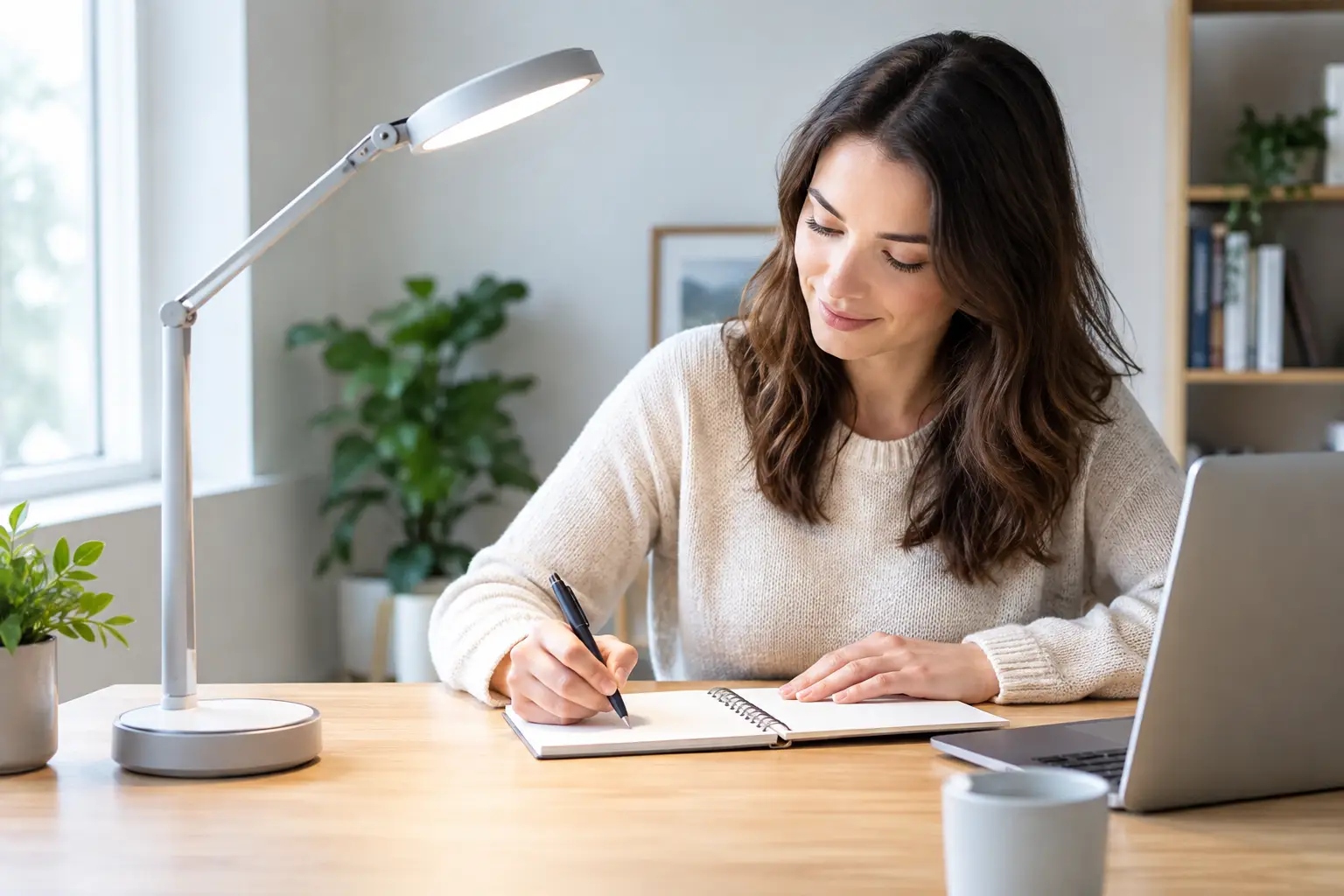
Daylight Desk Lamp Review: Is It Worth It?
A good daylight desk lamp review should start with a slightly boring truth: the lamp will not fix persistent exhaustion, poor sleep or a dark winter morning on its own. It can, however, make a dim home office more comfortable to work in and give your brain a clearer daytime cue, particularly when natural daylight is limited. That is useful, but it is not magic.
For most people, a daylight desk lamp is worth considering if they spend mornings or working hours in a poorly lit room, feel sluggish at their desk, or struggle with eye strain when reading. The best choice is not necessarily the brightest or most expensive model. It is the one that provides comfortable, well-directed light and fits a routine you will actually keep.
What a daylight desk lamp can realistically do
Light helps regulate the body’s internal clock, also known as the circadian rhythm. Bright light in the morning and daytime supports alertness and helps reinforce the difference between day and night. This matters because our modern routines often blur that distinction: dark bedrooms in the morning, screens all day, then bright overhead lighting late into the evening.
A desk lamp can improve the light around you, but it is not a replacement for getting outdoors. Even an overcast UK morning is often much brighter outside than a lamp on a desk. If you can take a ten-minute walk early in the day, that remains one of the simplest ways to get a stronger natural light signal.
Where a lamp helps is consistency. On a wet January morning, or in a north-facing room, it can make starting work, reading paperwork or eating breakfast feel less gloomy. It may also reduce the temptation to work in near-darkness with a bright screen as the only source of light.
Do not expect it to create energy if the underlying issue is short sleep, disrupted sleep, stress, low activity, illness or an irregular routine. Ongoing fatigue deserves proper attention. If tiredness is persistent, worsening or accompanied by symptoms such as unexplained weight change, breathlessness or low mood, speak to a GP rather than relying on a lamp.
Daylight desk lamp review: the features that matter
Marketing around lighting can get needlessly technical. You do not need to become an expert in lumens, lux and colour temperature to choose sensibly, but a few terms are worth understanding.
Brightness and distance
Lux measures how much light reaches a surface. Some lamps advertise 10,000 lux, a figure commonly associated with brighter light therapy devices. Read the small print carefully: that level may only be achieved at a very close distance, sometimes 15 to 30 centimetres from the lamp.
For ordinary desk use, a lamp does not need to blast your face with light. You want enough illumination to see clearly and feel comfortable, without glare, headaches or a harsh reflection on your monitor. An adjustable brightness setting is usually more valuable than an impressive maximum figure.
If you are specifically buying a product to help with seasonal symptoms or clinically significant low mood, treat it as a different purchase. Discuss it with a healthcare professional, particularly if you have an eye condition, bipolar disorder, take medicines that increase light sensitivity, or have a history of migraines. A standard desk lamp is not automatically a light therapy lamp simply because the packaging says “daylight”.
Colour temperature
Colour temperature is measured in Kelvin. Lower numbers, around 2,700K to 3,000K, look warmer and more yellow. Higher numbers, around 5,000K to 6,500K, look cooler and whiter.
Cooler white light can feel crisp and useful for focused daytime tasks. Yet very cool light is not automatically better. Plenty of people find 4,000K neutral white more pleasant for long periods, especially in a home office. A lamp with selectable colour temperatures gives you more flexibility than a fixed cool-white model.
Use the cooler setting in the morning or early afternoon if it helps you feel more awake. Later in the day, reduce brightness or switch to a warmer setting. The aim is not to fear blue-toned light, but to avoid sending yourself a strong daytime signal just before bed.
Glare, flicker and adjustability
This is where cheaper lamps often disappoint. A bright LED positioned directly in your line of sight can make a workspace feel worse, not better. Look for a shaded or diffused light source, a head that can tilt, and an arm that lets you position the light where it is needed.
For right-handed writing, place the lamp to your left to reduce shadows on the page. Reverse this if you are left-handed. For computer work, place it beside the screen rather than directly behind it or pointing at it. The light should brighten the desk and surrounding area, not create a bright patch reflected in the display.
Flicker is another practical consideration. Some LEDs flicker too quickly to be obvious but can still feel uncomfortable for sensitive users. It is difficult to judge from a product description alone, so customer feedback mentioning headaches, buzzing or unstable light is worth taking seriously. A lamp that makes you squint or tense your shoulders is not a productivity tool.
Build quality and everyday usability
A useful desk lamp needs controls that do not irritate you. Touch controls are tidy, but physical buttons may be easier to use in the dark. A memory setting is handy if you prefer the same brightness each morning. A timer can be useful for a short morning light session, although it is not essential for normal work lighting.
Also consider the unglamorous details: the size of the base, cable length, whether the neck stays where you put it, and whether it will fit beside your laptop, notebook and coffee. A compact lamp may suit a small kitchen table. A larger adjustable lamp is often better for someone who reads, works on a monitor and writes by hand in the same space.
The trade-offs most reviews miss
The brightest lamp is not always the best lamp. A very powerful model may be useful in a dark room, but it can be tiring at close range. Similarly, a wide light panel may create a more pleasant general glow, while a focused task lamp may be better for detailed work.
There is also a difference between a lamp designed to make a desk usable and one designed for a timed morning light routine. The first should be adjustable, glare-free and comfortable for several hours. The second may prioritise higher light intensity at a specified distance. Trying to use one device for both jobs can work, but only if it is comfortable and used at the right time.
Price is not a perfect guide. Paying more can buy better dimming, sturdier hinges and more even light, but it does not guarantee that the lamp will improve your energy. Set a sensible budget, then prioritise adjustability and comfort over gimmicks such as USB ports, coloured lights or an app you are unlikely to open after the first week.
How to use a daylight desk lamp without upsetting sleep
Timing matters more than people think. Use the lamp in the morning or during the working day, ideally while you are doing something already established: checking your diary, having breakfast, reading or starting work. This makes the habit easier to maintain.
Avoid using a bright, cool-white lamp close to bedtime, particularly if you already find it hard to switch off. In the evening, lower the brightness and rely on warmer, softer room lighting where possible. Your bedroom should feel meaningfully different from your workspace – darker, calmer and less demanding.
Keep the lamp as part of a wider approach. Open curtains soon after getting up, get outside when you can, move regularly during the day, and keep a reasonably consistent bedtime. Those ordinary habits do more for steady energy than any single wellness purchase.
Our practical verdict
A daylight desk lamp is a sensible tool for a dark desk, not a cure for fatigue. Choose one with adjustable brightness, a comfortable neutral or cool-white setting, a movable head and minimal glare. Use it early enough in the day, and do not let it replace outdoor daylight or the basics of sleep.
If a darker room is making work feel heavy, improving the light around your desk is a small change with a reasonable chance of helping. Start there, notice how you feel over a couple of weeks, and keep the parts of the routine that make ordinary days easier.