
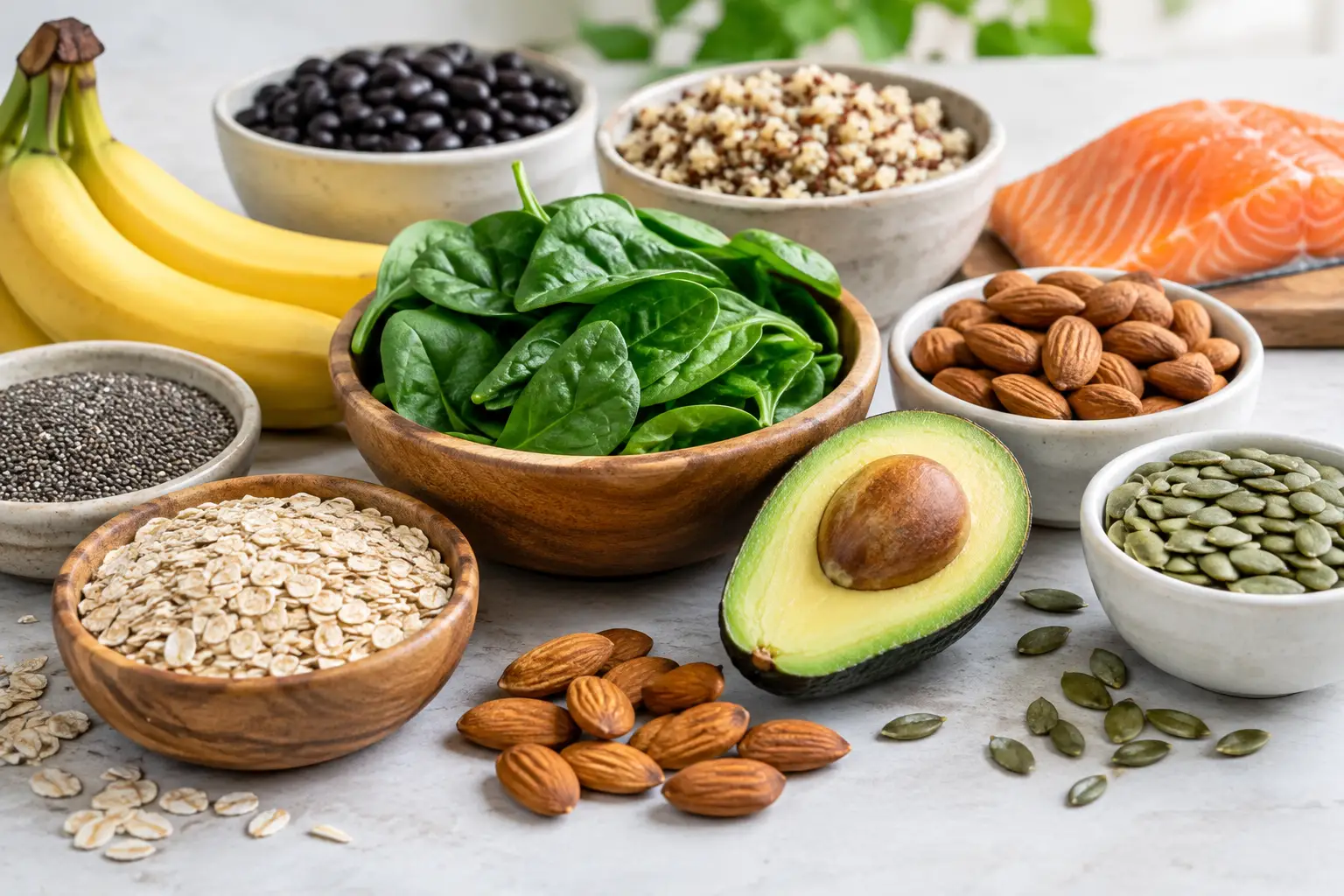
12 Best Magnesium Rich Foods for Everyday Meals
That mid-afternoon slump is not always about willpower or a lack of coffee. Poor sleep, irregular meals, stress and low activity can all play a part. But eating enough of the best magnesium rich foods is a sensible place to look too, particularly if your usual meals are light on wholegrains, beans, nuts, seeds and green vegetables.
Magnesium is involved in hundreds of processes in the body, including normal energy release from food, muscle and nerve function, and the reduction of tiredness and fatigue. That does not mean one bowl of spinach will transform your sleep or fix persistent exhaustion. It means a varied diet that regularly includes magnesium-rich foods can support the basics your body relies on every day.
How much magnesium do adults need?
UK reference values are 300mg a day for men and 270mg a day for women. Most people do not need to count every milligram. A more useful approach is to notice whether magnesium-containing foods appear across your week, rather than only occasionally.
Whole foods are usually the better starting point than supplements. They also provide fibre, protein, healthy fats and other minerals. Supplements can have a place when a clinician advises them, but they are not a shortcut around an erratic diet, late nights or a stressful routine.
The best magnesium rich foods to put on your plate
The figures below are approximate, as magnesium content varies by brand, growing conditions and portion size. Use them as a practical guide, not a scorecard.
| Food | Typical serving | Approximate magnesium | |—|—:|—:| | Pumpkin seeds | 30g small handful | 150mg | | Almonds | 30g handful | 80mg | | Cashews | 30g handful | 75mg | | Peanut butter | 2 tablespoons | 50mg | | Black beans | 150g cooked | 90mg | | Chickpeas | 150g cooked | 70mg | | Lentils | 150g cooked | 55mg | | Spinach | 80g cooked | 60mg | | Porridge oats | 40g dry | 50mg | | Wholemeal bread | 2 slices | 45mg | | Dark chocolate | 20g | 45mg | | Tinned mackerel | 100g | 75mg |
Seeds and nuts: small portions, useful returns
Pumpkin seeds are one of the easiest ways to raise magnesium intake without changing a meal completely. Sprinkle them over porridge, yoghurt, soup or a salad. They are energy-dense, so a small handful is enough. Keeping a jar in the cupboard is often more useful than buying an ambitious ingredient you will not use.
Almonds and cashews work well as a snack, but they are even better when attached to an existing habit. Add almonds to breakfast, keep cashews with a piece of fruit for the commute, or stir nut butter into porridge. Choose unsalted versions most of the time if you are watching your salt intake.
Beans, chickpeas and lentils: everyday cupboard staples
Beans and pulses are dependable, affordable sources of magnesium, fibre and plant protein. A tin of chickpeas can become part of a quick traybake, curry or salad. Lentils add substance to soups, bolognese and shepherd’s pie without requiring a separate complicated recipe.
If you currently eat little fibre, increase portions gradually and drink enough fluid. Suddenly eating large amounts of beans can leave some people bloated. Start with a few meals a week, rinse tinned pulses well, and let your digestion adjust.
Wholegrains: make the ordinary swap
Porridge oats, wholemeal bread, brown rice and wholewheat pasta tend to provide more magnesium than refined alternatives. This is not a rule that needs to be followed perfectly. White toast may still be the practical option on a difficult morning, and that is fine. The useful change is making wholegrains your usual choice where you enjoy them.
A bowl of porridge topped with fruit and seeds is a particularly easy breakfast for busy mornings. It provides slow-release carbohydrate alongside a modest magnesium contribution, which may help you avoid relying on a pastry or sugary cereal that leaves you hungry soon afterwards.
Green vegetables: helpful, but do not rely on them alone
Spinach, kale and other leafy greens contribute magnesium, especially when eaten cooked because the leaves reduce in volume. Add spinach to eggs, pasta sauce, dhal or a stir-fry. Frozen spinach is often cheaper, lasts longer and works well in cooked dishes.
Greens are worth eating for many reasons, but they need not carry the whole job. It is easier to meet your needs with a combination of vegetables, pulses, wholegrains and nuts than by forcing yourself through a large salad every day.
Fish and dark chocolate: useful additions, not magic foods
Oily fish such as mackerel can contribute magnesium as well as protein and omega-3 fats. Tinned mackerel on wholemeal toast makes a quick lunch with very little preparation. If you do not eat fish, beans, tofu, nuts and seeds can cover similar ground from a magnesium perspective.
Dark chocolate contains magnesium, but portion size still matters. A couple of squares after dinner can fit comfortably into a balanced diet. Treating it as a health food and eating half a bar every night is less helpful for most people, especially if it begins to replace more filling snacks.
Build magnesium into meals without overthinking it
The simplest plan is to add one magnesium-rich element to meals you already eat. At breakfast, have porridge with pumpkin seeds or peanut butter. At lunch, choose wholemeal bread with hummus, soup with lentils, or a jacket potato with beans. At dinner, add chickpeas to a curry, serve brown rice when it suits the dish, or include greens alongside fish, tofu or eggs.
For snacks, fruit with a small handful of nuts is more sustaining than biscuits alone. That does not mean biscuits are forbidden. It simply gives you an option that is more likely to support steady energy between meals.
Planning matters more than perfection. Keep two or three options you genuinely like at home: oats, wholemeal bread, tinned pulses, nut butter and frozen spinach are a good starting point. These foods are inexpensive compared with many wellness products, and they can be used in normal family meals.
Can magnesium-rich food help with sleep and tiredness?
Magnesium is commonly linked with sleep, and a low intake is worth addressing. Still, food is only one part of the picture. If sleep is poor because your bedroom is too warm, you scroll late into the evening, drink several coffees after lunch or wake frequently with a young child, more almonds will not solve the underlying issue.
Think of magnesium as supportive rather than sedating. A regular evening meal, a consistent wind-down routine, daylight early in the day and less caffeine late on are often more noticeable changes for sleep quality. The food approach works best when it sits alongside those ordinary habits.
Persistent tiredness also deserves a wider view. Low iron, thyroid problems, sleep apnoea, low mood, medication effects and many other issues can cause fatigue. Speak to a GP if tiredness is lasting, worsening, affecting daily life, or comes with symptoms such as unexplained weight change, breathlessness, palpitations or heavy periods.
A sensible word on supplements
Magnesium supplements are heavily marketed for sleep, stress and muscle cramps. The evidence and the right dose depend on the person and the symptom. Higher doses can cause diarrhoea and stomach upset, and supplements may not be suitable alongside certain medicines or with kidney problems.
If you are considering one, ask a pharmacist or GP, particularly if you are pregnant, have kidney disease, or take regular medication. Food-first is the calmer, lower-risk option for most people.
Start with one repeatable change this week: add seeds to breakfast, put beans into two evening meals, or swap one refined grain for a wholegrain version. Small choices, repeated often, are what make a difference to how you feel.